Russia Targets Private Pension Savings to Cover Ballooning Wartime Deficits
Moscow, Monday, 13 July 2026.
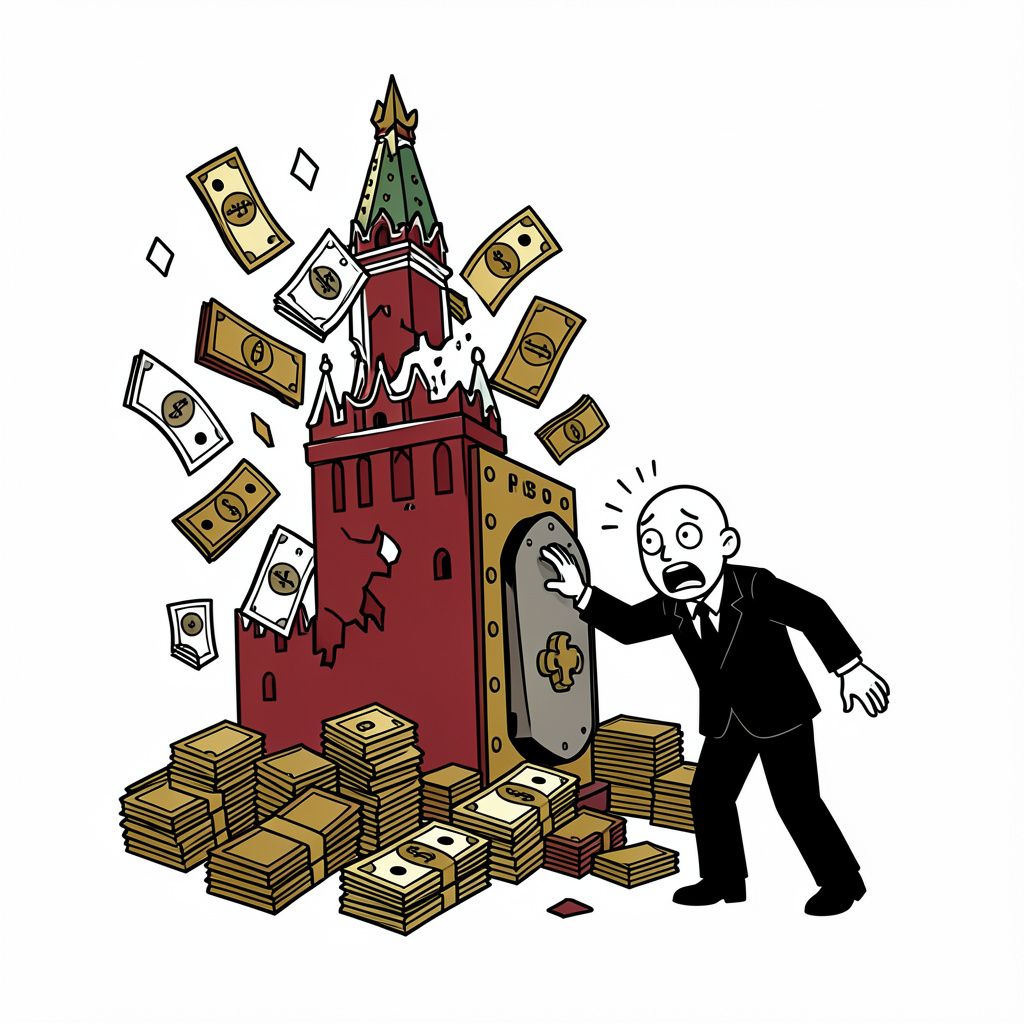
Facing a looming banking crisis and an $83 billion deficit, Moscow is drafting legislation to seize $40 billion in private pensions, triggering widespread panic and capital flight.
The Illusion of Wartime Resilience
While Moscow has attempted to project an image of economic strength fueled by military expenditures, recent data suggests this resilience is highly fragile [1]. By May 31, 2026, Russia’s federal budget deficit had surged to 6 trillion rubles ($83 billion), which is more than double the levels recorded in 2025 [1]. This actual deficit is already 57.895% higher than the state’s initial projection of 3.8 trillion rubles for the entirety of 2026 [1]. A June 2026 European intelligence report warned that this massive spending creates a deceptive ‘illusion of a dynamic economy’ that masks a highly volatile underlying reality [1]. According to the report, even a minor economic shock, such as targeted sanctions against major Russian banks, could act as a catalyst to shatter this fragile equilibrium [1].
Mounting Debt and Systemic Banking Risks
The core of Russia’s economic vulnerability lies in its rapidly deteriorating credit markets, where both corporate and retail borrowers are struggling under the weight of high interest rates and wartime inflation [GPT][1]. The June 2026 European intelligence report estimated that up to 10% of Russia’s corporate loans are at risk of non-repayment [1]. The situation is equally precarious in the consumer sector, where up to 15% of retail loans at some of the nation’s top financial institutions are now classified as non-performing [1]. This spike in bad debt follows a turbulent 2025, during which personal bankruptcies in Russia rose by nearly 33% [alert! ‘source says nearly 33%’] to exceed 500,000 cases [1].
Desperate State Interventions and Capital Flight
In response to these ballooning deficits and the threat of financial collapse, the Russian government is considering unprecedented and highly invasive fiscal measures. The Russian Finance Ministry is currently drafting legislation to access $40 billion in private pension fund savings to help bankroll the ongoing war in Ukraine [1]. This proposed seizure represents approximately 48.193% of the $83 billion deficit recorded by late May [1]. Adding to the anxiety, leadership within the Russian Communist Party has proposed an even more radical measure: ‘mobilizing’ 130 trillion rubles currently held in private domestic bank accounts to cover state deficits, though the current legislative status of this proposal remains unconfirmed [alert! ‘status of bank account mobilization proposal is currently unknown’] [1].