United States Imposes New Tariffs Up to 100 Percent on Foreign Drones
Washington, Friday, 14 August 2026.
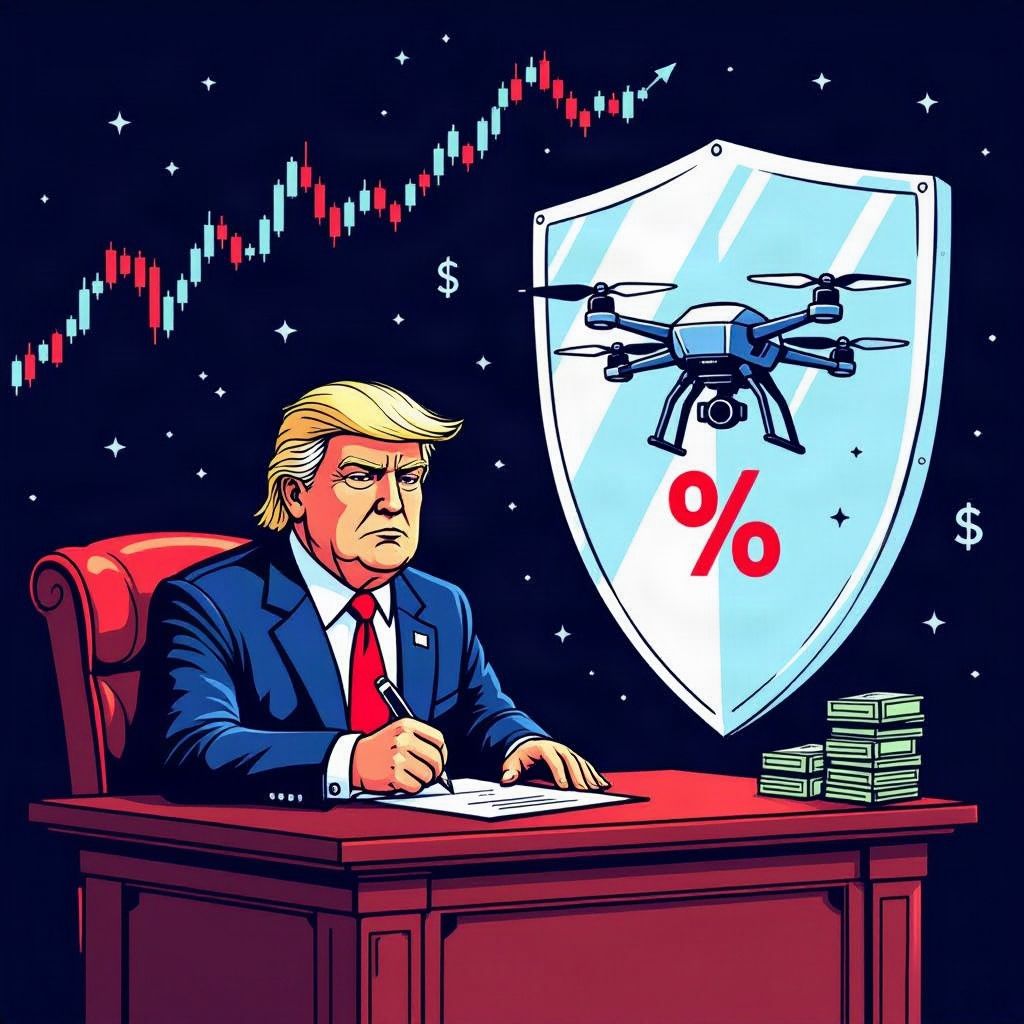
President Trump signed a proclamation targeting foreign drone dominance, introducing tariffs up to 100 percent on imported equipment to eliminate security risks and incentivize domestic manufacturing.
Implementation of National Security Tariffs
On August 13, 2026, President Donald J. Trump signed a national security proclamation imposing significant tariffs on imported uncrewed aerial vehicles and their components [1][2]. The policy establishes a tiered tariff structure, with a 100% ad valorem tariff applied to drones exceeding 25 kg in maximum takeoff weight or equipped with thermal imaging capabilities [1][2]. Smaller drones lacking these sensitive capabilities face a 25% tariff, while allied nations including members of the European Union, Japan, and South Korea face a reduced 15% rate contingent on technology origin [1].
This immediate policy shift marks a decisive move by the Trump administration to mitigate national security vulnerabilities linked to foreign technology dependencies [1]. The administration asserts that reliance on foreign components for commercial and military Unmanned Aircraft Systems presents critical cybersecurity vulnerabilities [1]. By targeting hardware supply chains, the executive action directly impacts commercial drone operators and hardware supply chains across the United States [1].
Effective Dates and Compliance Timelines
The majority of these tariffs are scheduled to take effect 21 days following the signing date, setting the implementation for September 3, 2026 [1][2]. Certain non-sensitive components and products exempted by the Department of War operate on a delayed timeline, with tariffs commencing 180 days after the initial signing [1]. This staggered approach allows supply chains time to adjust while prioritizing immediate restrictions on hardware deemed critical to national security [1].
Compliance with these timelines is critical for importers to avoid punitive measures once the window closes [1]. The Secretary of Commerce is authorized to establish an onshoring program for companies investing in domestic drone manufacturing to facilitate this transition [1]. Such measures indicate a long-term strategy rather than a temporary trade adjustment [1].
Geopolitical Implications and Domestic Goals
This action utilizes Section 232 trade authorities, a mechanism President Trump previously employed during his first term for steel and aluminum industries [1]. The administration highlights that Chinese company DJI has secured more than two-thirds of the global drone market in recent years, underscoring the dominance this policy aims to counter [2]. By incentivizing domestic manufacturing, the proclamation seeks to repatriate American jobs and strengthen the defense-industrial base [1].
President Trump stated that the program will protect national security and support American jobs within the defense and defense-adjacent industrial base [1]. Since returning to office post-January 2025, President Trump has utilized Section 232 trade authorities to impose tariffs on various sectors including steel, aluminum, and pharmaceuticals [1]. This continuity suggests a consistent broader economic policy focused on rebuilding key sectors of the industrial base [1].