Rising Mortgage Costs Push Americans Toward Renting Over Buying
Seattle, Thursday, 15 October 2026.
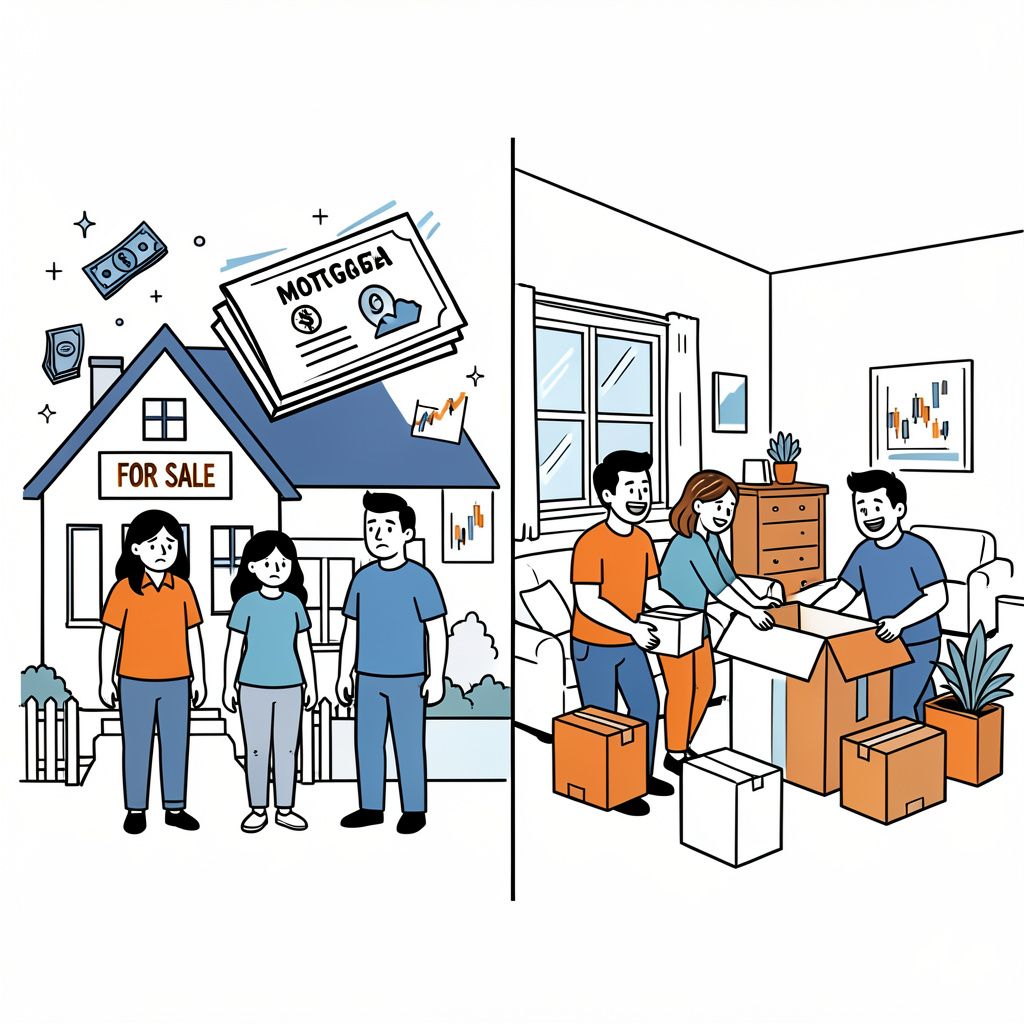
High homebuying costs led to a nearly 20% jump in national rental demand this fall, as new monthly mortgage payments climbed twice as fast as rent prices.
The Cost of Waiting: Monthly Payment Disparities
The latest data released on 14 October 2026 by Zillow Group, Inc. indicates a significant shift in housing behavior, driven by the widening financial gap between renting and buying [1][3][5]. While the typical U.S. rent reached $1,932 per month in September 2026, representing a 2.7% increase from the previous year, the costs associated with purchasing a home have accelerated more rapidly [1][2][4]. The typical monthly payment for a new homebuyer, assuming a 10% down payment on a 30-year fixed mortgage, climbed 5% year-over-year to reach $3,037 [1][2][5]. This divergence means the cost of buying is rising at nearly twice the pace of renting, creating a monthly cost difference of 1105 in favor of renters [1][2][4].
Income Requirements and Affordability Thresholds
Beyond monthly cash flow, the income required to enter the housing market highlights a substantial barrier to homeownership [2][4][5]. To afford a typical rental unit, a household requires an annual income of $77,278, whereas purchasing a typical home demands an annual income of $121,496 [2][3][5]. This creates an income gap of 44218 that many potential buyers cannot bridge without significant financial adjustment [2][4][5]. Consequently, median households are now spending 26.3% of their income on new rentals, compared to 41.3% for new homeowners, making renting the more financially accessible option for a large segment of the population [2][3][5].
Regional Variations in Rental Demand
Geographic analysis reveals sharp contrasts in rental market intensity across the United States [1][2][5]. The Zillow Observed Renter Demand Index (ZORDI) reported the highest year-over-year growth in San Jose, where demand surged 82.5%, followed by San Francisco at 66.9% [1][4][5]. Other major metropolitan areas experiencing significant demand increases include Austin (49.3%), Miami (48.9%), and Phoenix (43%) [1][3][5]. Conversely, rental demand declined in several markets, with Louisville seeing a 6.2% decrease, Baltimore down 6.1%, Washington, D.C. down 5.6%, and Cleveland down 5.5% [2][4][5]. In regions with high demand, rent growth varied; San Francisco rents rose 11.8% while San Jose saw an 8.3% increase, whereas new construction helped moderate growth in Austin to 0.7% and Phoenix to 1.0% [2][3][5].
Single-Family Rentals and Strategic Shifts
The composition of rental demand is also shifting, with single-family rentals outperforming multifamily units [2][4][5]. Demand for single-family rentals increased 21.6% year-over-year, significantly outpacing the 10.1% increase observed in multifamily rentals [1][3][5]. The typical cost for a single-family rental is $2,266 per month, which remains $771 cheaper than the typical new buyer’s monthly payment [2][4][5]. Kara Ng, a senior economist at Zillow, noted that elevated mortgage rates have pushed home shoppers into rentals, leading to the rise of the deliberate renter who chooses to bank the difference between buying and renting costs to build wealth without owning a home [1][3][5]. This trend suggests a structural change in how households approach wealth accumulation amidst high borrowing costs [3][4][5].