New Iranian Leadership Proposes Talks After US Military Strikes
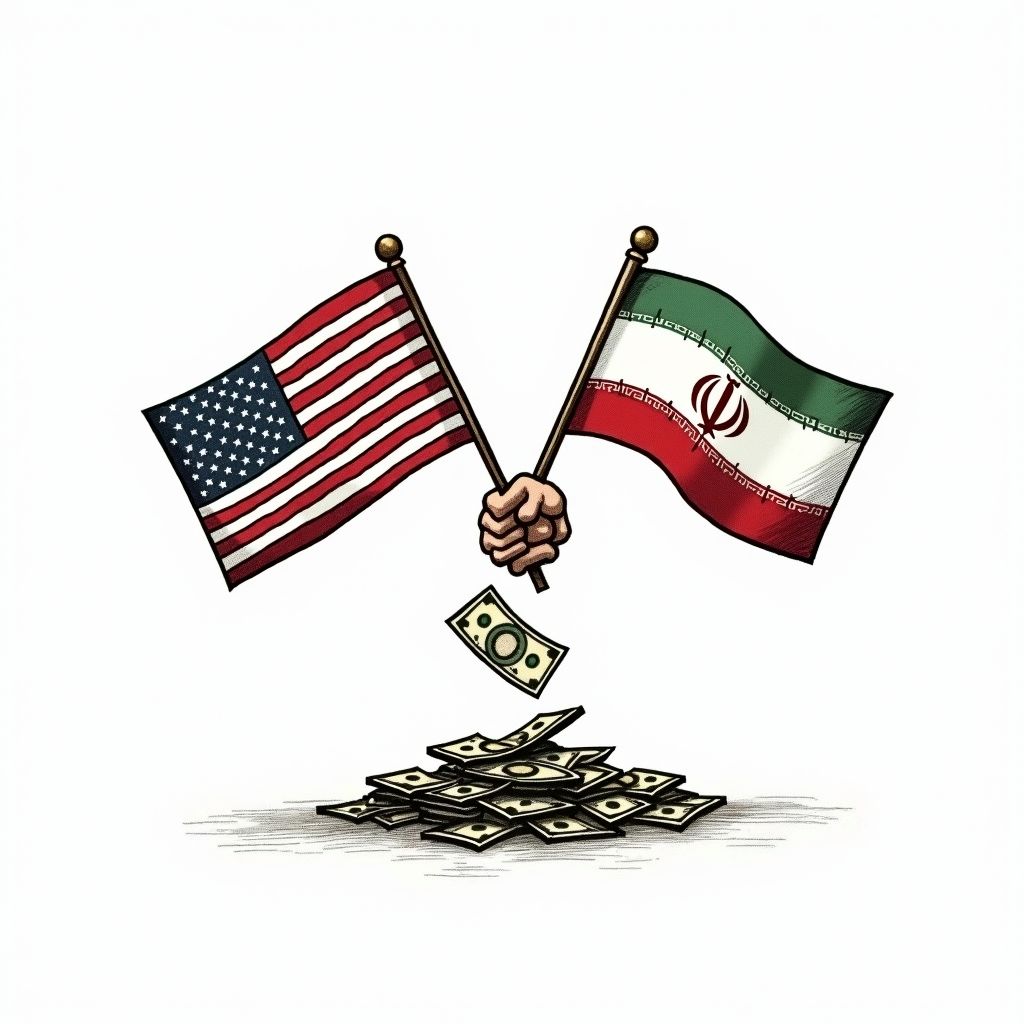
Tehran, Monday, 2 March 2026.
President Trump confirmed Iran’s transitional leadership initiated contact to negotiate following “Operation Epic Fury” and Ayatollah Khamenei’s death, marking a critical potential pivot for regional stability and markets.
New Iranian Leadership Proposes Talks After US Military Strikes
As previously reported, Foreign Minister Araghchi signaled a rapid selection of a new Supreme Leader to mitigate uncertainty [https://wsnext.com/4aad099-Geopolitics-Middle-East/]. Today, that political transition has yielded a definitive diplomatic overture. President Trump has confirmed that Iran’s emerging leadership has reached out to negotiate, a sharp pivot following the death of Supreme Leader Ayatollah Ali Khamenei during “Operation Epic Fury” this past weekend [1]. This outreach suggests that the combination of leadership decapitation and overwhelming military force may have accelerated Tehran’s readiness to engage, although the situation remains fluid.
From Geneva to “Epic Fury”
To understand the significance of this potential truce, one must analyze the rapid escalation that precipitated it. Diplomatic efforts collapsed on Thursday when Iranian officials in Geneva rejected U.S. demands to halt uranium enrichment for ten years [3]. President Trump noted that the regime “balked” at the terms, stating, “They weren’t willing to say they will not have a nuclear weapon” [3]. Following this impasse, the White House authorized a massive military campaign that began early Saturday, February 28, striking over 1,000 targets across Iran [4]. The operation resulted in the death of Ayatollah Khamenei and dozens of senior regime officials, fundamentally altering the negotiation landscape [4].
Unprecedented Digital and Kinetic Force
The scale of “Operation Epic Fury” likely forced the regime’s hand. U.S. Central Command (CENTCOM) deployed a formidable arsenal, including B-2 stealth bombers and, for the first time in combat, “LUCAS” one-way attack drones [4]. These cost-effective units, priced at approximately $35,000 each, were used to overwhelm Iranian defenses [4]. Simultaneously, the kinetic war was matched by a digital offensive dubbed “Operation Roar of the Lion,” which targeted the Islamic Revolutionary Guard Corps (IRGC) command centers [6]. This cyberattack plunged Iran’s nationwide internet traffic to just 4 percent of normal levels, effectively severing the regime’s internal communication lines during the bombardment [6].
Casualties and Continued Risks
Despite the diplomatic signal, the conflict has exacted a tangible toll. Retaliatory strikes by Iran targeting U.S. bases in Kuwait have resulted in the deaths of three American service members, with five others seriously wounded as of Sunday morning [4]. Furthermore, security risks persist in the digital domain; cybersecurity firms warn that Iranian-linked groups, such as the Handala Group, are actively targeting Western energy and manufacturing sectors in reprisal [7]. While President Trump has speculated that the war could end in “four weeks or less,” the continued aggression from surviving military elements suggests that the path to a ceasefire remains fraught with operational risks [3].
Sources
- www.foxnews.com
- theconversation.com
- www.nbcnews.com
- www.foxnews.com
- www.foxnews.com
- www.foxnews.com
- www.govinfosecurity.com