Costco Tests Standalone Gas Stations to Ease Warehouse Traffic
Issaquah, Sunday, 19 July 2026.
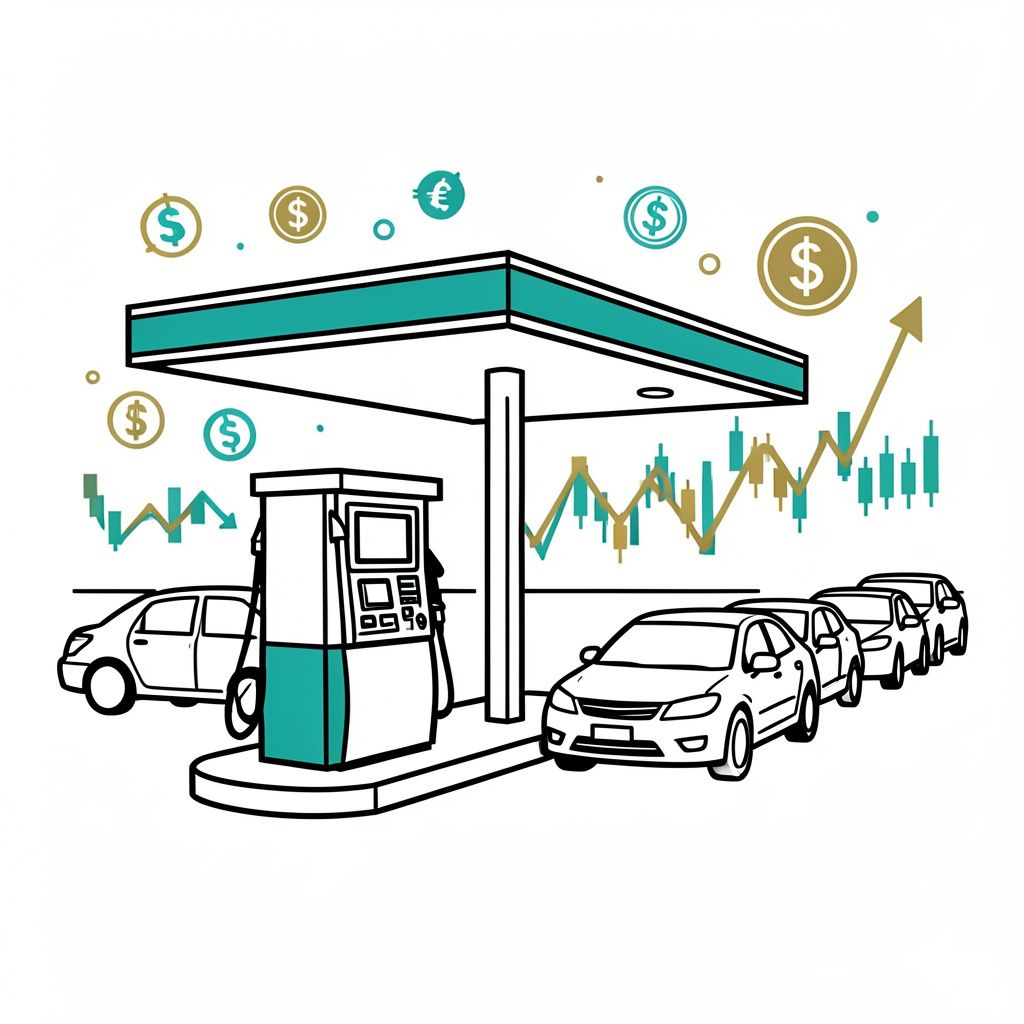
To alleviate severe warehouse congestion, Costco is piloting standalone gas stations, starting with a California site that decouples its high-volume, low-cost fuel operations from traditional retail stores.
Decoupling Fuel from Warehouses to Combat Gridlock
Costco Wholesale Corp. ($COST) is fundamentally rethinking its real estate and operational footprint to tackle one of its most persistent issues: parking lot gridlock [1][2][5]. In June 2026, the retail giant took a historic step by launching a pilot program that decouples its fuel operations from its traditional physical warehouses [3][4][5]. The company opened its first-ever standalone, member-only gas station in Mission Viejo, California, located at 25732 El Paseo, facing the I-5 San Diego Freeway [4][5]. By placing these high-volume fueling stations a short distance away from its warehouses—typically within a range of 1 to 2 miles, or approximately 1.609 to 3.219 kilometers—Costco aims to alleviate the severe traffic congestion that frequently paralyzes its main shopping centers [1][2][5].
The Physical and Strategic Anatomy of the Mission Viejo Pilot
The newly debuted Southern California pilot location is a massive, fuel-only facility that features a 17,185-square-foot canopy, which is approximately 1596.538 square meters, housing 40 individual fueling positions [4]. Uniquely, the site operates without an attached warehouse or convenience store [4]. To ensure maximum accessibility and convenience, the City Council of Mission Viejo finalized operational permits on July 14, 2026, granting the pilot site 24-hour fuel access [5]. This standalone site is situated 3.5 miles, or roughly 5.633 kilometers, away from the nearest Laguna Niguel warehouse at 27972 Cabot Road [4]. Because both of the nearby Laguna Niguel warehouses are already equipped with their own fuel stations, this strategic placement represents an effort to gain incremental customer exposure and test the standalone model’s viability rather than filling a geographic fuel deficit [4].
The Economics of Membership-Only Fuel
While the margins on gasoline are notoriously razor-thin, fuel is by no means a loss leader for Costco; instead, it serves as a critical driver of total business volume, consistently accounting for approximately 10% of the company’s total net sales [4]. During the grand opening of the Mission Viejo site, Costco offered fuel prices roughly 71 cents per gallon, which is approximately 0.188 dollars per liter, cheaper than the Orange County average, providing a massive incentive for local drivers [4]. Access to these low-cost stations requires a Costco membership, with the entry-level Gold Star Membership priced at $65 per year [4]. With the average American motorist consuming between 490 and 530 gallons of gasoline annually—equivalent to roughly 1854.851 to 2006.267 liters—a driver saving even a modest $0.20 per gallon, or around 0.053 dollars per liter, would easily recoup the annual membership fee through fuel savings alone [4].
Strategic Implications and Academic Analysis
The strategic and economic implications of Costco’s move have quickly caught the attention of industry analysts and academic institutions. On July 16, 2026, the William Davidson Institute (WDI) Publishing released a detailed case study exploring the economics behind the wholesaler’s venture into standalone retail territory [5]. Analysts note that by isolating the fuel pumps, Costco can capture high-margin membership fees from drivers who might otherwise avoid the congested warehouse parking lots [4][5]. If this experiment proves successful, it could trigger a paradigm shift in the warehouse club sector [4]. Currently, major competitors like BJ’s Wholesale Club and Walmart do not operate standalone fueling networks, save for a single experimental Walmart station located near its corporate headquarters in Bentonville, Arkansas [4].
Future Expansion and Regional Rollouts
As space becomes increasingly scarce in dense metropolitan areas, Costco is actively planning to extend this format to other high-traffic regions [1][5]. The company has already targeted Honolulu, Hawaii, for its second standalone gas station [1][4]. The Honolulu location is currently under development and is projected to open in 2027 [4]. Beyond these initial sites, Costco intends to expand the standalone model to additional congested markets, with further pilot program expansions slated for evaluation by August 15, 2026 [5]. However, company officials have indicated that long-term, nationwide rollout plans remain tentative as they gather data on consumer behavior and operational costs from the California and Hawaii locations [4].
Urban Planning and the Member Experience
The decoupling strategy also addresses critical urban planning challenges that have long plagued big-box retailers. Urban planning consultants point out that separating fuel-related gridlock from the primary retail warehouses improves the overall traffic flow for entire commercial shopping districts [5]. For traditional shoppers, the reduction in parking lot congestion enhances the member experience, making warehouse visits less stressful and more efficient [GPT]. By optimizing land use in pricey real estate markets, Costco ($COST) is testing whether it can maintain its legendary fuel volumes and membership growth without the physical footprint of a traditional warehouse looming overhead [1][3][4].