Trump Files $5 Billion Lawsuit Against JPMorgan Alleging Politically Motivated Account Closures
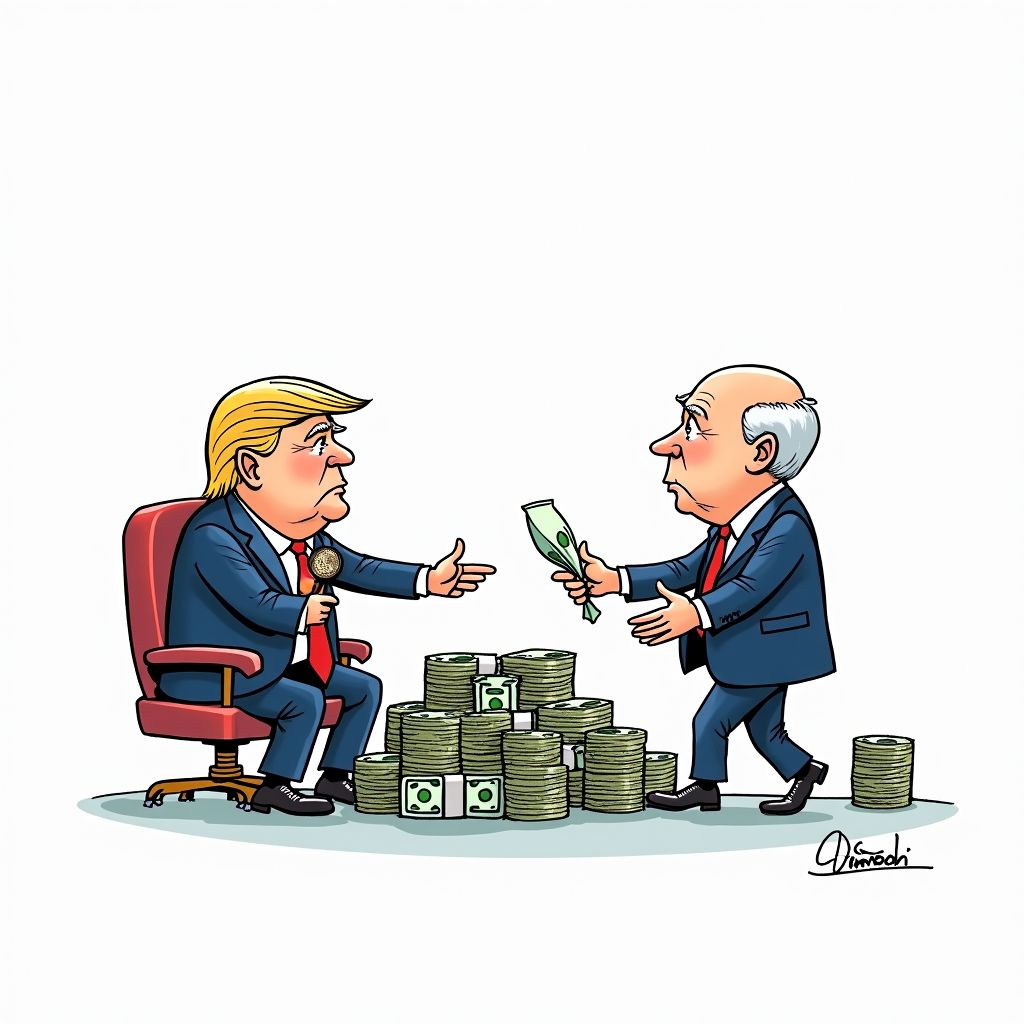
New York, Thursday, 22 January 2026.
President Trump seeks $5 billion in damages, accusing JPMorgan and CEO Jamie Dimon of “political debanking” by terminating his accounts following the 2021 Capitol riots.
Legal Escalation on Wall Street
In a significant confrontation between the executive branch and the banking sector, President Donald Trump has filed a lawsuit against JPMorgan Chase (JPM) and its CEO, Jamie Dimon, seeking damages of at least $5 billion [1][2][5]. The complaint, filed on Thursday, January 22, 2026, in a Florida state court in Miami, alleges that the financial giant engaged in “political debanking” by terminating the President’s accounts shortly after the events of January 6, 2021 [1][3][4]. This legal action accuses the bank of discriminating against Trump based on his political views and asserts claims of trade libel and breach of the implied covenant of good faith [4][6].
Anatomy of the Allegations
The lawsuit provides a specific timeline regarding the termination of services, claiming that JPMorgan notified Trump and his affiliated entities on February 19, 2021, that their accounts would be closed by April 19, 2021 [4]. Trump’s legal team argues that this decision forced the transfer of hundreds of millions of dollars and was driven by the bank’s “unsubstantiated, ‘woke’ beliefs” rather than legitimate financial concerns [3][4]. Furthermore, the complaint alleges that JPMorgan and Dimon unlawfully placed the Trump Organization and family members on a blacklist accessible to other regulated banks, effectively labeling them as noncompliant with banking rules [1][4]. The plaintiffs contend this violated Florida law, which prohibits lenders from disengaging with clients based on their political opinions, speech, or affiliations [1].
Banking Sector Defense and Market Reaction
JPMorgan Chase has swiftly rejected the allegations, stating that the lawsuit “has no merit” [1][3]. While a spokesperson expressed regret over the litigation, the bank maintained that it does not close accounts for political or religious reasons, but rather when accounts create “legal or regulatory risk for the company” [1][4]. This defense echoes earlier statements by Jamie Dimon in February 2025, where he attributed many debanking concerns to onerous regulatory requirements rather than political bias [4]. Despite the high-profile nature of the dispute, market reaction appeared muted; shares of JPMorgan were trading up 1.2% on the afternoon of the filing [5]. This legal battle unfolds against a backdrop of heightened scrutiny, as federal regulators acknowledged in late 2025 that major U.S. banks had restricted services to certain industries, a practice that has fueled the ongoing debate over access to financial services [5].
Sources
- www.forbes.com
- www.theguardian.com
- www.cnbc.com
- www.foxbusiness.com
- www.reuters.com
- www.bloomberg.com