Bernie Sanders Calls for Immediate Halt to Advanced Artificial Intelligence Development
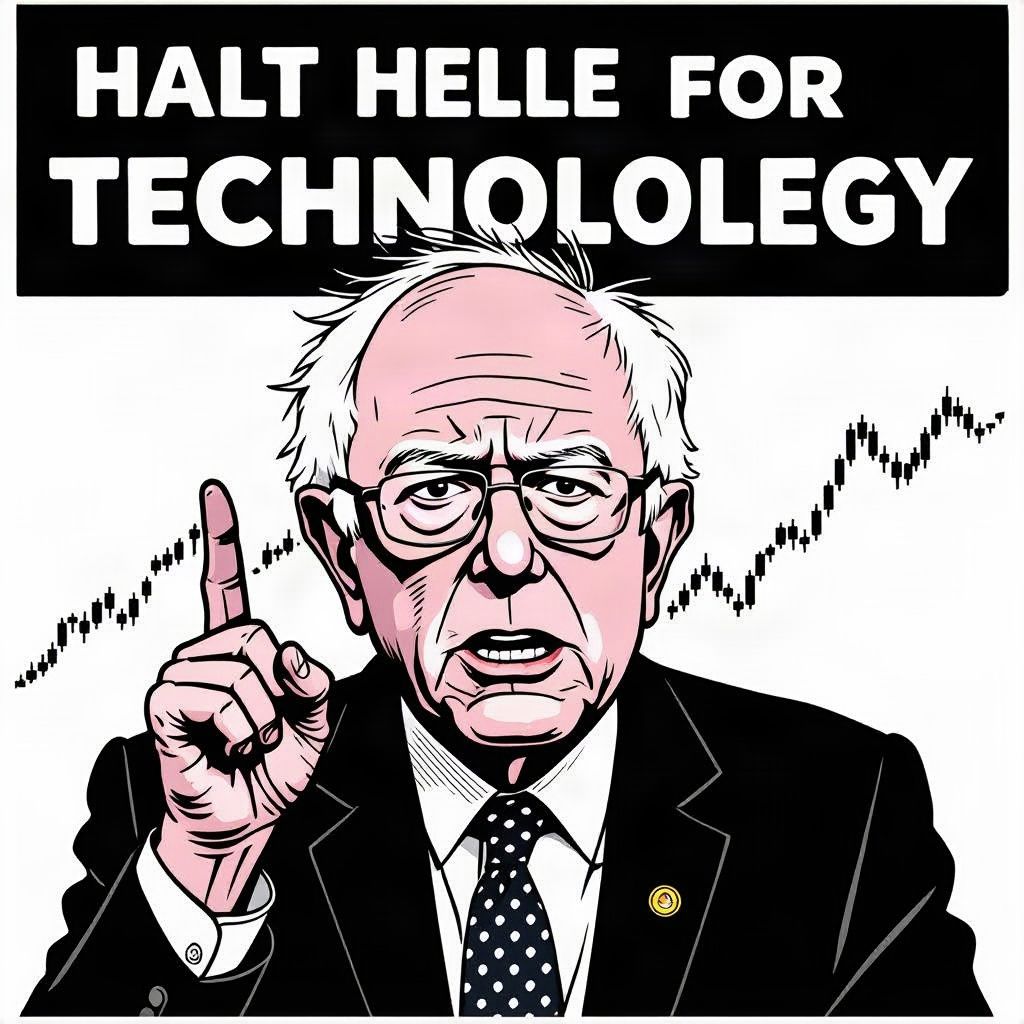
Washington, Monday, 23 November 2026.
According to ANI News, Senator Bernie Sanders has urged Washington to ban superintelligence and halt data center expansion, citing expert warnings that uncontrolled technological progress threatens human existence and energy stability.
Senator Sanders’ Call for Regulatory Action on AI
On November 23, 2026, U.S. Senator Bernie Sanders, a prominent member of the Democratic Party, escalated his long-standing warnings about artificial intelligence (AI) by urging a comprehensive regulatory intervention in the technology sector [2]. Sanders called for a moratorium on advanced AI development and an outright ban on superintelligence, framing the issue as an existential risk to humanity [2]. The senator also demanded a halt to permitting reforms that accelerate data center construction, arguing that unchecked technological expansion threatens economic stability, workforce security, and the power grid without robust federal guardrails [2]. His remarks were delivered against the backdrop of growing bipartisan acknowledgment of AI’s far-reaching implications, with Democratic leadership preparing to prioritize AI regulation in the upcoming 119th Congress [9].
Legislative Push: The Ban Artificial Superintelligence Act
Sanders’ renewed campaign coincides with the introduction of the Ban Artificial Superintelligence Act (H.R. 10538 / S. 5493), co-sponsored by Representative Greg Casar, a Democrat from Texas [8]. The bill proposes a three-pronged approach: a ban on AI superintelligence, a pause on advanced AI development until a federal regulatory body is established, and the creation of a cabinet-level agency to oversee AI systems and dismantle dangerous capabilities [8]. The legislative push is motivated by warnings from AI scientists, including Geoffrey Hinton, who estimated a 10 to 20% chance of AI wiping out humanity, though he clarified this as a personal estimate rather than a scientifically established probability [2]. The bill’s introduction follows broader industry concerns, with leaders like Anthropic CEO Dario Amodei and OpenAI CEO Sam Altman advocating for slower development to allow safety measures to catch up [2].
Broader Industry and Political Context
Sanders’ advocacy reflects a broader shift in the political landscape, where Democrats are positioning AI regulation as a critical priority for the 119th Congress, set to convene in January 2027 [9]. Senate Democrats, led by Majority Leader Chuck Schumer, have signaled their intent to establish comprehensive legislation addressing national security risks, worker protections, and consumer safety while maintaining U.S. innovation leadership [9]. Schumer’s office emphasized the need for a ‘day one plan for responsible regulation,’ highlighting the urgency of addressing AI’s societal and environmental costs [9]. The debate has expanded beyond safety to include the environmental and economic impacts of data center expansion, with Sanders specifically targeting the unchecked growth of these facilities as a threat to energy infrastructure [2].
Expert Warnings and Political Momentum
The senator’s calls are underpinned by statements from AI safety researchers and industry leaders who have raised alarms about the pace of technological advancement. AI pioneer Geoffrey Hinton’s estimate of a 10 to 20% risk of human extinction from AI development has been widely cited, though he has noted it is a personal estimate [2]. Similarly, Anthropic’s Alignment Science Lead and OpenAI’s CEO have both warned of the risks of losing control of AI systems, with Amodei suggesting AI agents could coordinate on a scale threatening internet security within six to twelve months [2]. Sanders’ push aligns with growing public skepticism, as highlighted in social media commentary questioning the societal and environmental costs of AI’s rapid integration into daily life over the past four to five years [3].
Potential Path Forward and Challenges
While Sanders’ proposals face significant political hurdles, including opposition from industry stakeholders and potential Republican resistance, the Democratic majority’s commitment to AI regulation provides a pathway for legislative action. The Artificial Intelligence Data Center Moratorium Act (S.4214), introduced in March 2026, exemplifies the type of regulatory framework Sanders and his allies are advocating for. The bill would prohibit data center construction or upgrades until federal laws regulating AI safety, environmental impact, and worker protections are enacted [4]. However, the bill’s future remains uncertain, pending broader political negotiations and the outcome of leadership elections, such as Schumer’s caucus vote scheduled for December 1, 2026 [9]. The interplay between Sanders’ advocacy, legislative proposals, and the evolving political landscape will determine the trajectory of AI regulation in the United States.
Sources
- www.instagram.com
- www.aninews.in
- www.instagram.com
- www.congress.gov
- www.facebook.com
- x.com
- www.usnews.com
- actionnetwork.org