Global Leaders to Hold First Joint Summit on Nuclear Arms Control
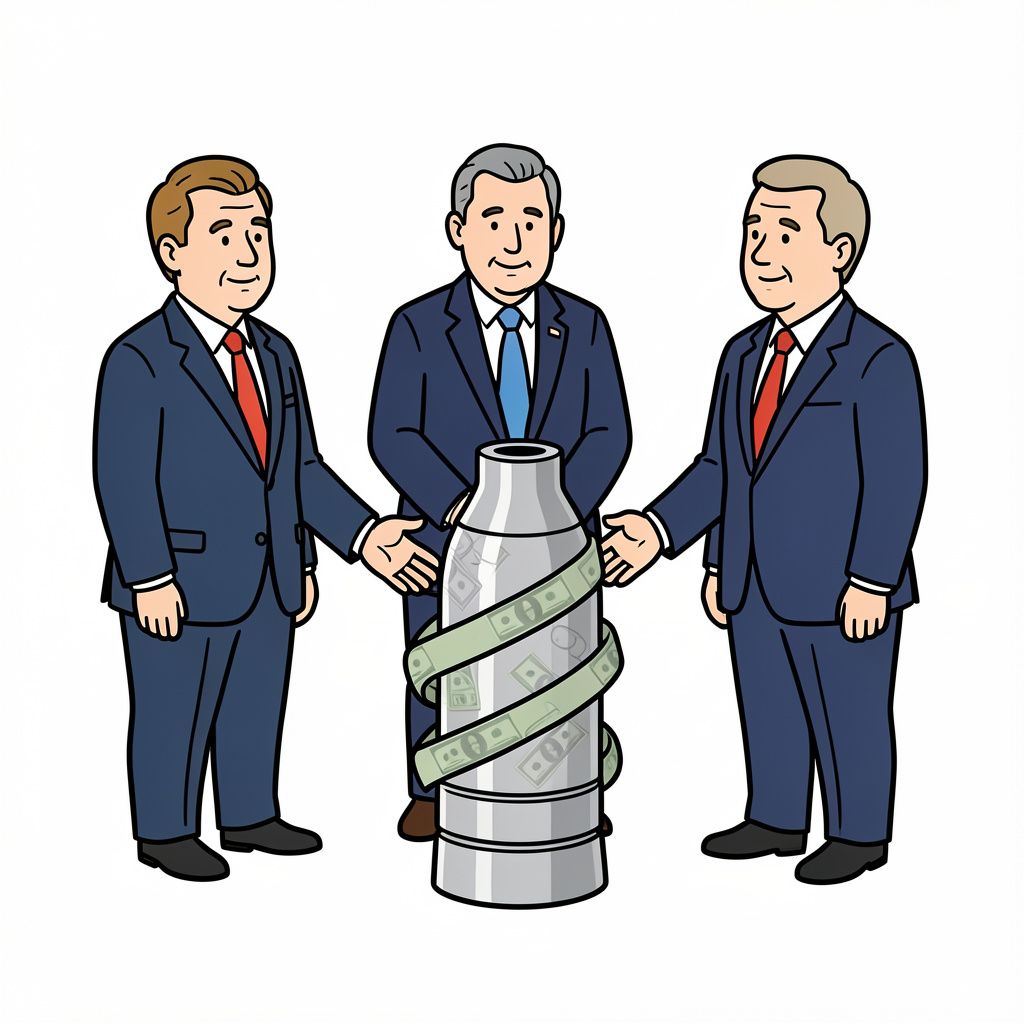
Washington, Saturday, 14 November 2026.
Facing an unconstrained atomic landscape since the New START treaty expired, leaders of the three largest nuclear powers will convene next week to address dangerous proliferation risks.
A Historic Summit Amid Unprecedented Nuclear Uncertainty
In a diplomatic first, U.S. President Donald Trump, Chinese President Xi Jinping, and Russian President Vladimir Putin are scheduled to convene a trilateral summit on Thursday, November 19, 2026, in Shenzhen, China, on the sidelines of the Asia-Pacific Economic Cooperation (APEC) summit [1][2][3][4][5][6]. The meeting marks the first-ever joint gathering of the leaders of the world’s three largest nuclear powers, convening against the backdrop of a global nuclear landscape that has been unconstrained by treaty limits since the expiration of the New Strategic Arms Reduction Treaty (New START) in February 2026 [1][2][3][4][5][6]. Since its lapse, the U.S. and Russia have operated without caps on their deployed strategic warheads and launchers for the first time in over five decades, while China has accelerated the expansion of its nuclear arsenal [1][2][3][4][5][6].
Nuclear Non-Proliferation at the Forefront
The agenda for the summit is expected to prioritize nuclear non-proliferation, a topic President Trump has repeatedly emphasized as a critical global security concern [1][2][3][4][5][6]. A senior U.S. official confirmed that the meeting will serve as an initial dialogue rather than a forum for immediate agreements, stating, “We do not expect to get to any kind of agreement. I would characterize this as the entry point, the first conversation, certainly at the leader level, between these countries” [1][2][3][4][5][6]. The White House has framed the discussions as an opportunity to address what it perceives as the dangerous proliferation of nuclear weapons worldwide [1][2][3][4][5][6].
Geopolitical Symbolism and Strategic Implications
Analysts and officials alike have downplayed expectations for concrete outcomes, emphasizing instead the symbolic significance of the meeting. Dmitry Peskov, Kremlin spokesman, described the summit as “extremely significant,” while cautioning against comparisons to historical conferences such as Yalta, stating that agreements cannot be imposed on others [1][2][3][5]. Hoo Tiang Boon, professor of Chinese foreign policy at Nanyang Technological University, noted that the trilateral format may run counter to China’s traditional support for multilateralism, suggesting the meeting is as much about signaling as it is about substance [2][4]. Edgard Kagan, former U.S. ambassador to Malaysia at the Center for Strategic and International Studies, framed the summit as a signal from Putin to discuss decisions on Ukraine, a move likely to provoke concern among Ukrainians and Europeans [2][4].
Broader Agenda and Exclusions
Beyond nuclear arms control, the summit is expected to touch on Iran, a topic of growing concern due to the ongoing conflict in the region [1][2][3][4][5][6]. Notably absent from the agenda is Ukraine, despite Russia’s ongoing war in the country and international calls for its inclusion in any discussions about its future [4][5][6]. Ukrainian President Volodymyr Zelenskyy has already voiced concerns that the summit could lead to negotiations about Ukraine’s sovereignty without Kyiv’s participation [6]. The meeting will also exclude technology mogul Elon Musk, who is accompanying Trump to China but will not attend the trilateral discussions [1][6].
The State of Global Nuclear Arsenals
The urgency of the summit is underscored by the current distribution of global nuclear capabilities. The U.S. and Russia each possess more than 5,000 nuclear warheads, while China’s arsenal, though significantly smaller, is rapidly expanding [1][2][3][4][5][6]. Pentagon estimates suggest China could surpass 1,000 operational warheads by 2030, a figure that reflects its growing assertiveness in regional and global security matters [4][5]. The expiration of New START has left both the U.S. and Russia with approximately 1,800 operational warheads each and no strategic caps or regular inspections, a situation described by analysts as unprecedented in modern history [1][2][3][4][5][6].
Market and Geopolitical Reactions
Global markets and corporate executives are closely monitoring the summit, as any shifts in geopolitical risk premiums, trade policies, or defense spending could have cascading effects on economic stability [GPT]. The potential for even symbolic agreements on nuclear risk reduction or crisis management protocols could ease some of the uncertainty that has gripped financial markets since the expiration of New START [GPT]. Conversely, a failure to establish meaningful dialogue or a perceived alignment between the U.S., China, and Russia could exacerbate existing tensions, particularly in regions like the Indo-Pacific and Eastern Europe [GPT]. The absence of Ukraine from the agenda and the inclusion of Iran among the topics of discussion further complicate the geopolitical calculus, leaving analysts to parse every statement and gesture for clues about the future of global security architecture [4][5][6].
Sources
- www.cnn.com
- www.nbcnews.com
- www.bbc.com
- apnews.com
- thehill.com
- www.aljazeera.com
- www.foreignaffairs.com
- www.brookings.edu