Major Pacific Storm Threatens Hawaii as Explosive Intensification Triggers Emergency Precautions
Honolulu, Thursday, 3 September 2026.
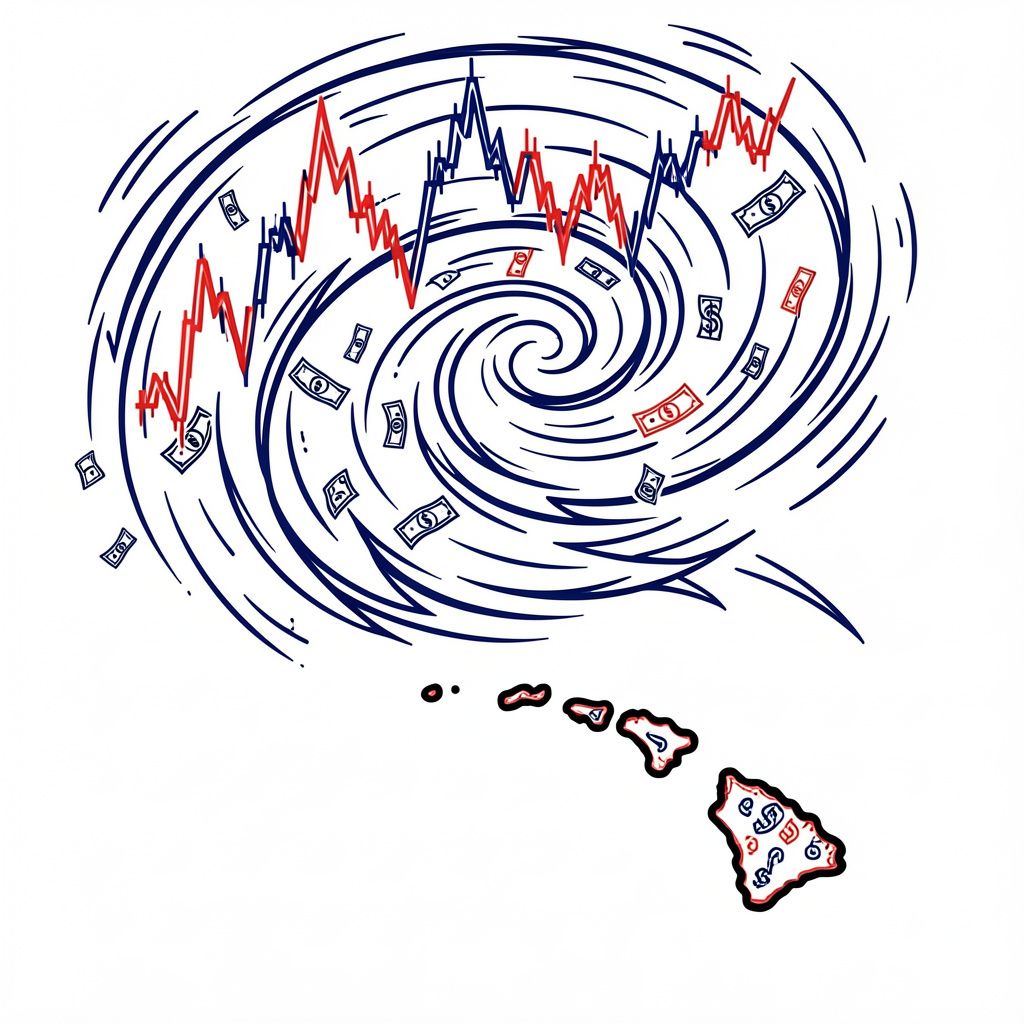
Hurricane Lowell surged from a tropical storm into a Category 5 monster in just 30 hours, sending maximum sustained winds up to 257 km/h toward Hawaii. Hawaii officials are urging immediate preparations for potential island impacts.
Rapid Intensification and Status Downgrade
Hurricane Lowell underwent explosive intensification, surging from a 113 km/h tropical storm to a 257 km/h Category 5 system in just over 30 hours, representing a 128.571 percent increase in wind speed [5]. However, as of 5 p.m. HST on Wednesday, 2 September 2026, the National Weather Service reported that Lowell weakened from a Category 5 to a Category 4 hurricane [1]. The Central Pacific Hurricane Center noted that while maximum sustained winds reached near 257 km/h earlier in the day, intensity reduced to 250 km/h due to satellite signature decay and easterly shear [6]. This volatility underscores the dynamic nature of the storm system currently situated approximately 716 km south of Hilo [7].
Economic Disruption and Supply Chain Risks
Supply chain managers and enterprise leaders are assessing potential delays across Pacific shipping lanes as maritime authorities issue advisories [1]. Businesses across the islands are initiating emergency continuity protocols, while insurance analysts evaluate potential property and agricultural losses if the storm maintains its major hurricane status near the archipelago [1]. The economic stakes are heightened by recent history; Hurricane Lala, which struck weeks prior to 1 September 2026, caused significant infrastructure damage including the loss of 500 trees and roof damage to 50–60 houses [4]. Over 100,000 homes experienced power outages during Lala, setting a precarious baseline for infrastructure resilience ahead of Lowell’s approach [4].
Tourism and Consumer Preparedness
The tourism sector, a cornerstone of Hawaii’s economy, faces immediate risks from dangerous surf and storm surge, even if the storm’s projected path remains south of the islands [4]. Residents and visitors alike are initiating emergency preparations; Waikiki resident David Gerson noted, I’m totally not prepared. Because I didn’t think it would be much [4]. Officials recommend residents maintain a 14-day supply of non-perishable food and 3.79 liters of water per person per day [1]. Emergency preparation tasks include verifying functionality of flashlights, batteries, portable chargers, radios, vehicle fuel levels, and backup generators [1].
Forecast Uncertainty and Future Outlook
Meteorological data suggests a complex interaction between Lowell and upper-level features. A mid-to upper-level trough/low is identified near 32N 164W, which is forecast to influence Lowell’s track by breaking down the northern ridge [6]. Model consensus shows significant spread regarding the timing and location of a northward turn, with an overall trend showing an eastward shift in the long-range track envelope [2]. The storm is projected to move northwest, reaching 18.6N 162.7W with sustained winds of 203 km/h by 8 September 2026, at which point more pronounced weakening is expected due to upper-level trough shear [6]. Interests in Hawaii should continue to closely monitor the progress of Lowell through this upcoming weekend [6].
Sources
- www.khon2.com
- mauinow.com
- www.facebook.com
- www.hawaiinewsnow.com
- www.sfchronicle.com
- www.nhc.noaa.gov
- www.khon2.com