Why Claiming Social Security Early Could Cost You Over $200,000
Washington, Monday, 7 September 2026.
As Social Security’s full retirement age officially reaches 67, claiming benefits at age 62 permanently reduces payouts, costing the average retiree more than $204,000 over 20 years.
The Final Phase of Retirement Age Adjustments
The landscape of American retirement planning underwent a significant structural shift in 2026, marking the culmination of a 42-year transition initiated by the Social Security Amendments of 1983 [1][3]. For individuals born in 1960 or later, the Full Retirement Age (FRA) has officially capped at 67 years, a milestone that impacts workforce demographics as this cohort begins reaching eligibility thresholds in 2027 [3]. This adjustment represents the final stage of a gradual increase that began in 2021, where the FRA grew by two months annually for those born between 1943 and 1959 [1]. Enterprise leaders are now recalibrating long-term labor strategies, acknowledging that older workers may remain in the workforce longer to maximize benefit eligibility [3]. The certainty of this cap provides a stable framework for financial planning, as current law dictates no further increases beyond 67 [3].
Financial Implications of Claim Timing
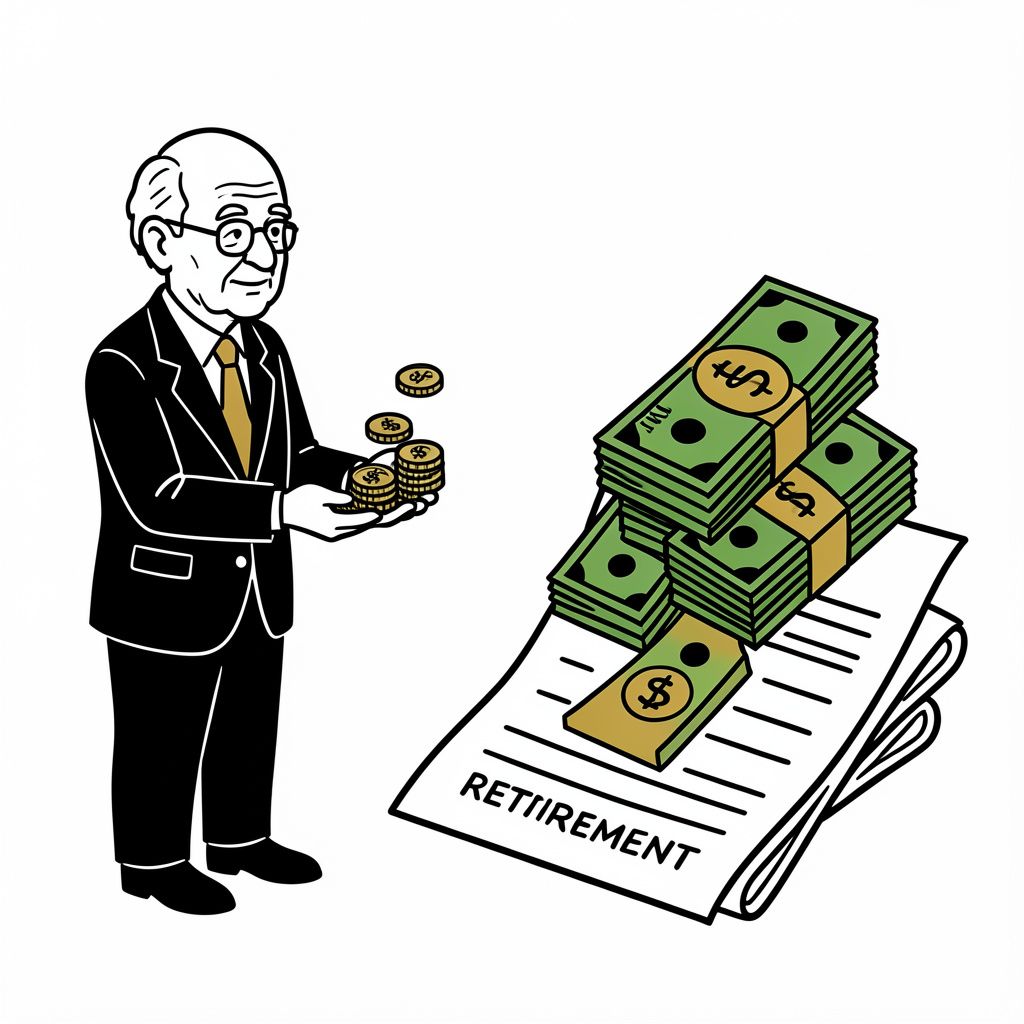
The decision to claim Social Security benefits prior to reaching the Full Retirement Age carries substantial long-term financial consequences. Data indicates that claiming at age 62 results in a permanent reduction of benefits by approximately 30% compared to waiting for the FRA [1][4]. According to Social Security Administration data analyzed in 2025, the average monthly benefit for a retired worker at age 62 is $1,424, whereas waiting until age 70 increases the average payout to $2,275 [2]. This discrepancy translates to a monthly difference of 851 dollars, or $851, which compounds significantly over a retiree’s lifetime [2]. Over a 20-year period, claiming early instead of delaying until age 70 could cost the average retiree 204240 dollars, totaling $204,240 in foregone income [2]. Furthermore, benefits increase by approximately 8% annually for each year a recipient delays claiming past their FRA, up to age 70 [2].
Corporate Labor and Benefit Strategy
Corporate human resources departments are integrating these regulatory timelines into workforce retention models and pension dynamics. With the FRA stabilizing at 67 for the 1960 birth cohort, organizations are observing higher retention rates among senior personnel who opt to work longer to secure full benefit payouts [1]. This trend alters cost-structure projections for enterprise benefit programs across the United States economy. Additionally, gender-based earnings disparities persist within the benefit structure, with men averaging $1,573 monthly at age 62 compared to $1,286 for women, a gap that widens by age 70 [2]. Such disparities necessitate tailored financial counseling within corporate wellness programs to ensure equitable retirement outcomes. The stabilization of the retirement age allows companies to model labor availability with greater precision over the next decade.
2026 Payment Schedules and 2027 COLA Projections
In the immediate term, beneficiaries are navigating specific payment schedules for September 2026, with payments issued on Wednesdays depending on birth dates [4]. The Social Security Administration is scheduled to issue payments on September 9, 16, and 23, 2026, for retirees, spousal, and survivor beneficiaries [4]. Looking ahead, attention turns to the 2027 Cost-of-Living Adjustment (COLA), which will be determined by Consumer Price Index data released by the Bureau of Labor Statistics in September and October 2026 [4]. Current projections suggest a 3.6% increase for 2027, exceeding the 2.8% COLA applied in 2026 [4]. The maximum monthly benefit for those retiring at age 70 in 2026 stands at $5,181, while the average across all beneficiaries was $1,940.08 as of July 2026 [4]. These figures underscore the importance of timing and inflation adjustments in overall retirement income security.