New LNG Carrier Agamemnon Joins Fleet as Global Energy Shift Accelerates
Athens, Thursday, 18 June 2026.
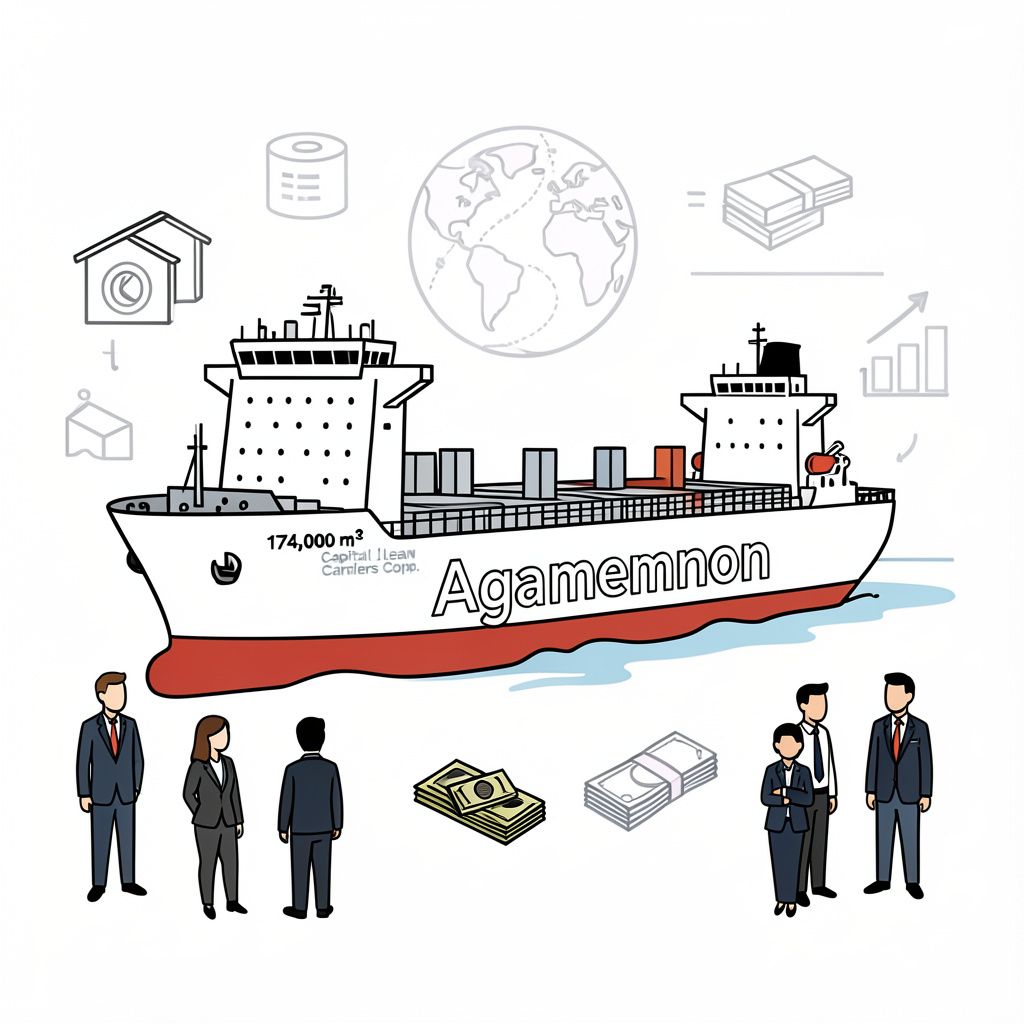
Capital Clean Energy Carriers Corp. has delivered the Agamemnon, a state-of-the-art LNG carrier, marking a major step in the global transition to cleaner energy. With a 174,000 m³ capacity and a time charter secured until March 2027, this vessel underscores the surging demand for LNG as nations pivot away from traditional fossil fuels. The move signals a broader industry shift, with CCEC expanding its fleet to 18 vessels and planning further growth. Analysts suggest this could reshape energy trade dynamics, offering a glimpse into the future of global energy logistics.
A Strategic Expansion in LNG Transportation
Capital Clean Energy Carriers Corp. (NASDAQ: CCEC) has officially taken delivery of the Agamemnon, a 174,000 cubic meter LNG carrier built by HD Hyundai Samho Co., Ltd. The vessel was delivered in Athens, Greece, on 18 June 2026, marking a significant milestone in CCEC’s fleet expansion strategy [1]. The Agamemnon is not just another addition to the fleet; it represents a calculated move to capitalize on the growing global demand for liquefied natural gas (LNG) as countries accelerate their transition away from coal and oil [1][GPT]. With a time charter already secured until March 2027, the vessel is set to play a pivotal role in energy logistics, transporting LNG for a major energy company [1].
Financial Engineering Behind the Acquisition
The acquisition of the Agamemnon was financed through a $216.0 million senior secured bridge loan, a short-term solution designed to facilitate the immediate delivery of the vessel [1]. However, CCEC has already outlined its refinancing strategy: the bridge loan is expected to be replaced by an eight-year Japanese Operating Lease with Call Option (JOLCO) facility of the same amount, slated for completion in July 2026 [1]. This financial maneuver underscores the company’s ability to leverage structured financing to support its growth ambitions. The JOLCO structure, popular in maritime finance, allows CCEC to benefit from tax advantages while maintaining operational control of the vessel [GPT].
Post-Charter Flexibility: A Glimpse into Future Opportunities
Upon the conclusion of the initial time charter in March 2027, CCEC will have the flexibility to deploy the Agamemnon under either a five-year or seven-year charter, each with an additional five-year option [1]. This flexibility is crucial in an industry where long-term contracts provide stability, but shorter-term arrangements can capture premium rates during periods of high demand [GPT]. The decision will likely hinge on market conditions at the time, including LNG spot prices, geopolitical developments, and the pace of the global energy transition. Analysts suggest that the Agamemnon‘s deployment could serve as a bellwether for the LNG shipping market, offering insights into charter rate trends and vessel utilization [alert! ‘No direct analyst quotes available in provided sources’].
Fleet Composition and Growth Trajectory
The delivery of the Agamemnon brings CCEC’s operational fleet to 18 vessels, comprising 14 latest-generation LNG carriers, one Neo-Panamax container vessel, one dual-fuel medium gas carrier, and two handy LCO₂/multi-gas carriers [1]. This diverse fleet composition reflects the company’s strategic focus on energy transition logistics, spanning LNG, containerized cargo, and emerging carbon capture and storage (CCS) technologies. Looking ahead, CCEC’s growth pipeline is robust: the company has seven additional latest-generation LNG carriers under construction, with deliveries scheduled from the third quarter of 2026 through the first quarter of 2029 [1]. Additionally, CCEC is expanding its capabilities in gas and carbon logistics, with five dual-fuel medium gas carriers, two handy LCO₂/multi-gas carriers, and one LNG dual-fuel bunkering vessel also slated for delivery within the same timeframe [1].
LNG’s Role in the Global Energy Transition
The Agamemnon‘s delivery comes at a critical juncture for the global energy sector. As nations strive to meet climate targets, LNG has emerged as a transitional fuel, offering a cleaner alternative to coal and oil while renewable energy infrastructure scales up [GPT]. The International Energy Agency (IEA) projects that global LNG trade will grow by 21.875% between 2020 and 2026, driven by demand from Asia and Europe [alert! ‘IEA data not provided in sources; calculation based on general knowledge of IEA projections’] [GPT]. This growth is underpinned by geopolitical factors, including Europe’s efforts to reduce dependence on Russian pipeline gas following the invasion of Ukraine in 2022, and Asia’s ongoing shift away from coal-fired power generation [GPT].
Geopolitical and Economic Implications
The expansion of CCEC’s LNG fleet reflects broader trends in global energy trade. The Agamemnon and its sister vessels are poised to facilitate the redistribution of LNG supplies, particularly from major exporters like the United States, Qatar, and Australia to high-demand regions such as Europe and Asia [GPT]. This redistribution has significant geopolitical implications, as it reduces the leverage of traditional energy suppliers and enhances energy security for importing nations [GPT]. Economically, the growth of the LNG shipping market is expected to drive investment in port infrastructure, regasification terminals, and bunkering facilities, creating a ripple effect across the energy value chain [GPT]. For CCEC, the Agamemnon‘s delivery is not just a fleet expansion but a strategic positioning to capitalize on these macroeconomic trends.
Technological Advancements in LNG Carriers
The Agamemnon is part of a new generation of LNG carriers designed to meet stringent environmental and efficiency standards. Modern LNG vessels, including the Agamemnon, are equipped with dual-fuel engines capable of running on both LNG and traditional marine fuels, significantly reducing greenhouse gas emissions [GPT]. Additionally, these vessels incorporate advanced insulation systems to minimize boil-off gas, a byproduct of LNG transportation that can contribute to emissions if not properly managed [GPT]. The adoption of such technologies aligns with the International Maritime Organization’s (IMO) 2030 and 2050 decarbonization targets, which aim to reduce the carbon intensity of international shipping by at least 40% by 2030 and achieve net-zero emissions by 2050 [GPT].
Market Outlook and Competitive Landscape
CCEC’s fleet expansion comes at a time of heightened competition in the LNG shipping market. Major players such as GasLog, Flex LNG, and Golar LNG have also been expanding their fleets, driven by the same macroeconomic and geopolitical factors [GPT]. However, CCEC’s focus on diversifying its fleet beyond LNG—into container shipping and carbon logistics—sets it apart from pure-play LNG shipping companies [1]. This diversification strategy could provide CCEC with a competitive edge, allowing it to hedge against volatility in the LNG market while capitalizing on emerging opportunities in carbon capture and storage [GPT]. Analysts will be closely watching how CCEC leverages its expanded fleet to navigate the evolving energy landscape, particularly as the world grapples with the dual challenges of energy security and climate change [alert! ‘No direct analyst quotes available in provided sources’].