Trump Abruptly Ends NBC Interview Following Contentious Foreign Policy Fact-Checks
Washington, Sunday, 7 June 2026.
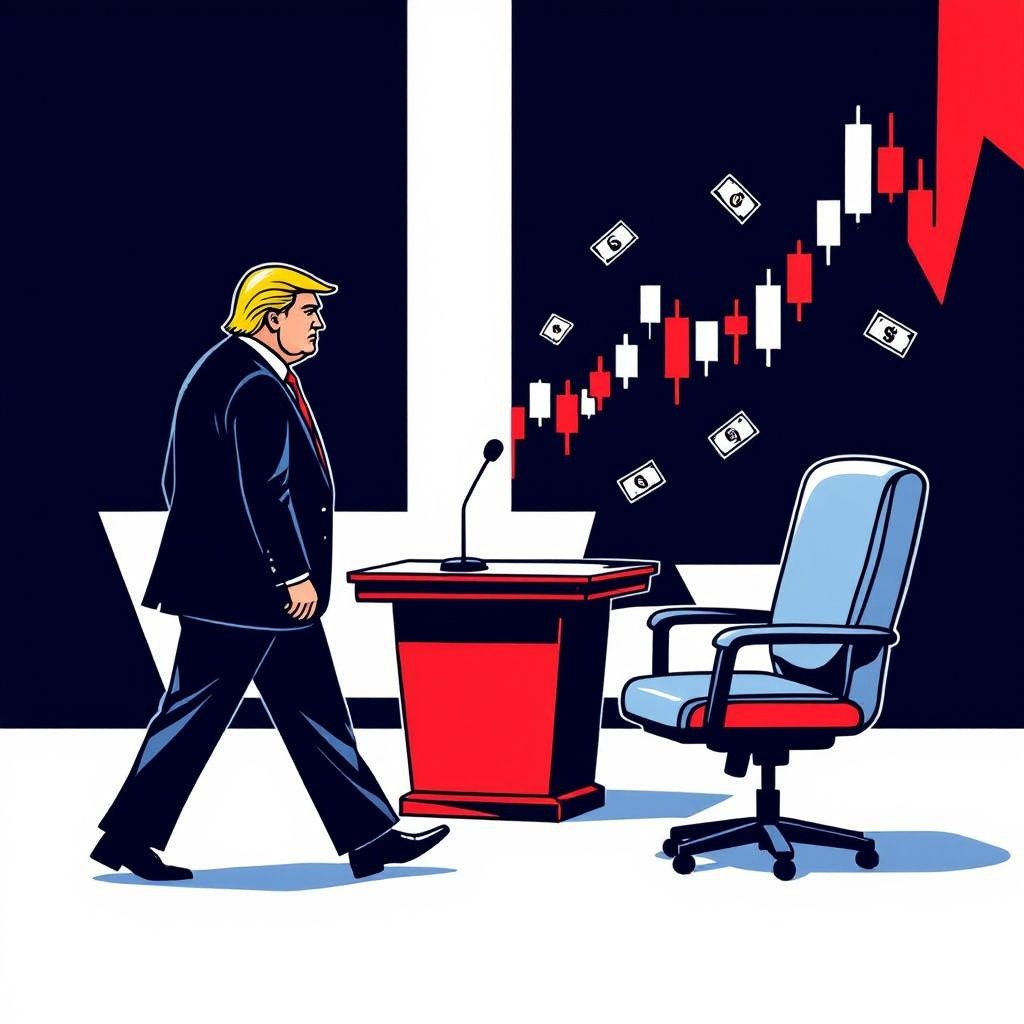
Former President Trump unexpectedly walked out of Sunday’s Meet the Press broadcast after facing rigorous fact-checks regarding his claims about the economy and recent military strikes in Iran.
A Volatile Exit Amidst Fact-Checking
The highly anticipated interview, recorded on Friday, June 5, 2026, and broadcasted on Sunday, June 7, 2026, devolved into a tense standoff between the former president and Kristen Welker, the 13th moderator of the long-running public affairs program [2][3]. Tensions peaked when Trump abruptly terminated the session, reportedly exclaiming that he had “had enough” [1]. Visibly irate, the former U.S. leader stormed out, explicitly labeling the network as “one-sided” and “crooked” following a series of real-time fact-checks [1]. This unprecedented walkout on the top-ranked Sunday public affairs broadcast in the key 25-54 demographic underscores the increasingly fraught relationship between political figures and the press as the 2026 election cycle intensifies [3].
Clashing Over Geopolitics and the Middle East
A central catalyst for the interview’s breakdown was a dispute over the ongoing conflict with Iran. Trump asserted that under his directives in August or September of 2025, U.S. B-2 bombers “totally obliterated” Iranian nuclear facilities, claiming he demolished the nation’s conventional military capabilities within three months [2]. However, intelligence and military reports indicate that American strikes had mostly destroyed only one of three known enrichment sites by July 2025 [2]. Furthermore, while the Pentagon neutralized 90 percent of Iran’s conventional navy—leaving a mere 10 percent operational—and destroyed over 95 percent of its naval mines, roughly half of the unconventional Islamic Revolutionary Guard Corps (IRGC) naval forces remain intact [2].
Economic Ripple Effects and Monetary Policy
Beyond military posturing, the cascading effects of Middle Eastern instability on global energy markets remain a paramount concern for economists and business leaders [GPT]. The disruption in the Strait of Hormuz has severely impacted petroleum supply chains. According to Sultan Al Jaber, chief executive of the United Arab Emirates state oil group ADNOC, even if hostilities ceased immediately, it would take a minimum of four months to restore 80 percent of pre-conflict oil flows, leaving a 20 percent deficit in the interim [2]. Full normalization is not anticipated until the first or second quarter of 2027 [2]. Exxon Senior Vice President Neil Chapman echoed these logistical hurdles, estimating a 4 to 6 week lag just to return to standard supply chain operations once the Strait reopens [2].