President Trump Honors Special Forces at Fort Bragg for Capture of Venezuelan Leader
Fayetteville, Friday, 13 February 2026.
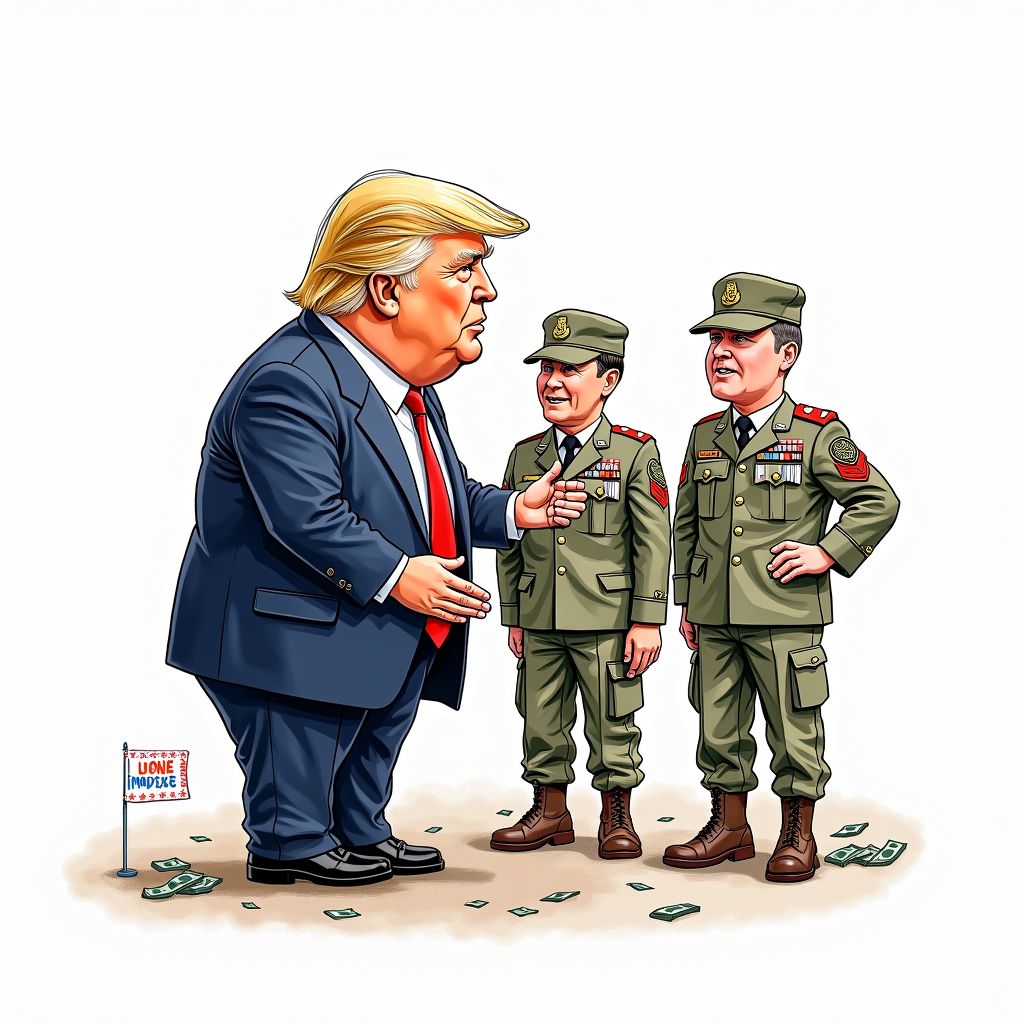
On Friday, February 13, 2026, President Donald Trump and the First Lady are visiting Fort Bragg, North Carolina, to formally recognize the U.S. Special Forces units responsible for the high-profile capture of former Venezuelan leader Nicolás Maduro earlier this year. This visit highlights a significant geopolitical pivot, as the administration leverages this military success to implement the “Donroe Doctrine,” facilitating the entry of U.S. oil companies into Venezuela to rebuild its energy infrastructure. However, this projection of international strength contrasts sharply with domestic fiscal turbulence; the President’s visit occurs just hours before a potential Department of Homeland Security shutdown, triggered by a Senate stalemate over immigration reform funding due at midnight Saturday.
A Toast to Tactical Success
President Trump arrived at Pope Army Airfield at approximately 1:20 p.m. today, accompanied by First Lady Melania Trump, to honor the service members involved in the January 3 operation that resulted in the capture of Nicolás Maduro [1][3]. The mission, executed by Special Forces Delta Force soldiers, successfully detained the Venezuelan leader and his wife, Cilia Flores, who are now facing drug smuggling charges in the United States [3][5]. This event at Fort Bragg serves as a victory lap for the administration, with the President describing the ouster as a feat requiring both bravery and advanced weaponry [4]. The timing of the visit is strategic, occurring just a day after Tom Homan, the administration’s border czar, announced the conclusion of operations in Minnesota [1][4], signaling a pivot from domestic enforcement controversies to international military achievements.
The “Donroe Doctrine” and Energy Realism
Beyond the military accolades, the visit underscores a profound shift in U.S. foreign and economic policy toward Venezuela. The administration is promoting what President Trump has dubbed the “Donroe Doctrine,” a renewed and aggressive stance on hemispheric influence intended to counter Chinese presence in the region [4]. This doctrine manifests practically in the energy sector; rather than prioritizing immediate democratic elections, the White House is inviting major U.S. oil companies to rebuild Venezuela’s energy infrastructure [1]. President Trump emphasized this transactional approach on Friday, stating, “The relationship is strong, the oil is coming out,” and noting that American companies would be “pumping out the oil and selling the oil for a lot of money” [1][5]. This policy aims to stabilize global supply while securing lucrative contracts for American firms, a move the President plans to further discuss with Latin American leaders at a gathering in Florida scheduled for March 7 [4].
Domestic Energy and Fiscal Deadlocks
The focus on energy dominance extends to the domestic front, where the administration is aggressively bolstering traditional fuel sources. Earlier this week, on February 10, the President hosted a “Champion of Coal” event at the White House, signing an Executive Order directing the Department of War to purchase coal power and securing a recommitment to coal from the Tennessee Valley Authority [8]. These moves align with the President’s latest economic messaging, which touts a reduction in inflation to a nearly five-year low as of January 2026 [5]. Trump characterized the current economic climate optimistically, asserting, “We have very modest inflation, which is what you want to have” [1]. However, this economic optimism faces an immediate legislative threat.