SoftBank Takes Heavy Loss After Misjudging Artificial Intelligence Power Needs
Tokyo, Wednesday, 11 November 2026.
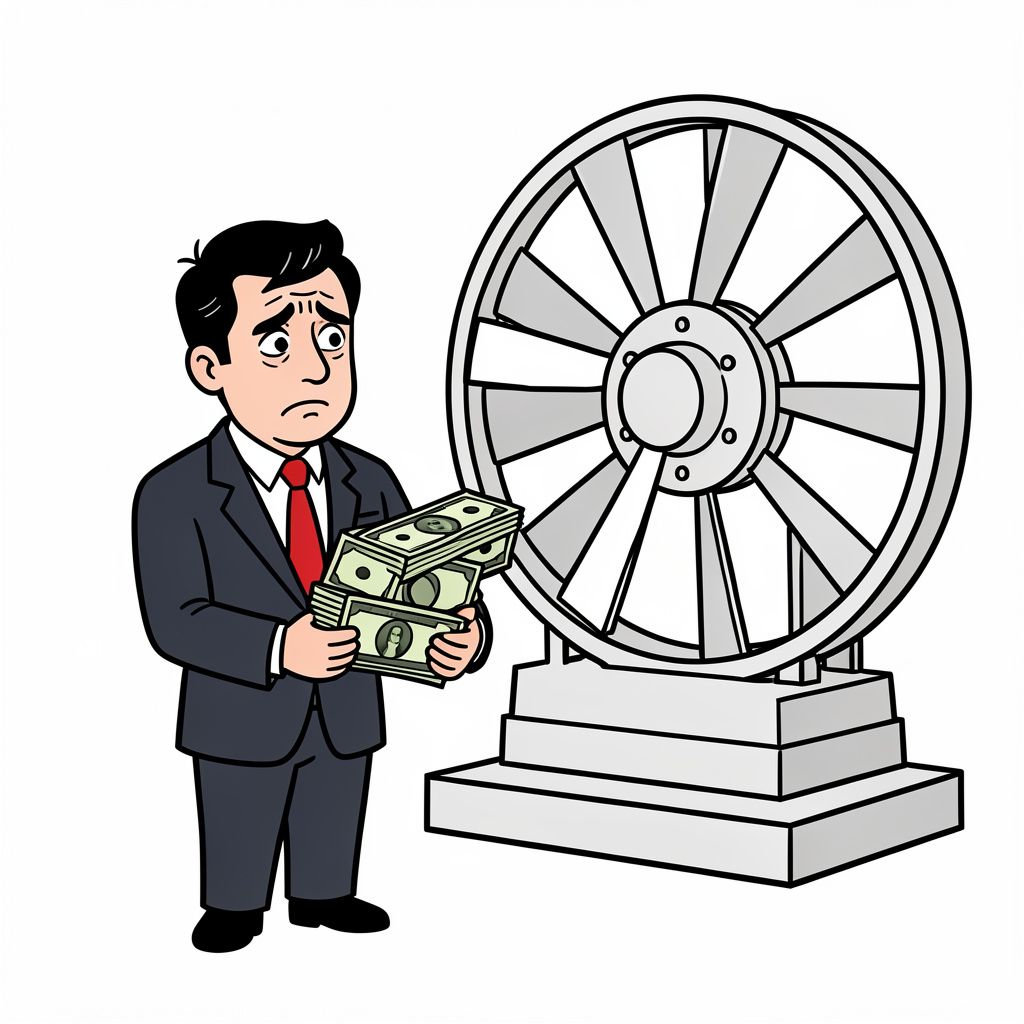
SoftBank absorbed a $3.7 billion hit after forfeiting billions in nonrefundable turbine deposits, revealing miscalculated energy demands equivalent to over six Hoover Dams.
A $3.7 Billion Write-Down: The Scale of SoftBank’s Miscalculation
Japanese technology conglomerate SoftBank Group Corp. (TYO: 9984 / SFTBY) reported a $3.7 billion non-cash charge on Tuesday, 10 November 2026, stemming from the cancellation of gas turbine orders intended to power its artificial intelligence data centers [1][2][3][4][5]. The writedown reflects the forfeiture of non-refundable advance payments made to equipment suppliers, a decision SoftBank described as a strategic reassessment of its procurement strategy amid evolving AI infrastructure demands [2]. Industry analysts estimate the canceled orders totaled approximately 4 gigawatts (GW) of power capacity, a figure corroborated by multiple sources [1][6]. This amount represents a significant reduction from the company’s earlier reservation of more than 13 GW—equivalent to 6.019 times the generating capacity of the Hoover Dam—to meet projected energy needs for its AI data center buildout [1][6][GPT].
From Overestimation to Reassessment: How SoftBank’s Strategy Unraveled
SoftBank’s aggressive reservation of turbine capacity in early 2026 was predicated on an anticipated surge in AI-driven data center construction, a bet that now appears significantly overestimated [1]. By mid-2026, the company had reserved power generation capacity exceeding that of the entire state of Connecticut, cornering a substantial portion of the global gas turbine production pipeline [1][7]. However, internal reassessments in the third quarter of 2026 revealed that the demand for such high-capacity power infrastructure had been overestimated, prompting the company to cancel excess turbine reservations [2][3]. The decision to cancel orders—primarily with GE Vernova—resulted in a $2.85 billion loss from non-refundable advance payments, with an additional $850 million attributed to other project-related costs [2][3]. While SoftBank retained 9.2 GW of capacity for its PORTS-Pike project in Ohio, the cancellation underscores broader challenges in aligning capital expenditure with real-time market dynamics [6].
Market Reactions and Broader Sector Implications
The announcement triggered immediate market reactions, with shares of GE Vernova Inc. (GEV) and Bloom Energy Corp. declining sharply on Tuesday, 10 November 2026 [4][5]. GE Vernova, a key supplier of turbines to SoftBank’s canceled orders, saw its stock fall 6.496% intraday, reversing a 7.1% gain from the previous day [5][GPT]. Bloom Energy also experienced a downturn, reflecting broader investor concerns about the sustainability of AI-driven demand for power infrastructure [4]. Analysts noted that while the canceled capacity could potentially be resold given the global scarcity of turbines, the episode raises questions about pricing and future conversion rates for reserved slots [5]. GE Vernova’s order book, which stood at 122 GW as of September 2026, includes approximately 20% dedicated to data center projects across 100 customers in 26 countries [3]. The company’s management has stated that deposits on orders and slot reservations are non-refundable, a policy that may insulate it from immediate financial losses but could deter future large-scale reservations [3].
Elon Musk’s Claims and SoftBank’s Response: A Clash of Narratives
The controversy surrounding SoftBank’s turbine orders was amplified on 6 November 2026, when Elon Musk posted on X (formerly Twitter) that the company was defaulting on its turbine orders [3]. The claim, which Musk has not substantiated, triggered a sharp decline in SoftBank’s stock and fueled speculation about the company’s financial health [3][8]. In response, SoftBank’s Chief Financial Officer Yoshimitsu Goto categorically denied the allegations during an earnings call on 10 November 2026, stating that the claim was ‘completely false’ and that there had been no default [8][9]. Goto’s rebuttal was echoed by Scott Strazik, CEO of GE Vernova, who confirmed that no cancellations or disruptions in financing had been observed [8]. The exchange highlights the growing tensions between rapid infrastructure buildouts in the AI sector and the financial risks associated with misaligned capital deployment [3][8].
Lessons for the AI Infrastructure Boom
SoftBank’s writedown serves as a cautionary tale for the broader tech sector, where aggressive expansion in AI data centers has outpaced the availability and feasibility of power infrastructure [1][3][4]. The episode underscores the challenges of forecasting demand in a rapidly evolving market, particularly as companies race to secure critical components like gas turbines [1][6]. While SoftBank’s decision to cancel excess reservations may mitigate long-term financial strain, it also signals a potential slowdown in AI-related capital expenditure—a trend that could ripple through the supply chains of equipment manufacturers like GE Vernova [2][5]. For investors, the SoftBank writedown highlights the importance of scrutinizing financial commitments in high-growth sectors, where overestimation of demand can lead to significant write-offs [2][4]. As the AI infrastructure boom continues, companies may need to adopt more conservative forecasting models to avoid similar pitfalls [alert! ‘No publicly available data suggests industry-wide adoption of such models as of November 2026’].
Sources
- www.tomshardware.com
- www.wsj.com
- www.tikr.com
- www.bloomberg.com
- www.streetinsider.com
- x.com
- x.com
- www.kucoin.com