Warren Buffett Steps Down as Berkshire Hathaway Chairman
Omaha, Friday, 18 September 2026.
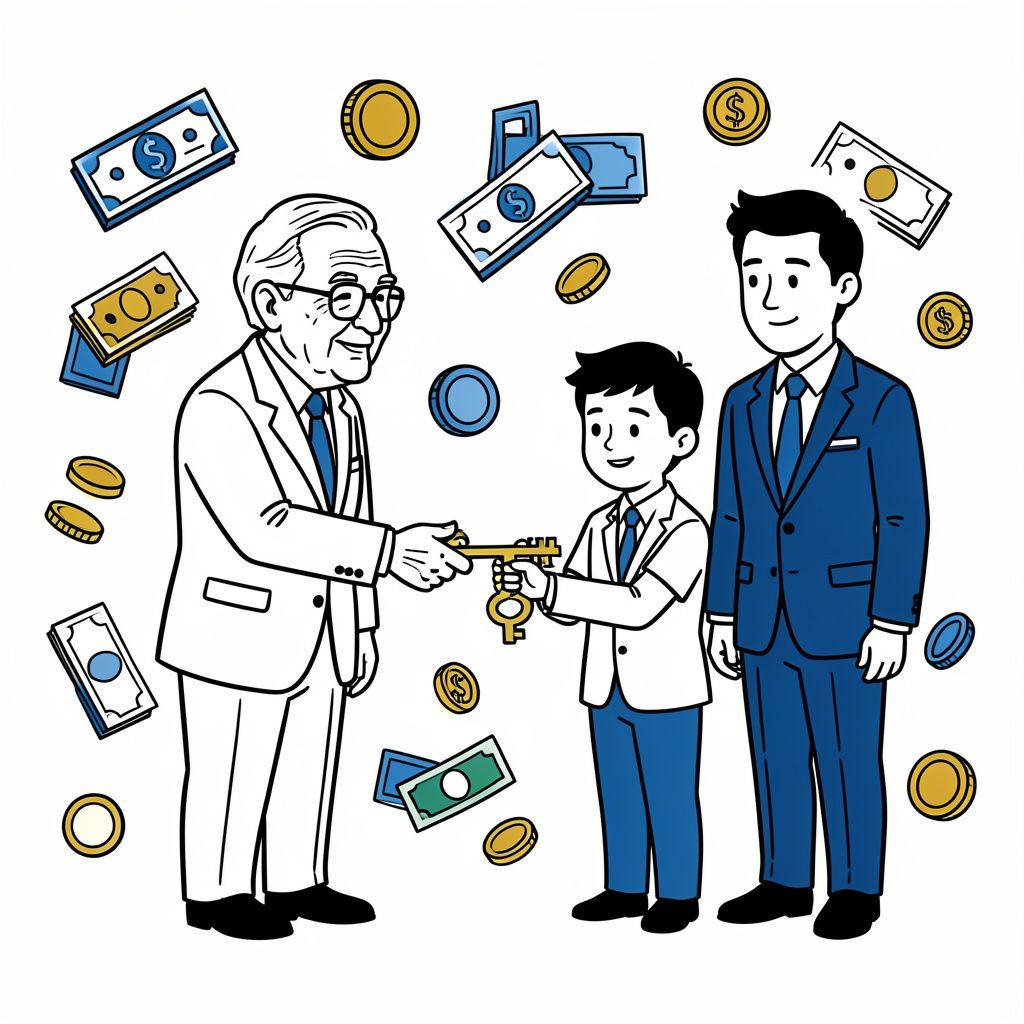
At 96, Warren Buffett has resigned as Berkshire Hathaway chairman, transitioning to chairman emeritus while his son Howard takes over to preserve the firm’s culture alongside CEO Greg Abel.
A Historic Leadership Transition at Berkshire Hathaway
Warren Buffett has officially stepped down as Chairman of Berkshire Hathaway (NYSE: BRK.A / BRK.B), marking the end of a historic era for the conglomerate [1][5]. Effective September 17, 2026, the 96-year-old investor transitioned to the role of Chairman Emeritus while remaining on the Board of Directors [1][5]. In accordance with the company’s long-established succession plan, his son, Howard Buffett, has been elected Chairman of the Board [1][5]. Howard Buffett, who has served as a director since 1993, will now guard the company’s culture and values [1][5]. Meanwhile, Greg Abel continues as CEO, a role he assumed in January 2026, ensuring operational continuity [4][5]. Warren Buffett led Berkshire Hathaway since 1965, transforming it over 61 years into a company with significant global influence [1][5].
Operational Continuity and Capital Allocation
Under CEO Greg Abel, Berkshire Hathaway has maintained a disciplined approach to capital allocation [4]. In the second quarter of 2026, the company spent $4.5 billion repurchasing its own shares, a move that required consultation with the Chairman under company rules [4]. This buyback activity signals confidence in the firm’s intrinsic value while preserving liquidity [4]. Berkshire Hathaway’s cash reserves currently total approximately $365.5 billion, providing substantial flexibility for future investments [1]. Abel’s leadership style emphasizes letting quarterly filings demonstrate strategy, aligning with the conservative financial principles established by Buffett [4]. Susan Decker continues in her role as Lead Independent Director, supporting the board’s oversight functions [1][5].
Portfolio Shifts and Market Performance
Significant changes have occurred within Berkshire’s equity portfolio under the current leadership [3]. In June 2026, Berkshire executed a $10 billion private stock purchase of Alphabet (GOOGL), making it the company’s third-largest holding behind Apple (AAPL) and American Express (AXP) [1][3]. Greg Abel increased the company’s stake in Alphabet by 83% in the quarter preceding September 17, 2026, marking one of his boldest equity bets as CEO [3]. Conversely, Warren Buffett reduced Berkshire’s Apple stake by more than 75% in recent years due to concentration concerns [3]. Year-to-date 2026, Berkshire Hathaway shares have risen 1%, significantly underperforming the S&P 500, which rallied over 11% during the same period [1].
Preserving Culture and Future Outlook
In a letter to shareholders, Warren Buffett stated, ‘Father Time always wins,’ acknowledging the inevitability of the transition [2]. He expressed confidence in the future, noting, ‘Greg runs the company; Howard will guard its culture and values – both worth more than anything on our balance sheet’ [1][5]. Greg Abel affirmed this commitment, stating, ‘The culture Warren built and the values he championed will remain at the heart of Berkshire’ [1][5]. The transition signifies a major shift in corporate leadership for one of Wall Street’s most influential holding companies, though operating succession plans remain firmly structured to ensure continuity [1]. Investors and analysts will watch closely to see how the new leadership structure navigates complex economic landscapes in the coming quarters [1][3].