Russian Warship Conducts Live-Fire Drill Near United Kingdom Coast
London, Tuesday, 21 July 2026.
A Russian warship escorting shadow fleet oil tankers conducted an unprecedented live-fire drill just 74 kilometers off the United Kingdom coast, forcing a shadowing British vessel to reposition.
A High-Stakes Maritime Encounter
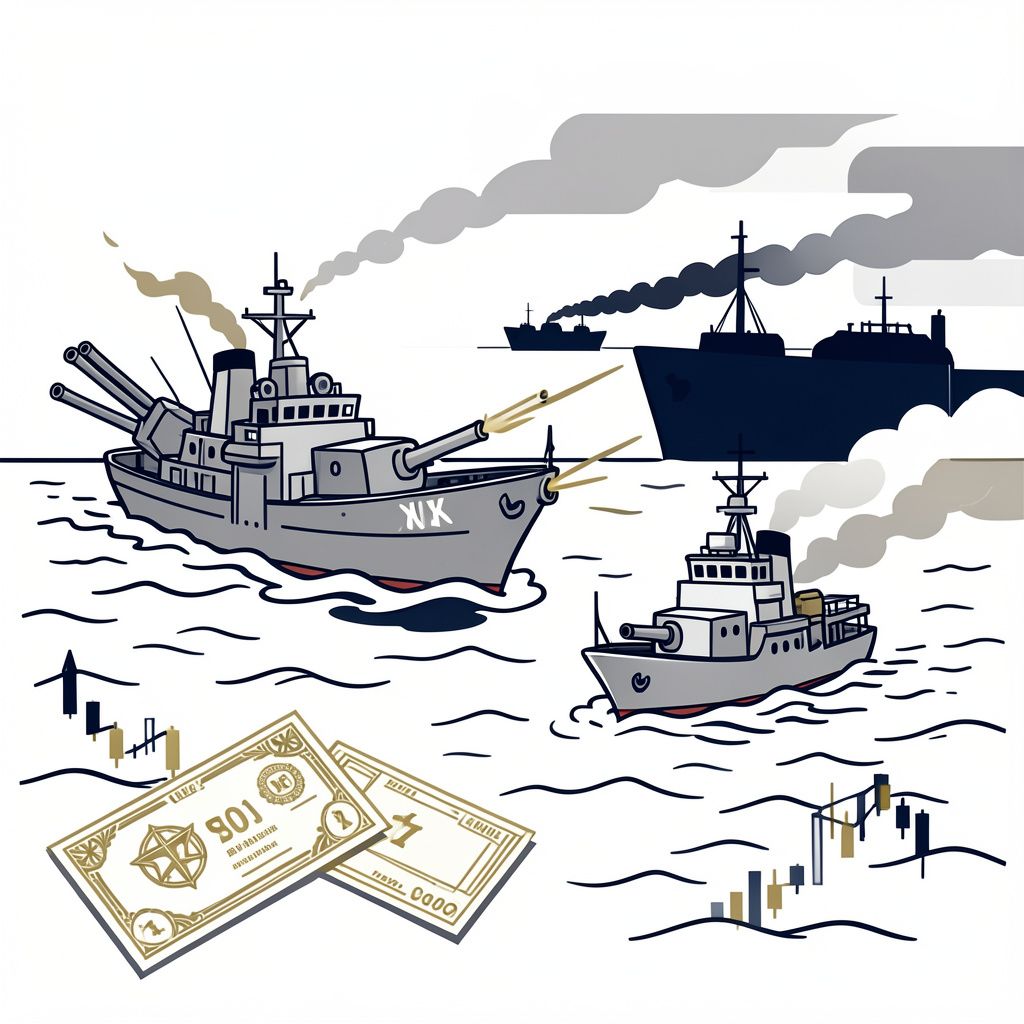
On July 20, 2026, the Russian frigate Neustrashimy (Project 11540) conducted a brief, 30-minute live-fire artillery exercise in international waters approximately 40 nautical miles (46 miles or 74 kilometers) south of Plymouth, United Kingdom [1][3]. The 4,400-tonne, 129-meter warship, which was originally commissioned into the Baltic Fleet in 1993 and returned to active service in 2023, was being shadowed by the Royal Navy’s 1,700-tonne offshore patrol vessel HMS Tyne [1][3]. Prior to commencing the gunnery drill, the Russian vessel followed standard maritime safety protocols by notifying HMS Tyne of its intentions and requesting that the British ship reposition to a safe distance, which it subsequently did [2][3]. The exercise was also monitored and verified via radio by a French military aircraft [3][5].
Political Transition Amid Naval Tensions
The highly unusual military demonstration occurred on the exact day that Andy Burnham was sworn in as the new Prime Minister of the United Kingdom, marking a transition of power from Sir Keir Starmer [1][3]. Defence Minister Luke Pollard sought to reassure the public, confirming that while such close-proximity naval activity can cause understandable concern, British Armed Forces remain vigilant, professional, and fully prepared to safeguard national security [3]. Despite the de-confliction protocols, defense sources emphasized that a live-fire weapons exercise by a Russian warship this close to the British coastline is an extraordinary event that highlights heightened regional friction [1].
Escorting the Shadow Fleet
The presence of the Neustrashimy in the English Channel and the North Sea is directly tied to Russia’s ongoing efforts to protect its maritime energy exports [1]. The frigate has been actively escorting Russian ‘shadow fleet’ oil tankers, and on July 20, 2026, it was tracked refueling in the North Sea while guiding a shadow tanker through the Channel [1]. The Neustrashimy is the second Russian warship to take on this specific escort role since early July 2026 [1]. It recently took over responsibilities from the frigate Admiral Grigorovich, which spent nearly three months loitering around the English Channel before returning to its base in Baltiysk, Kaliningrad, on July 16, 2026 [3][4].
An Escalating Pattern of Maritime Friction
This transition of naval escorts follows a series of aggressive encounters in the region. In June 2026, the Admiral Grigorovich fired warning shots in international waters approximately 20 nautical miles south of the Isle of Wight near a British couple sailing a 40-foot yacht [1][2]. While the Ministry of Defence later clarified that the shots were not aimed directly at the yacht but were intended to prevent a collision, the incident underscored the volatile nature of the Channel [2]. Tensions escalated further that same month when Royal Marine commandos and National Crime Agency (NCA) officers boarded and seized a stateless shadow fleet tanker carrying Russian oil 25 miles (40.23 kilometers) south of the Isle of Wight, leading to sanctions violation charges against the captain [1].
Economic and Regulatory Battlegrounds
The shadow fleet has become a critical geopolitical battleground as Russia seeks to bypass Western economic restrictions. Regulators have sanctioned more than 1,000 tankers since the end of 2023, with the United Kingdom and the European Union accounting for over 650 of these designations [6]. To mitigate the risk of stateless tankers being interdicted, Moscow has increasingly registered these vessels under its own flag [6]. Windward maritime intelligence analysis reveals that Russia is now the leading flag registry for shadow fleet tankers, having registered 69 sanctioned ships since November 2025 [6]. Out of 98 tankers that reflagged to Russia between January 2025 and July 2026, those registered since November 2025 represent 70.408% of the reflagged cohort [6].
The Tactics of Flag-Hopping
To maintain the flow of sanctioned oil from Russia, Iran, and Venezuela, operators rely heavily on ‘flag-hopping’ and fraudulent registries [6]. Cameroon and Sierra Leone host the second and third largest registries for these vessels, though Cameroon expelled 55 sanctioned tankers between February and May 2026 [6]. Despite this expulsion, 20 of those tankers continue to falsely broadcast Cameroon as their flag, and an additional 38 Cameroon-flagged tankers were expelled on May 26, 2026 [6]. Meanwhile, Equatorial Guinea currently hosts 38 sanctioned tankers, of which 36 joined in 2026 alone, representing 94.737% of its sanctioned fleet [6]. Furthermore, 26 of these 38 Equatorial Guinea-flagged tankers transferred to the Russian Maritime Register of Shipping for classification between February 2025 and June 2026 [6].
Intensified Interdictions and Geopolitical Risks
In response to these evasive maneuvers, Western navies have significantly ramped up physical enforcement [6]. Between January 2026 and July 2026, European and UK naval forces boarded and detained 13 tankers [6]. This wave of enforcement includes the March 2026 seizure of the vessel Mozamb by the French navy with UK assistance, as well as a separate June 2026 interception of a sanctioned Russian oil tanker by joint French and British forces [1]. Legal proceedings are also moving forward, with the captain of the stateless tanker seized south of the Isle of Wight scheduled to stand trial in late 2026 for alleged sanctions violations [3].
Strategic Implications for Global Energy
For global business leaders, policymakers, and energy sector executives, the deployment of heavily armed warships to escort commercial tankers through busy European shipping lanes represents a dangerous fusion of military posturing and sanctions evasion [GPT][6]. The Neustrashimy is equipped with a 100mm gun, Kinzhal surface-to-air missiles, Kortik close-in weapon systems, torpedo tubes, and anti-submarine rockets, making its close-range live-fire drills a potent reminder of the physical security risks surrounding critical maritime energy transit routes [3][GPT]. As Western nations prepare to evaluate further enforcement measures, the militarization of these commercial trade routes is poised to remain a central flashpoint in the ongoing economic conflict [6][GPT].