Agriculture Secretary Brooke Rollins Faces Conflict of Interest Claims Amid Soaring Fuel Costs for Farmers
Washington, Sunday, 6 September 2026.
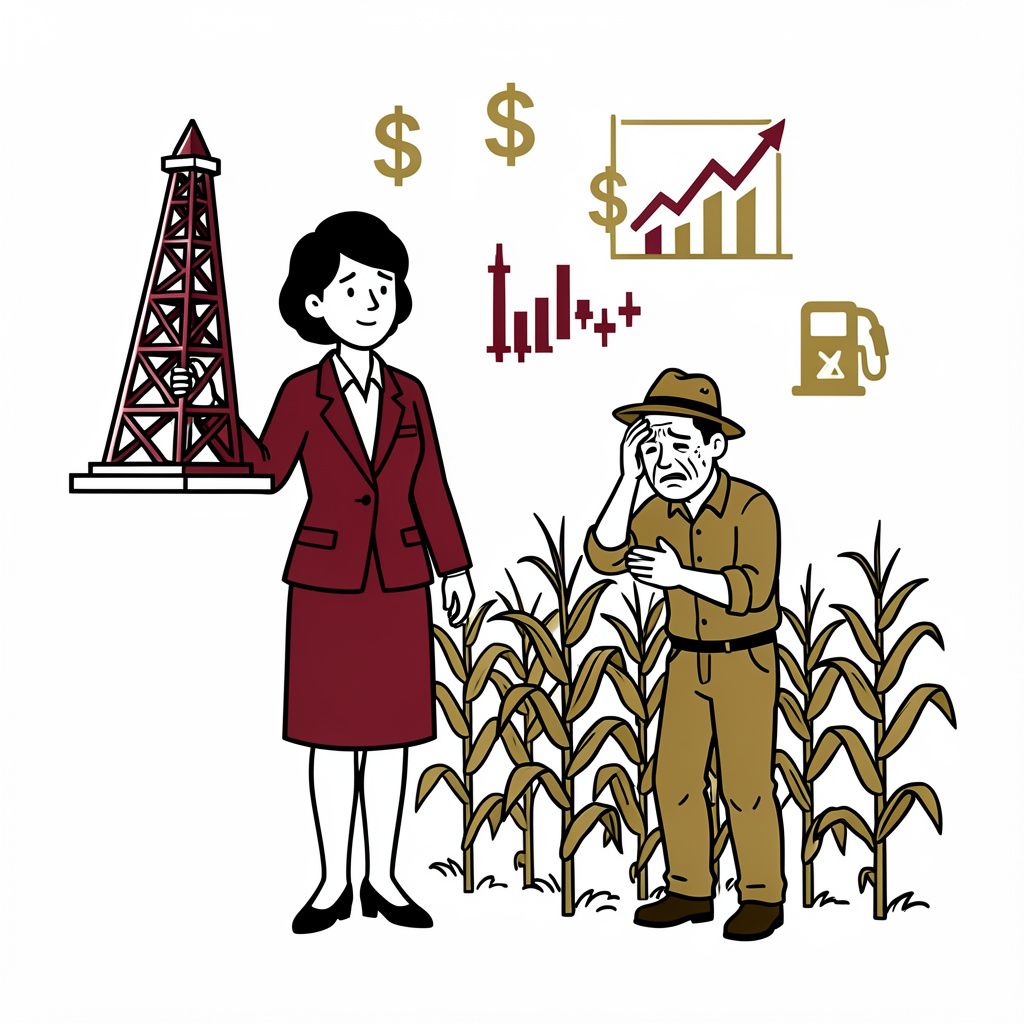
As high diesel prices drive U.S. farm losses toward $31 billion in 2026, Agriculture Secretary Brooke Rollins faces intense scrutiny over holding millions in oil and gas investments.
Confirmation Amidst Rising Costs
On September 5, 2026, the U.S. Senate confirmed Brooke Rollins as the 33rd Secretary of Agriculture via a 72-28 vote, placing her at the helm of the department during a period of acute financial stress for American farmers [2]. This confirmation coincides with record-high diesel prices reached during the week of September 5, 2026, exacerbating operating margins across the agricultural sector [1]. A September 2026 report highlights that inflation, high production costs, and low commodity prices are projected to cost U.S. farmers $31 billion in 2026 and $32 billion in 2027 [1]. The convergence of leadership changes and escalating input costs underscores the volatility facing rural markets at this time [3].
Financial Interests and Conflicts
Scrutiny has intensified regarding Secretary Rollins’ personal financial portfolio, specifically her holdings in the energy sector. In July 2026, Rollins and her husband disclosed holding up to $2.5 million in fossil fuel investments, including at least $1 million in HKN II (Kurdistan, Iraq) and $1 million in Hillwood Energy New Ventures (Texas) [1]. Concurrently, President Donald Trump’s oil and gas stock holdings increased in value from $45.6 million at the end of 2025 to as much as $61.1 million, representing a potential gain of 33.991 percent [1]. Critics argue this creates a conflict of interest as the administration manages policies affecting energy prices that directly impact agricultural profitability [3].
Policy Shifts and Regulatory Changes
Under Secretary Rollins, the USDA has implemented policies restricting renewable energy initiatives, including banning wind and solar project loans under the Rural Energy for America Program (REAP) [1]. Additionally, the Partnerships for Climate-Smart Commodities program was cancelled, signaling a shift away from previous climate-focused agricultural incentives [1]. Broader regulatory actions include a DOJ Antitrust Division investigation into beef prices targeting major retailers announced on September 3, 2026, aiming to address high consumer costs [4]. These 举措 occur alongside a stalled 2026 Farm Bill, which failed to advance out of the Senate Agriculture Committee on August 6, 2026, due to disputes over SNAP benefit cuts [4].
Economic Outlook and Voter Sentiment
The economic strain is influencing political sentiment, with an April 2026 survey finding 94 percent of farmers concerned about rising production costs linked to geopolitical tensions [1]. Former Washington Governor Jay Inslee stated that farmers have spent significantly on additional diesel costs due to the Iran war, noting that American farmers are paying heavily for these conflicts [1]. As the midterm elections approach, 40 percent of farmers identified as 〚alert! ‘source says persuadable voters’〛 voters, indicating potential shifts in political support based on economic relief [1]. The situation emphasizes the complex interplay between federal energy policies, inflation in rural markets, and agribusiness profitability [1].