NATO Chief Rutte: Europe Needs U.S. for Defense
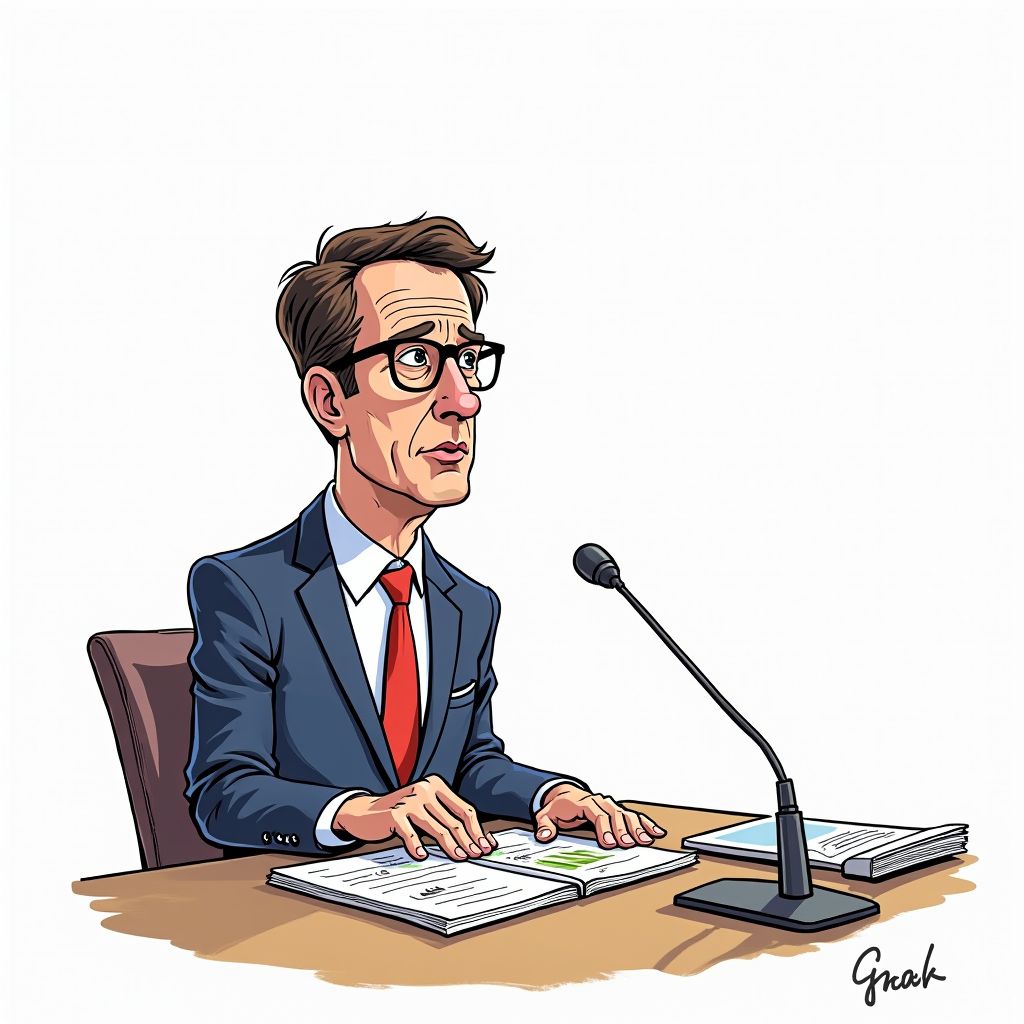
Brussels, Tuesday, 27 January 2026.
On January 26, 2026, Mark Rutte warned the EU Parliament that Europe cannot defend itself without the U.S., saying that those who think otherwise should keep dreaming, and that independent defense would require a 10% GDP spend.
The High Cost of Independence
Speaking to the European Parliament in Brussels on Monday, January 26, Secretary General Rutte dismantled the notion of a standalone European defense strategy with brutal arithmetic [1][5]. While NATO allies pledged at The Hague summit last July to reach a total defense spending target of 5% of GDP by 2035—comprising 3.5% for core defense and 1.5% for security infrastructure—Rutte argued that removing the United States from the equation would necessitate a dramatic surge in expenditure [4]. He estimated that independent defense would require spending levels to reach 10% of GDP, a 100% increase from the ambitious targets currently set for the next decade [2][4]. Rutte further cautioned that replacing the U.S. nuclear umbrella would cost “billions and billions of euros,” warning that Europe would lose its ultimate guarantor of freedom without the American alliance [4].
Diplomatic Volatility and the Trump Factor
The Secretary General’s comments arrive amidst a volatile diplomatic backdrop involving the Trump administration’s recent maneuvers regarding Greenland [1]. Tensions spiked earlier in January when President Trump threatened tariffs on European nations resisting his ambitions for the semi-autonomous territory, only to retract these threats on January 21 following the establishment of a negotiation framework facilitated by Rutte [1][4]. Despite the friction, Rutte credited the U.S. President’s pressure tactics as a catalyst for financial compliance, noting that without Trump’s influence, nations such as Spain, Italy, and Belgium would likely not have raised their defense spending from 1.5% to the 2% threshold expected by the end of 2025 [8].
The Friction Over Strategic Autonomy
Rutte’s dismissal of European self-reliance explicitly targeted the concept of a “European pillar” within NATO, a strategy championed by France [2]. Following Rutte’s remarks, French Foreign Minister Jean-Noël Barrot pushed back on January 26, asserting that Europeans “can and must take charge of their own security,” and claiming that even the U.S. supports this shift [2]. However, Rutte characterized the pursuit of total independence as an “empty word” that risks duplicating efforts and complicating command structures, a situation he suggested would only benefit adversaries like Vladimir Putin [2]. He maintained that the United States and Europe “need each other” to secure the Atlantic and the Arctic [2][5].
Future Fronts: The Arctic and Ukraine
Looking ahead, the alliance is pivoting toward new geopolitical realities. Following the de-escalation of the Greenland dispute, NATO has agreed to assume greater responsibility for Arctic defense to prevent Russian and Chinese encroachment, while the U.S. pursues direct dialogue with Denmark and Greenland [6][8]. Simultaneously, Rutte addressed the immediate financial needs of the war in Ukraine, urging the EU to apply flexibility to a €90 billion loan package rather than restricting funds solely to European-manufactured weapons [8]. He emphasized that while Europe’s defense industry is growing, it currently cannot produce enough hardware to meet Ukraine’s urgent requirements without external support [8].
Sources
- www.nytimes.com
- www.yahoo.com
- www.politico.eu
- www.npr.org
- www.nato.int
- www.lemonde.fr
- www.euronews.com