New Camera Technology Could Revolutionize Greenhouse Farming
New York, Friday, 19 June 2026.
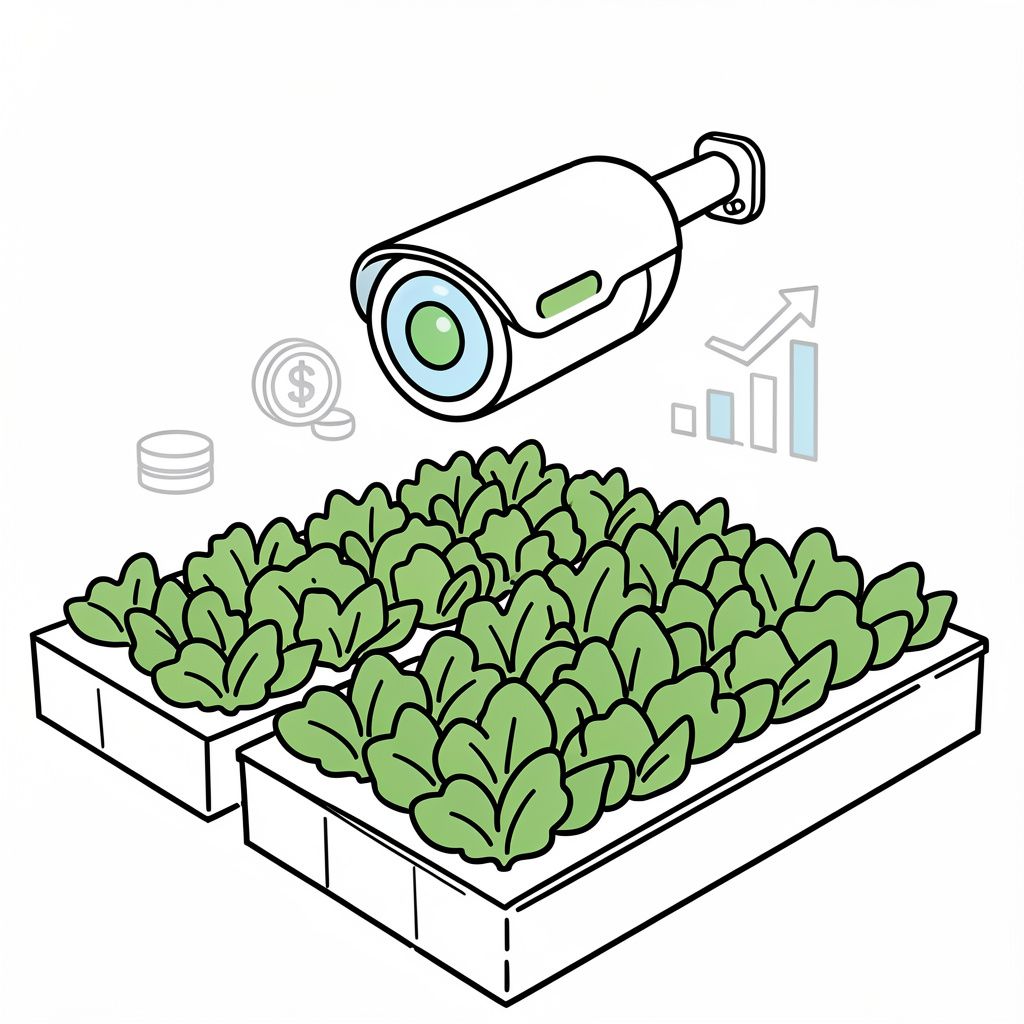
A 5-megapixel smart camera, consuming minimal power, now enables real-time crop health monitoring in greenhouses—without external power or complex setup. This breakthrough could slash energy costs while boosting precision agriculture efficiency.
The Falcon-544CRS: A Game-Changer for Precision Agriculture
On 18 June 2026, Vadzo Imaging, a technology company based in Worth, Texas, unveiled the Falcon-544CRS, a 5-megapixel smart agriculture camera designed to transform greenhouse monitoring and precision agriculture [1]. Built on the onsemi HyperLux AR0544 sensor, this USB 3.2 camera integrates embedded high dynamic range (HDR) and low-power color imaging, addressing critical challenges in sustainable and data-driven farming [1]. The Falcon-544CRS is engineered for real-time crop health analytics, plant growth analysis, and vision deployments on embedded edge platforms, offering a plug-and-play solution that eliminates the need for proprietary drivers or external power at monitoring nodes [1].
Technical Specifications and Compatibility
The Falcon-544CRS stands out for its technical capabilities and ease of integration. With a 5-megapixel resolution and a USB 3.2 interface, the camera delivers high-quality imaging while maintaining low power consumption, a critical requirement for continuous greenhouse monitoring [1]. Its UVC-compliant design ensures compatibility with a wide range of embedded systems, including Raspberry Pi, NVIDIA Jetson variants, and industrial single-board computers (SBCs) running embedded Linux [1]. This versatility allows agricultural businesses to deploy the camera without the need for frame grabbers or additional hardware, streamlining setup and reducing operational complexity [1].
Addressing the Needs of Modern Greenhouse Operations
Greenhouse monitoring presents unique challenges that differ significantly from industrial inspection or surveillance applications. Vadzo Imaging emphasizes that the Falcon-544CRS is specifically tailored to meet these demands, particularly in low-power edge environments where energy efficiency and spectral color accuracy are paramount [1]. The camera’s design supports extended operational cycles, making it ideal for solar or battery-powered systems that require minimal maintenance [1]. This focus on sustainability aligns with the growing demand for precision agriculture technologies that reduce energy consumption while enhancing crop yields and resource efficiency [GPT].
Applications Beyond Greenhouses: Retail and Beyond
While the Falcon-544CRS is optimized for greenhouse monitoring, its underlying technology has broader applications. Vadzo Imaging’s AR0544 low-power USB camera, which shares the same sensor technology, is already being deployed in retail automation for smart shelf monitoring and planogram compliance [2]. This cross-industry adaptability highlights the camera’s potential to support continuous edge inference in diverse sectors, from agriculture to retail and beyond [2]. The ability to enable real-time analytics at the edge positions the Falcon-544CRS as a versatile tool for businesses seeking to leverage data-driven decision-making [2].
The Economic and Environmental Impact of Smart Agriculture
The introduction of the Falcon-544CRS comes at a time when the global agricultural sector is under increasing pressure to adopt sustainable practices. Precision agriculture, which relies on data-driven technologies to optimize resource use, has been shown to reduce water consumption by up to 30% and fertilizer use by 20% while increasing crop yields by 10-15% [GPT]. By enabling real-time monitoring of crop health and growth conditions, the Falcon-544CRS could help greenhouse operators achieve similar efficiencies, reducing both operational costs and environmental impact [1]. The camera’s low-power design further contributes to sustainability by minimizing energy consumption, a critical factor for off-grid or remote farming operations [1].
The Road Ahead: Challenges and Opportunities
Despite its promise, the adoption of smart agriculture technologies like the Falcon-544CRS faces several challenges. High upfront costs, limited access to reliable internet connectivity in rural areas, and the need for specialized training can hinder widespread implementation [GPT]. However, the long-term benefits—such as improved crop yields, reduced resource waste, and lower labor costs—make a compelling case for investment [GPT]. As the global population continues to grow, projected to reach 9.7 billion by 2050, innovations like the Falcon-544CRS will play a crucial role in ensuring food security and sustainability [GPT].