New York Expands Utility Bill Discounts to Middle-Class Households
New York, Tuesday, 15 September 2026.
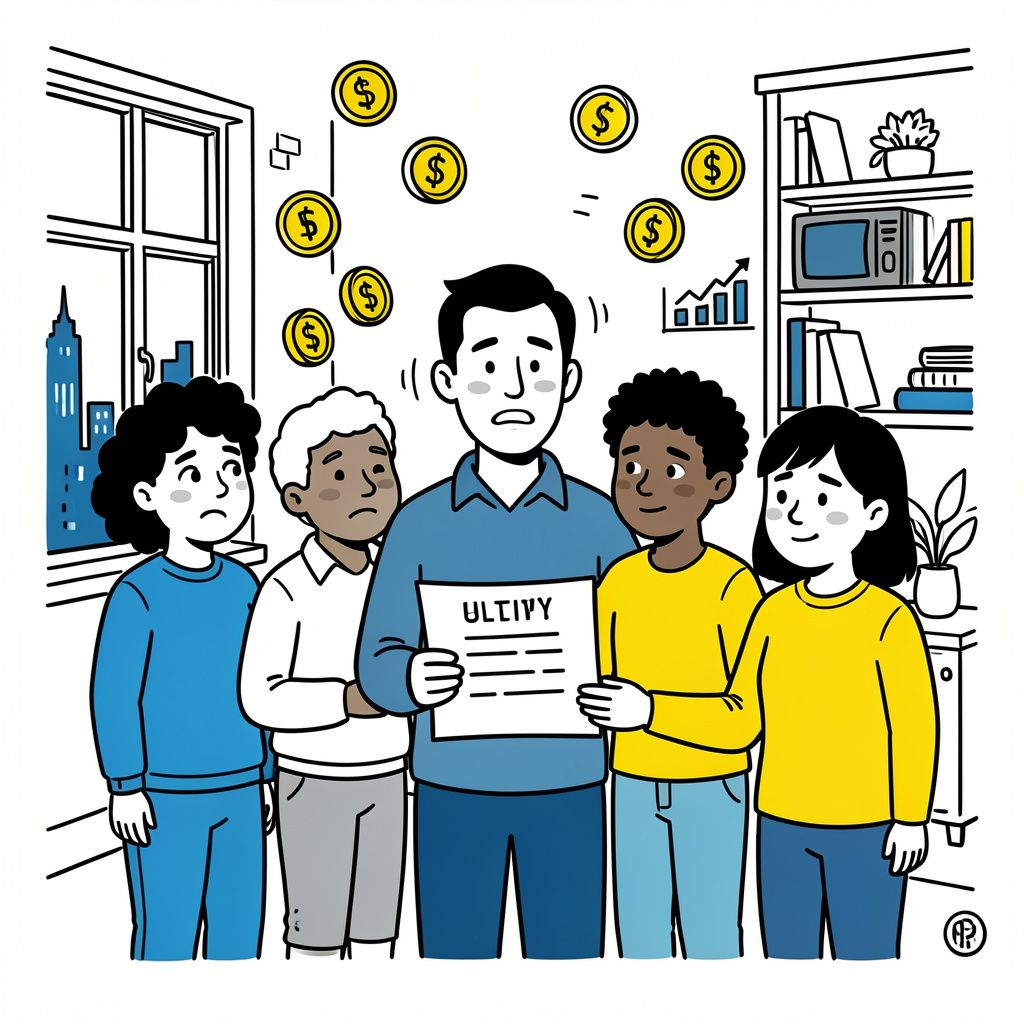
New York is expanding its Energy Affordability Program to 2.5 million middle-class households, capping energy costs at 6% of income and offering discounts up to $500 annually.
Statewide Enrollment Drive Launched
On Tuesday, September 15, 2026, Governor Kathy Hochul announced a significant expansion of New York’s Energy Affordability Program (EAP), aiming to include an additional 2.5 million middle-class households [1][3]. This initiative represents a major shift in state policy, extending utility bill discounts beyond low-income recipients to cover approximately half of all households in New York State [3]. The program caps energy costs at 6% of household income for participants, providing relief against rising consumer cost pressures [1][3]. While approximately 1 million households were already enrolled in the EAP prior to this announcement, the state plans to use cross-referencing of social services rolls and digital promotion to reach the newly eligible population [1][3].
Eligibility Thresholds and Enrollment Process
Income eligibility thresholds for the expanded EAP vary by location and household size, with limits reaching up to $162,000 for a family of four in New York City [1]. For individuals living upstate, the income limit is set at $69,477, ensuring broad coverage across different economic regions [1]. While recipients of Home Energy Assistance Program or Public Assistance benefits are automatically enrolled, privacy laws require recipients of other aid such as Medicaid or SNAP to apply online via ny.gov/eap [1][3]. The state estimates that 2.5 million eligible households are currently leaving money on the table, prompting an all-of-government push to increase participation [3].
Energy Rebates and Economic Pressures
Complementing the EAP expansion, the state will distribute energy rebate checks of up to $200 to 8.2 million New Yorkers starting September 21, 2026 [1][4]. This distribution is part of a $1 billion energy relief effort funded via the enacted state budget, with mailing scheduled to continue through December 2026 [1][4]. The economic context for these measures includes significant fuel price increases, with average gas prices reaching $4.35 per gallon, representing a 45% increase since the conflict in Iran began [4]. Diesel prices have also surged to $5.98 per gallon, a 49% increase since the end of February 2026, contributing to broader inflationary pressures on goods and services [4].
Regulatory Measures and Future Outlook
To address long-term affordability, the state has implemented a Ratepayer Protection Plan which restricts utilities from passing costs related to lobbying or political donations onto consumers [3]. The FY27 enacted budget established a RATES Commission tasked with investigating the causes of rising utility bills and evaluating utility profits [3]. If utility rate cases cause the average household energy burden to exceed 6 percent, the State is authorized to deploy an independent Affordability Monitor directly into the utility’s boardroom [3]. Political debate continues regarding the efficacy of these measures, with opponents arguing that utility rates remain 70% higher than the national average [2].
Sources
- www.news10.com
- abc7ny.com
- www.governor.ny.gov
- www.governor.ny.gov
- www.facebook.com
- www.facebook.com
- www.youtube.com
- www.facebook.com