Europe Faces Imminent Flight Cancellations as Jet Fuel Reserves Fall to Six Weeks
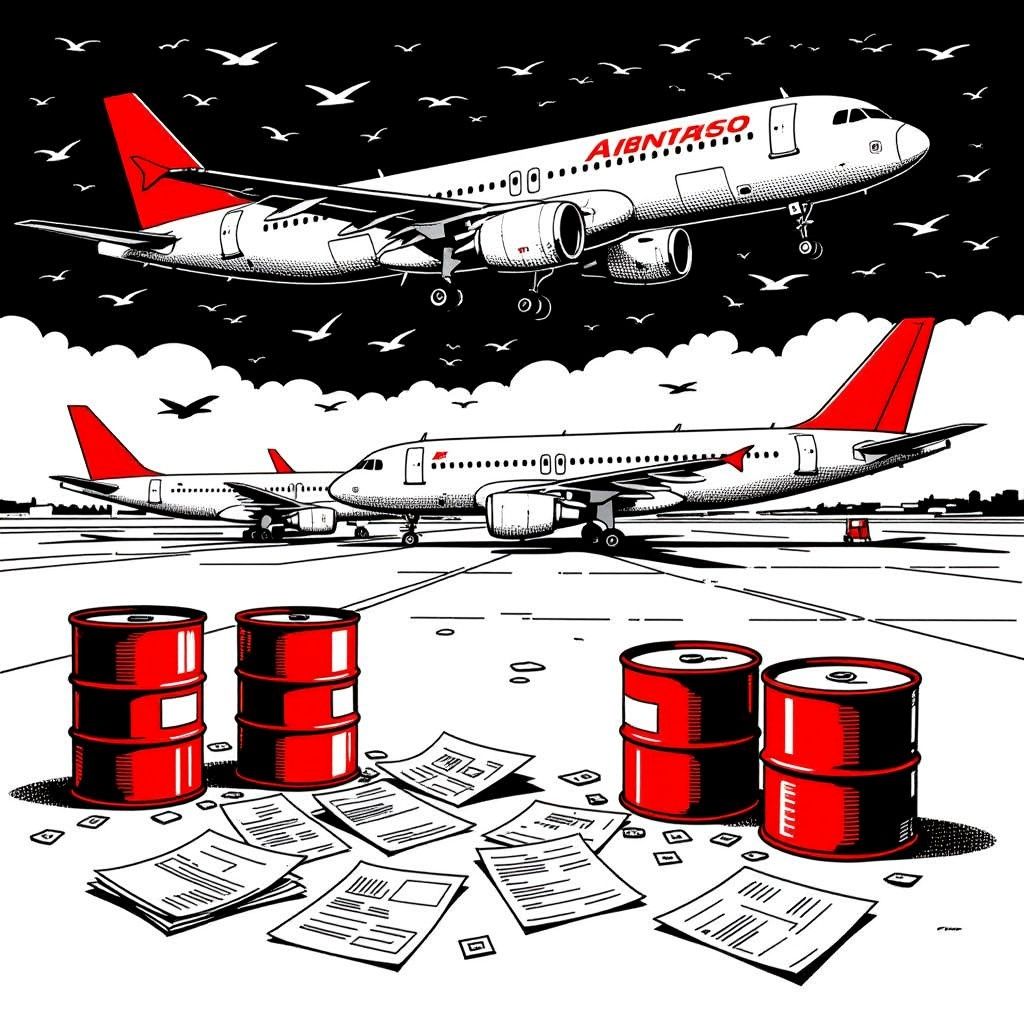
Paris, Thursday, 16 April 2026.
The closure of the Strait of Hormuz has left Europe with only a six-week supply of jet fuel, prompting the IEA to warn of imminent, widespread flight cancellations.
The Chokepoint of Global Energy
The roots of this unprecedented bottleneck trace back to late February 2026, when the outbreak of the United States-Israel war with Iran sent immediate shockwaves through global energy markets [1]. In retaliation, Iran orchestrated the closure of the Strait of Hormuz, a critical maritime artery, which was subsequently compounded by a U.S. blockade [1][2]. The U.S. blockade on vessels entering or departing Iranian ports, which was scheduled to take full effect shortly after April 15 [alert! ‘Exact operational status of the U.S. maritime blockade remains unconfirmed as of April 16’], continues to restrict traffic [6]. The logistical paralysis has been staggering: oil shipments through the strait plummeted from over 20 million barrels per day (mb/d) in February 2026 to an average of just 3.8 mb/d by early April [6]. While alternative export routes have managed to increase flows to 7.2 mb/d—up from less than 4 mb/d prior to the conflict—the global market still witnessed a massive observed oil stock decline of 85 million barrels in March alone [6]. Consequently, physical crude oil prices have surged to approximately $150 per barrel [6], while Brent crude futures sit more than 30% higher than their pre-war levels [1].
The Aviation Industry on the Brink
For the European aviation sector, the closure of the Gulf is an existential threat. Europe is acutely dependent on the Middle East, which supplies nearly 375,000 barrels per day—accounting for a staggering 75% of the continent’s net jet fuel imports [4][7]. The financial toll is already visible on the commodities board. At the beginning of April 2026, the benchmark European jet fuel price reached a peak of $1,838 per tonne, an astronomical 121.179% increase from the $831 per tonne recorded before the conflict [4]. Because fuel typically accounts for 20% to 40% of an airline’s total operating costs [4], and airlines operate in a highly competitive environment where profit margins are historically thin [GPT], carriers are already being forced to cancel loss-making routes to mitigate the financial hemorrhage [1].
Economic Fallout and Uneven Global Impacts
Individual airlines are navigating the crisis with varying degrees of resilience. On April 16, 2026, British carrier easyJet reported that it had no immediate fuel supply concerns for the next month, maintaining visibility into mid-May [1]. The airline had successfully hedged at least 70% of its summer fuel to buffer against volatility [3]. Nevertheless, the macroeconomic environment is taking its toll: easyJet absorbed roughly £25 million in additional fuel costs in March alone, and customer bookings for later in the year have already declined by 2% compared to 2025 [3]. Analysts note that even airlines with robust hedging arrangements may soon have to consider canceling flights if the baseline cost of operations continues to outstrip passenger revenue [1].
Sources
- www.theguardian.com
- www.the-express.com
- www.cnbc.com
- www.bbc.com
- www.nbcnews.com
- www.iea.org
- www.reuters.com