How China Cut Oil Imports by Thirty Percent Without Hurting Its Economy
Beijing, Sunday, 30 August 2026.
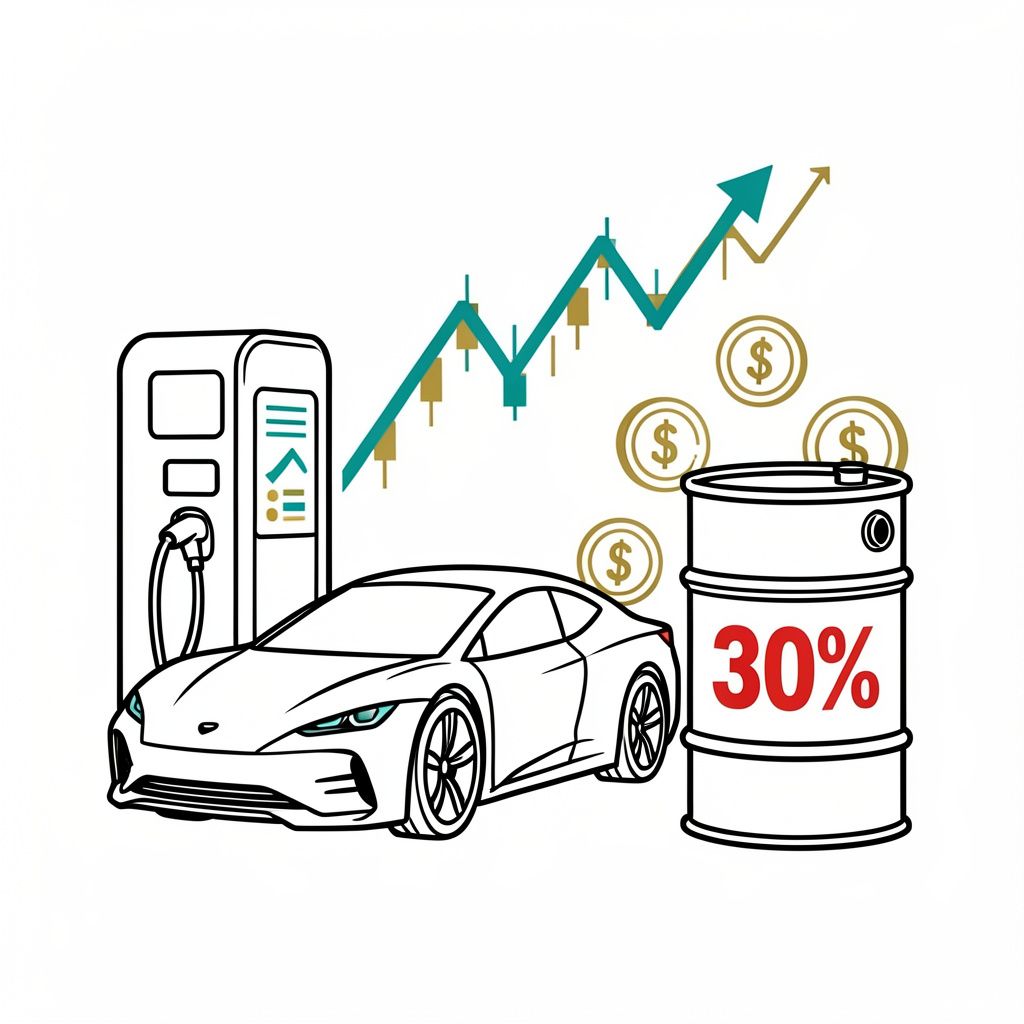
By drawing on massive strategic reserves and expanding electric vehicle use, China cut crude oil imports by thirty percent in mid-2026 without slowing its economic growth.
Strategic Import Reductions in Q2 2026
China reduced net crude oil imports by 30% year-over-year in Q2 2026, equivalent to a decline of 3.5 million barrels per day [1]. This reduction occurred without a meaningful decline in economic activity, signaling a structural shift rather than a recessionary contraction [5]. The reduction was achieved via two main channels: a 1.9 million barrels per day shift in inventory management and a 1.6 million barrels per day reduction in refinery throughput [1]. The sum of these components accounts for the total decline of 3.5 million barrels per day [1]. Refinery throughput averaged 12.8 million barrels per day in Q2 2026, constrained by capped domestic fuel prices [1].
Geopolitical Context and Strategic Reserves
China’s strategic reserves, estimated between 1 billion to 1.4 billion barrels as of January 1, 2026, allowed the nation to mitigate the global oil price crisis driven by the Iran war [4]. The conflict added an estimated $330 billion to global energy import bills between March 2026 and August 2026 [4]. China’s crude reserves have given it huge power over the global oil market and a critical new defense against the West [2]. By some estimates, China’s reserves last year were nearly 600 million barrels bigger than those in the U.S. [2].
Electrification and Structural Demand Changes
Structural gasoline demand is falling due to electric vehicle penetration, while diesel demand fell due to weak infrastructure investment [1]. Implied demand for Q2 2026 showed a 5% year-over-year decline for gasoline and 13% for diesel [1]. Beijing has not published data on oil demand or the size of state oil inventories since December 2017, complicating assessments of whether import reductions are structural or temporary [1]. A key unresolved question is whether Chinese crude oil imports will return to pre-war levels [alert! ‘Source indicates this is an unresolved question dependent on consumer behavior’] [1].
Supply Chain Diversification and Future Outlook
Saudi Arabia has begun diverting oil exports to China through alternative loading points along the Omani coastline, bypassing the Hormuz Strait [6]. China imported approximately 1.2 million barrels of Iranian oil per day in 2026, a volume described as slightly less than 2025 levels [3]. As of August 27, 2026, Saudi Arabia finalized a 4 million barrel sale of Arab Medium and Heavy crude to PetroChina that will load outside the Hormuz Strait [6]. Beijing is expected to resume oil stockpiling to replenish inventories, though the specific target for days of net import coverage remains undefined [1].