American Sanctions Push Iran's Economy to the Brink
Tehran, Sunday, 30 August 2026.
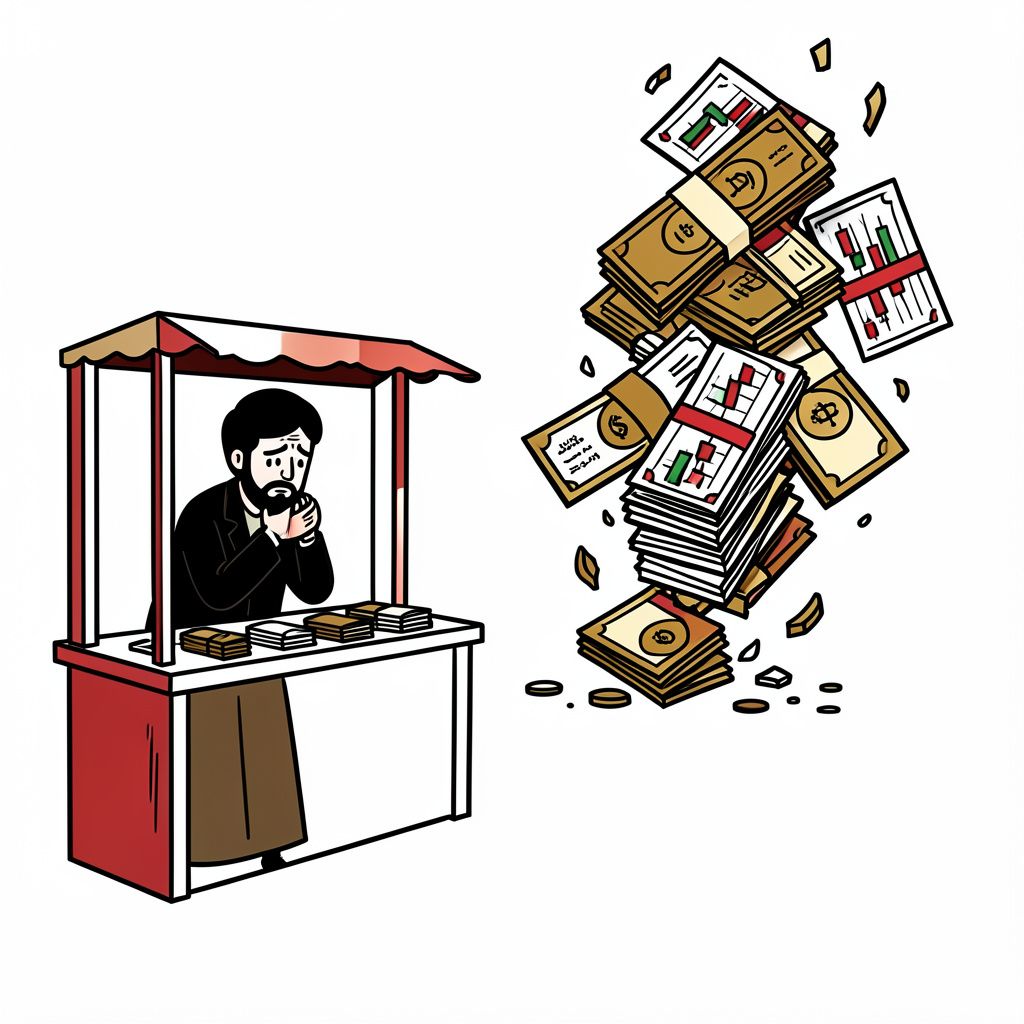
As US sanctions and a blockade slash foreign trade by 35%, soaring inflation and skyrocketing food prices are driving widespread domestic unrest across Iran.
Operation Economic Outcast and the Financial Squeeze
On August 29, 2026, the United States escalated its economic warfare against Iran under a Treasury Department campaign dubbed “Operation Economic Outcast” [6]. The Financial Crimes Enforcement Network (FinCEN) proposed a rule to revoke the correspondent banking access of Egypt’s Banque Misr UAE branches [6], accusing the institution of processing approximately $1.8 billion for Iranian shadow banking networks between January 2024 and June 2026 [6]. Concurrently, the Office of Foreign Assets Control (OFAC) sanctioned Reza Mohammad Taeedi, the general manager of Bank Melli’s Dubai branch, alongside Hong Kong-based Kameng Trading Limited for facilitating illicit fund transfers [6]. Treasury Secretary Scott Bessent characterized the strategy as an “economic D-Day,” designed to sever all remaining financial lifelines to Tehran [1][6].
Hyperinflation and the Flight to Alternative Assets
The tightening of secondary sanctions has compounded an already devastating domestic economic crisis. While Iran’s annual inflation rate officially reached 66% in July 2026 [2][3][4][5], current estimates indicate that inflation has surged past 80%, with the cost of key food staples skyrocketing by 100% [1]. Furthermore, the national currency has lost an additional 30% of its value over the course of 2026 [1]. With traditional banking channels blocked, ordinary Iranians have increasingly relied on gold and digital assets to protect their savings from rapid devaluation [1]. Esfandyar Batmanghelidj, chief executive of the Bourse & Bazaar Foundation, noted that technology, aviation, and shipping sectors are being heavily disrupted, cutting off essential connections and the import of critical goods like food and medicine [1].
Rising Labor Unrest and Domestic Pressures
The combination of the U.S. naval blockade and economic restrictions has led to severe fuel shortages, resulting in long lines at domestic gas stations despite Iran’s status as a major oil producer [1]. This economic strangulation has directly translated into widespread labor unrest. By late May 2026, a labor ministry official estimated that over 1 million jobs had been lost [1]. This has triggered a wave of protests across the country, including demonstrations by oil and gas workers in Asaluyeh on August 24, 2026, as well as protests by laid-off steelworkers at the Shadegan complex and petrochemical workers in Bandar-e Mahshahr [1]. In response to the growing domestic instability, Supreme Leader Ayatollah Mojtaba Khamenei issued a written statement urging the government to address inflation and unemployment while warning against actions that harm social cohesion [2][3].
Geopolitical Impasse in the Strait of Hormuz
The macroeconomic crisis is unfolding against the backdrop of an ongoing military conflict launched by the U.S. and Israel on February 28, 2026 [2][5]. This war has severely crippled Iran’s trade, with President Masoud Pezeshkian reporting a 35% decline in total exports and imports due to the naval blockade [2][3][5]. Diplomatic efforts to resolve the standoff have hit an impasse. Although Qatari Prime Minister Sheikh Mohammed bin Abdulrahman Al Thani met with Iranian leaders in Tehran on August 27, 2026, to discuss reopening the Strait of Hormuz—which previously handled 20% of global oil and LNG transport [2][5]—negotiations remain stalled. Iranian Foreign Minister Abbas Araqchi described the talks as “creative” [2][5], but the collapse of a June 17, 2026, memorandum of understanding that briefly allowed Iran to sell 90 million barrels of oil underscores the deep friction preventing a lasting resolution [2][3][5].
Sources
- fortune.com
- www.detroitnews.com
- thearabweekly.com
- www.japantimes.co.jp
- www.spokesman.com
- home.treasury.gov
- ofac.treasury.gov