Fed Governor Claims “Phantom Inflation” Is Misleading Interest Rate Decisions
Washington, Tuesday, 16 December 2025.
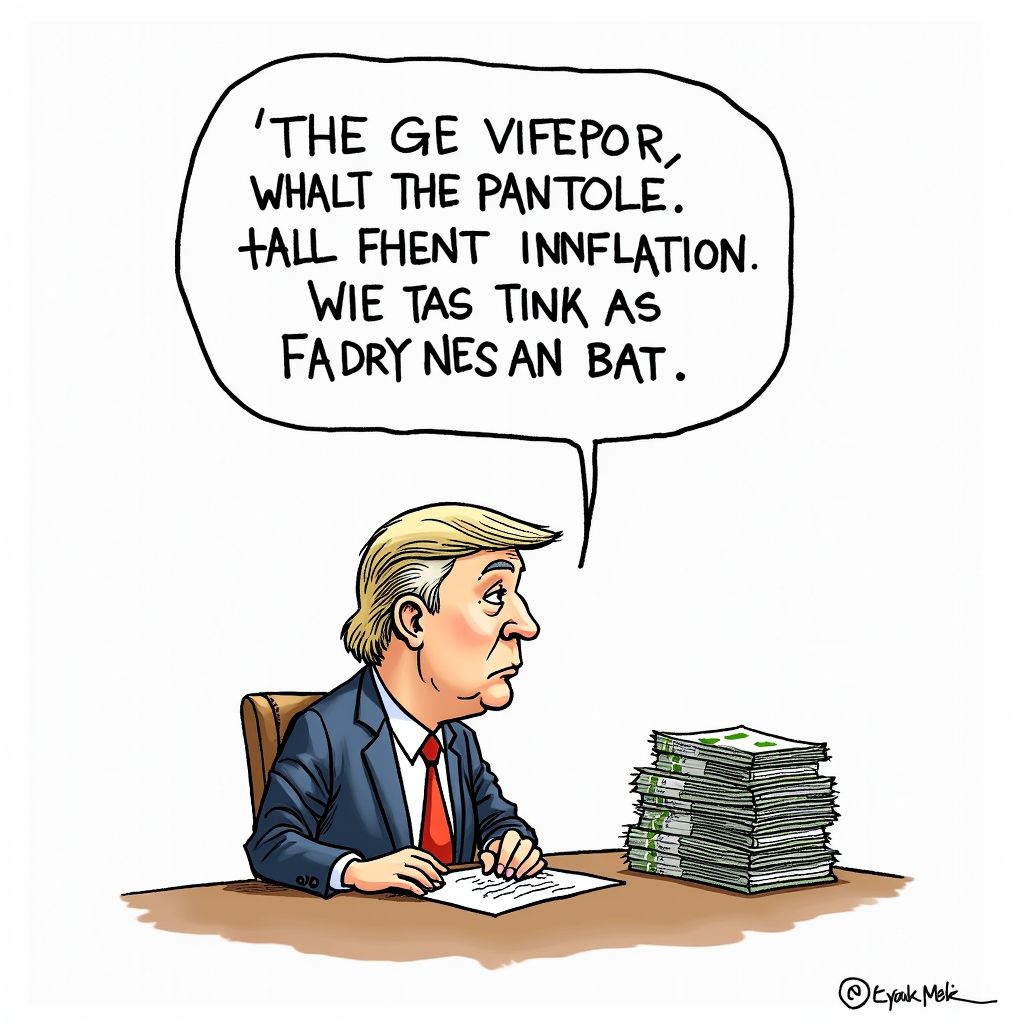
Federal Reserve Governor Miran warns that “phantom inflation” from lagging housing data hides the reality that true prices are near target at 2.3%, risking unnecessary job losses.
Unmasking the “Phantom”
Speaking at Columbia University on Monday, Federal Reserve Governor Stephen Miran delivered a sharp critique of the metrics currently guiding U.S. monetary policy [2][3]. Miran, who is currently on an unpaid leave of absence from the White House, argued that the central bank is being misled by “phantom inflation,” specifically pointing to lagging shelter data and imputed prices that do not reflect current economic realities [2][3]. According to Miran, these statistical distortions are masking a much cooler inflationary environment, suggesting that the Federal Reserve’s restrictive stance is no longer necessary to cap price growth [1][3]. He contends that shelter inflation figures are currently capturing supply and demand imbalances from two to four years ago rather than the present dynamic [3].
The Data Discrepancy
To illustrate the extent of this distortion, Miran provided a detailed breakdown of inflation metrics. While the Bureau of Economic Analysis reported that the Fed’s preferred gauge—the personal consumption expenditures (PCE) price index excluding food and energy—slowed to 2.8% annually in September, Miran argues the true figure is significantly lower [3]. He stated that if one removes imputed phantom inflation, such as portfolio management costs, market-based core inflation is actually running below 2.6% [3]. Furthermore, excluding the lagging housing data reveals an even starker contrast: underlying inflation is running below 2.3%, a figure Miran describes as being “within noise” of the central bank’s 2% target [3][5].
A House Divided
This analytical disagreement has fueled a rare three-way split within the Federal Open Market Committee (FOMC). During the meeting held last week, the committee voted to lower the benchmark interest rate by 25 basis points to a target range of 3.5% to 3.75% [3][5]. However, the decision was far from unanimous. Miran dissented in favor of a more aggressive 50-basis-point reduction, consistent with his advocacy for steeper cuts since joining the bank [2][3]. Conversely, Chicago Fed President Austan Goolsbee and Kansas City Fed President Jeffrey Schmid voted against any change, preferring to hold rates steady [3]. This marked the first time since September 2019 that a meeting resulted in three dissenting votes, highlighting the intensifying internal debate over the appropriate “neutral” rate [5].
Risks to the Labor Market
The urgency in Miran’s call for faster easing stems from his concern for the labor market. He warned that maintaining unnecessarily tight policy based on “artifacts of the statistical measurement process” risks triggering job losses that could be difficult to reverse [2][3]. Citing historical precedents, Miran noted that labor market deterioration often occurs “nonlinearly,” meaning it can accelerate rapidly once it begins [3]. In contrast, New York Fed President John Williams defended the current path on Monday, stating that monetary policy is “well positioned” and has moved closer to a neutral stance [3][5]. Williams projects inflation will ease to just under 2.5% next year, arguing that while downside risks to employment have increased, the upside risks to inflation have diminished [3].