U.S. Considers Historic NATO Exit Amid Widespread Allied Defiance Over Iran War
Washington, Wednesday, 1 April 2026.
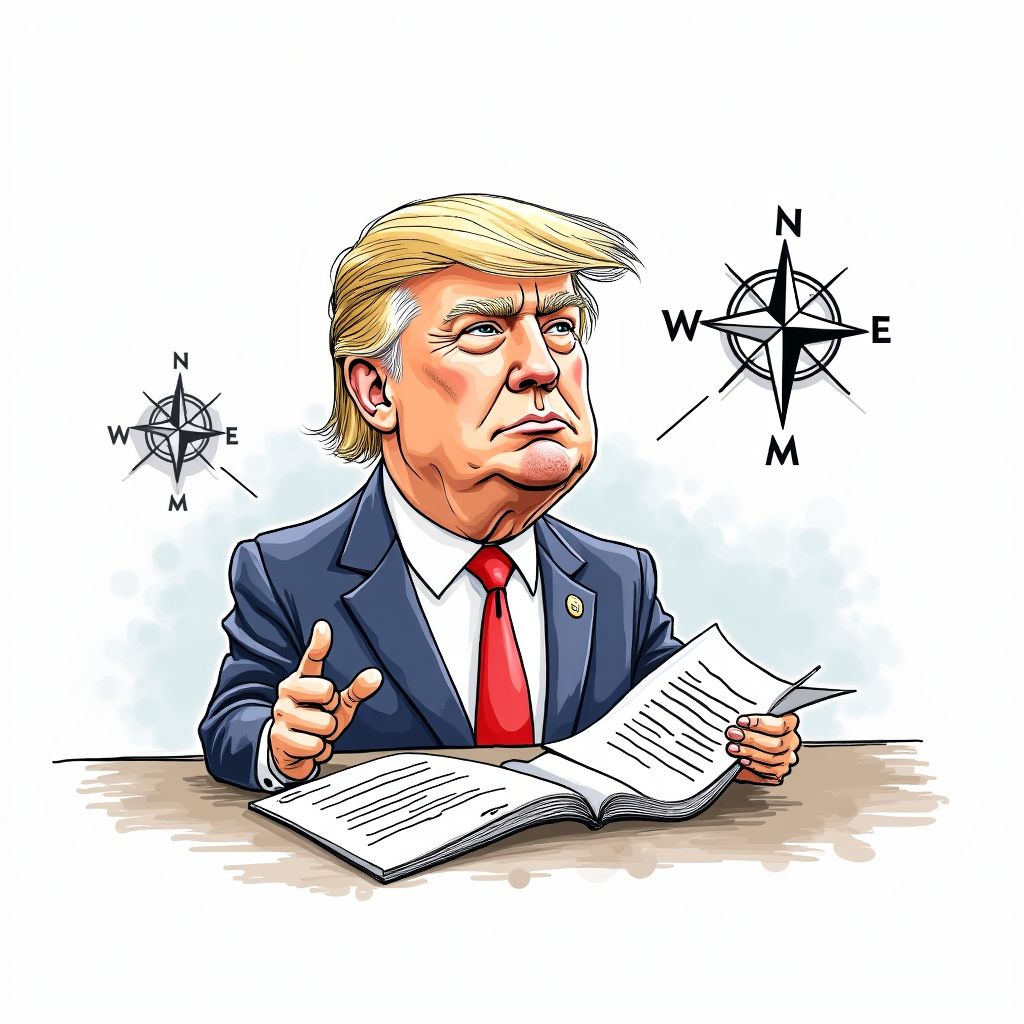
Triggering unprecedented geopolitical risk, President Trump is evaluating a U.S. withdrawal from NATO after key European allies closed their airspace and denied military support for the Iran conflict.
A Transatlantic Fracture Over the Middle East
The current geopolitical crisis stems from the ongoing military conflict with Iran, which began in the recent past on February 28, 2026, when the United States and Israel launched joint offensive strikes [1][4]. The Republican administration under President Donald Trump initiated these operations without consulting the other 31 member states of the NATO alliance [1]. In response to this unilateral action, key European allies have actively distanced themselves from the war effort, severely restricting American logistical capabilities. France and Spain have closed their airspace to U.S. military flights associated with the conflict, while Italy has denied refueling permissions for American warplanes [5]. Furthermore, NATO members have collectively declined to participate in U.S.-led operations aimed at reopening the Strait of Hormuz [4]. This widespread defiance prompted President Trump to state in a March 31 interview with Britain’s Telegraph that he is “strongly considering” pulling the U.S. out of NATO, characterizing the historic alliance as a “paper tiger” [1][3][4]. While this currently represents a statement of political intent and campaign rhetoric rather than an implemented policy, Trump warned France and Britain that the U.S. would no longer come to their defense, stating that the allies “weren’t there for us” [1][5].
Economic Shockwaves and Volatile Energy Markets
The diplomatic rift is deeply intertwined with global economic stability, particularly concerning energy supply chains. Iran has effectively closed the Strait of Hormuz, a critical maritime chokepoint through which 20 percent of global oil shipments typically pass [4]. Curiously, Iran has permitted ships carrying oil destined for neutral countries to transit the strait, a strategic move that appears designed to reward European non-participation in the U.S. war effort [5]. Despite the geopolitical turbulence, financial markets showed signs of optimism on March 31, 2026, driven by Trump’s suggestion that the U.S. could exit the conflict within two to three weeks [1][4]. Consequently, crude oil prices fell below $100 per barrel (approximately 159 liters) [1][GPT]. Asian equity markets responded robustly to the prospect of an end to the hostilities; South Korea’s Kospi index surged by 8.4 percent from its previous close of approximately 5054.151 to reach 5,478.70, and Tokyo’s Nikkei 225 climbed by 5.2 percent to 53,739.68 [1]. However, European officials remain cautious regarding the long-term economic damage. On March 30, E.U. Energy Commissioner Dan Jørgensen warned that European oil and gas prices are unlikely to normalize in the foreseeable future, even if a peace agreement is reached [1].
Redrawing the European Security Architecture
The diplomatic fallout has escalated into direct rhetorical attacks on individual allied leaders. President Trump recently criticized British Prime Minister Keir Starmer, specifically mocking the United Kingdom’s naval capabilities by stating, “You don’t even have a navy. You’re too old and had aircraft carriers that didn’t work” [2][4]. The administration’s frustration is echoing through the highest levels of the U.S. State Department. Secretary of State Marco Rubio emphasized that if NATO allies deny the U.S. basing rights during times of need, the existing defense arrangement is “not a sustainable arrangement” and will require reexamination once the Iran conflict concludes [1][2][4]. Analysts note that NATO’s Article 5 mutual defense clause has only been invoked once—after the September 11 attacks—and does not apply to offensive military operations like the current U.S.-Israeli strikes in Iran [4].
Strategic Realignments and Policy Proposals
Moving beyond campaign rhetoric, the Trump administration is reportedly evaluating concrete structural changes to the transatlantic alliance. Proposals currently under consideration include implementing a “pay-to-play” model for member states and significantly reducing U.S. troop deployments across Europe [4]. A total withdrawal of American forces from Germany is among the specific options being weighed [4], a prospect that aligns with recent demands from Tino Chrupalla, a spokesman for Germany’s right-wing Alternative for Germany (AfD) party, who called for the removal of all U.S. troops from German soil on March 30 [5]. Global markets and defense contractors are now looking toward Washington for clarity. President Trump is scheduled to deliver a national address tonight, April 1, 2026, at 21:00 ET, where he is expected to provide an update on the war in Iran and potentially elaborate on the future of the United States’ role in NATO [1][4] [alert! ‘Trump’s exact policy details regarding a NATO withdrawal remain undefined pending tonight’s national address’].