Widespread Digital Outages Disrupt Online Services Across Major American Banks
New York, Monday, 16 November 2026.
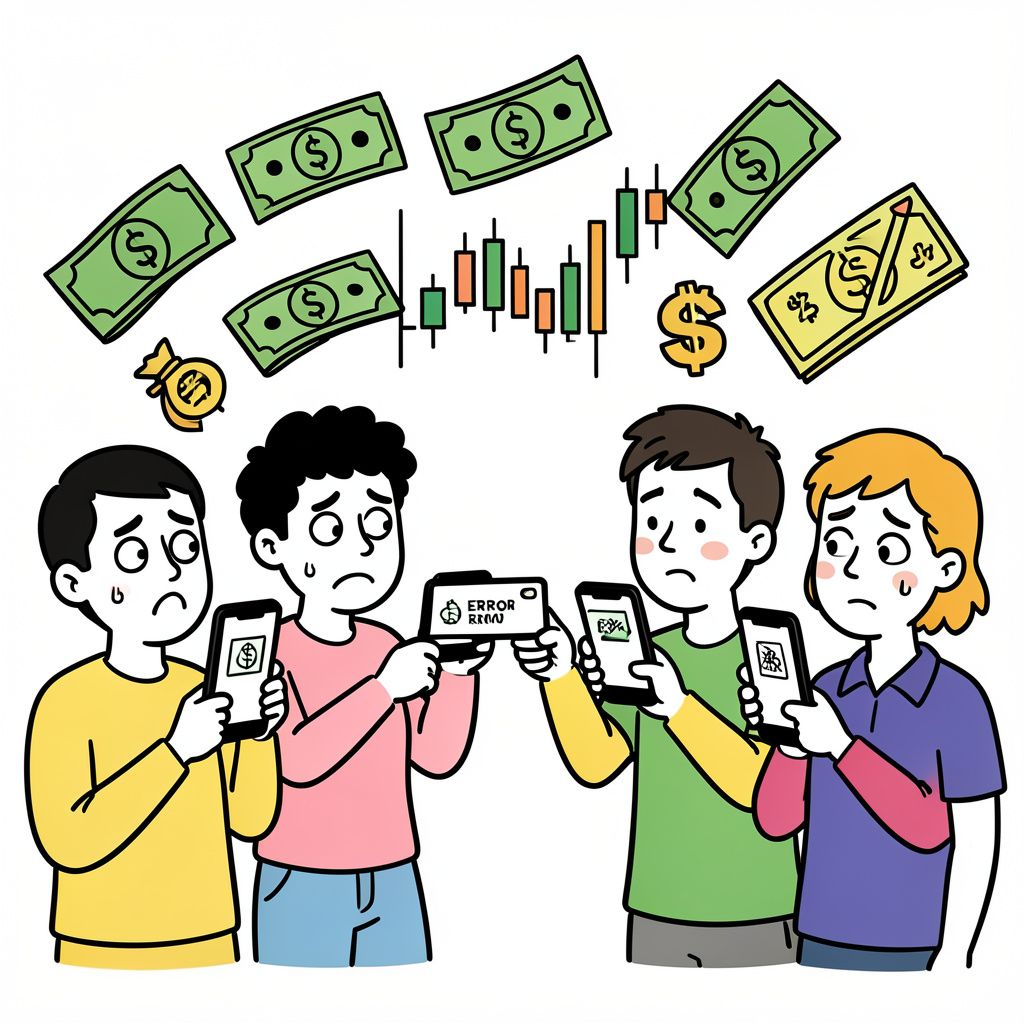
Simultaneous technical disruptions struck major lenders including Chase and Bank of America on Monday, freezing online access and delaying shared payment networks without compromising underlying customer funds.
Nationwide Digital Disruptions Strike Major US Banks
On Monday, 16 November 2026, thousands of retail and commercial banking customers across the United States encountered severe disruptions to digital banking services, including online accounts and mobile platforms. The outages simultaneously affected several of the nation’s largest financial institutions, including JPMorgan Chase & Co. (NYSE: JPM) [GPT], Bank of America Corp. (NYSE: BAC) [GPT], Wells Fargo & Co. (NYSE: WFC) [GPT], and U.S. Bancorp (NYSE: USB) [GPT]. Users reported widespread issues accessing funds, completing transactions, and logging into banking applications [1][2][3][5].
Root Causes and Official Responses
Initial investigations suggest the disruptions stem from technical issues rather than cyberattacks, though lenders have not yet provided detailed explanations. Chase (NYSE: JPM) acknowledged a technical malfunction affecting transaction processing times, reassuring customers that account access and funds remained secure during the incident [1][2][5]. A spokesperson for the bank stated, ‘Due to a technical issue, some transactions are taking longer than usual to complete but customers still have access to their accounts and funds’ [1][2][3][5]. U.S. Bank (NYSE: USB) similarly noted that while its core systems were unaffected, delays were reported in Zelle transactions, a peer-to-peer payment network operated by Early Warning Services—a consortium including Bank of America, Capital One, JPMorgan Chase, and Wells Fargo [1][2][3][5]. Zelle’s operator clarified that the issue lay with participating financial institutions rather than the Zelle network itself [2].
Scale of Impact and User Reports
Downdetector.com, a platform tracking service outages, recorded thousands of user reports within hours of the disruptions. As of 2:00 p.m. EST on 16 November 2026, Chase (NYSE: JPM) had received over 4,000 complaints, with 50% related to account balances and transactions, 23% to web logins, and 18% to transfers and wire services [3][5]. Bank of America (NYSE: BAC) logged over 1,500 reports, primarily involving online banking, ATM access, and mobile logins [2][5]. Wells Fargo (NYSE: WFC) recorded more than 640 reports, with users citing issues in logins, account balances, and fund transfers [2][3][5]. U.S. Bank (NYSE: USB) received over 600 user reports, largely focused on app functionality, money transfers, and online banking [2][3][5]. Truist Financial Corp. also experienced significant disruptions, with users reporting difficulties in accessing accounts and completing transactions [1][5].
Broader Context and Industry Implications
The outages occurred against a backdrop of recent technology failures, including a Microsoft service disruption that began on 6 November 2026 and lasted into the following day, impacting Outlook, Teams, and AI tools such as Copilot [1]. Additionally, a Federal Aviation Administration (FAA) technical failure on 7 November 2026, caused by aging network equipment, triggered a nationwide ground stop for over four hours [2]. While these incidents were unrelated to the banking outages, they underscore the vulnerabilities in critical infrastructure reliant on interconnected digital systems [1][2]. Financial analysts warn that the simultaneous failures across multiple major banks highlight potential risks in shared third-party cloud infrastructure and interbank payment networks like Zelle [GPT]. Business continuity remains a critical concern for enterprises and financial institutions alike [GPT].
Customer Experience and Immediate Responses
Customers took to social media and customer service channels to express frustration over the disruptions, with many reporting error messages such as ‘Some services aren’t available. We’re working on them. Please try back later’ [1][2][3][5]. While lenders assured customers of ongoing mitigation efforts, the prolonged nature of the outages raised questions about resilience in digital banking infrastructure [1][2][3][5]. Banking industry experts note that such widespread disruptions, even if temporary, can erode consumer trust and highlight the need for robust contingency planning [GPT].