China's Economic Architect Zhu Rongji Dies at 97
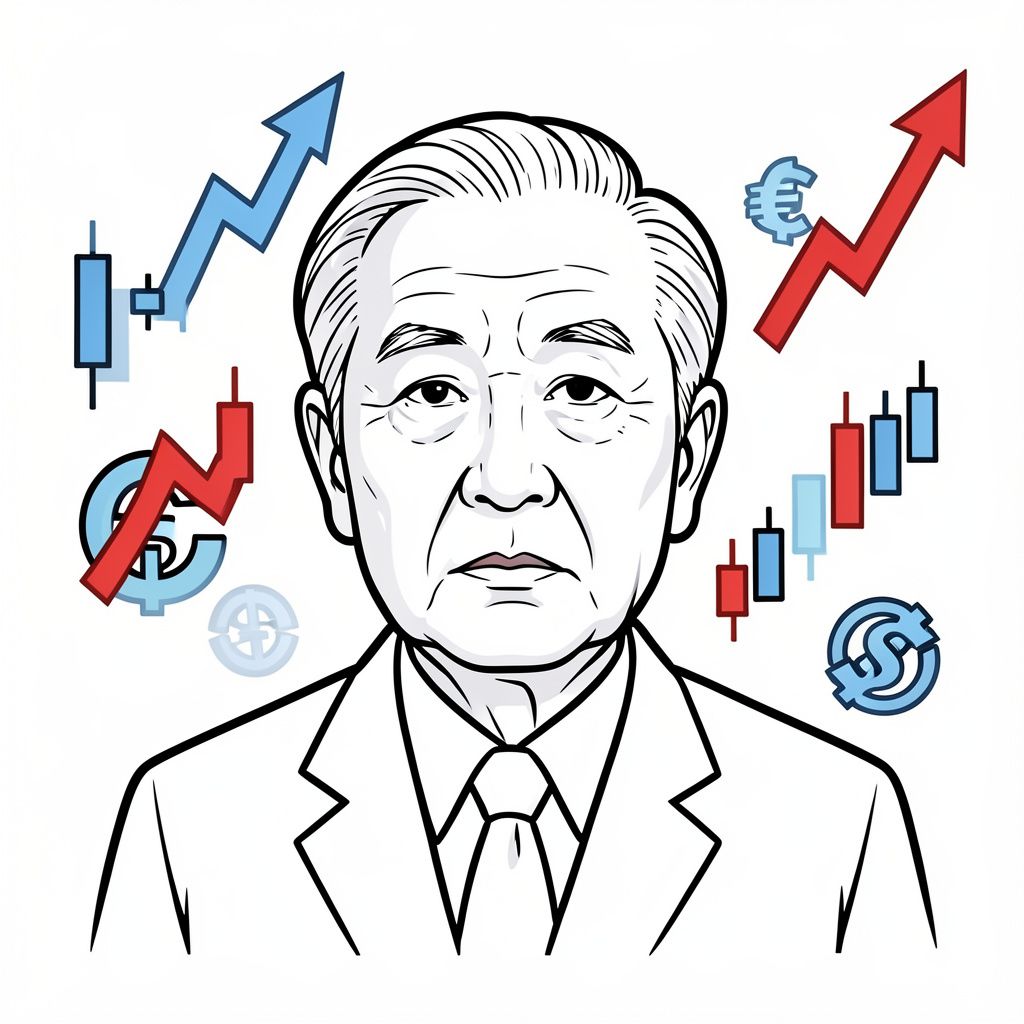
Beijing, Wednesday, 12 August 2026.
Former Chinese Premier Zhu Rongji, who spearheaded China’s market transformation, state enterprise restructuring, and pivotal 2001 WTO accession, has died in Beijing at age 97.
Announcement of Passing
Former Chinese Premier Zhu Rongji died on 12 August 2026 at 11:06 in Beijing [2][4]. He was reported to be 97 years old by some outlets, while official state media stated 98 [1][2]. Born in October 1928 in Changsha, Hunan, Zhu served as Premier from 1998 to 2003 [3][7]. His death marks the end of an era for China’s economic modernization [1][8].
State media described him as a loyal communist warrior and outstanding leader of the party and state [2][6]. The announcement was issued by the Central Committee of the Communist Party of China and other top state bodies [2][7]. Mourning activities reflect his significant role in the nation’s development [6][7].
Market Transition and WTO Accession
Zhu spearheaded China’s accession to the World Trade Organization in 2001, negotiating hard concessions with the United States [1][3]. He reduced import tariffs for automobiles from over 100% to a maximum of 25%, spurring export growth [3]. His reforms transitioned China from a post-Maoist system to a global market-oriented financial system [1]. This period established structural dynamics influencing international trade today [1][8].
He played a central role in securing preferential trading status with the United States [1]. Former U.S. trade representative Charlene Barshefsky noted he embraced a system compatible with the West [1][3]. These negotiations required opening China’s economy to American companies [1]. The move helped make China the world’s largest manufacturer by 2010 [3].
Political Landscape and Social Costs
Serving under Party General Secretary Jiang Zemin, Zhu focused on economic policy while maintaining Communist Party control [1][5]. He restructured state-owned enterprises, resulting in approximately 30 million workers losing their jobs [1][4]. To mitigate impacts, he implemented a basic social welfare system known as Dibao [1]. Political tensions existed, with reports of power struggles regarding economic decision-making [5].
Critics note the central government initially ignored the laid-off worker problem [1][4]. Zhu famously quipped during an anti-corruption campaign about preparing coffins for corrupt officials [1]. He faced purges during the Cultural Revolution before his rehabilitation [1][5]. Despite controversies, he maintained a reputation for speaking truth to power [4][7].
Enduring Legacy and Global Impact
Experts note Zhu embraced a China compatible with Western economic systems [1]. His tenure saw China become the world’s largest manufacturer by 2010 [3]. Official obituaries describe his life as revolutionary and glorious [2][7]. His policies laid the foundation for decades of rapid Chinese economic expansion [1].
Columbia University expert Andrew Nathan stated Zhu made reforms irreversible [8]. His legacy includes the tax system and financial sector modernization [2][7]. Current leaders continue to cite his contributions to socialism with Chinese characteristics [2][6]. The structural dynamics he established continue to influence corporate strategies [1].
Sources
- www.npr.org
- www.news.cn
- cn.nytimes.com
- www.bbc.com
- www.epochtimes.com
- app.xinhuanet.com
- www.zaobao.com.sg
- amp.dw.com