Federal Escalation: Pentagon Readies 1,500 Troops for Potential Minnesota Deployment
Saint Paul, Sunday, 18 January 2026.
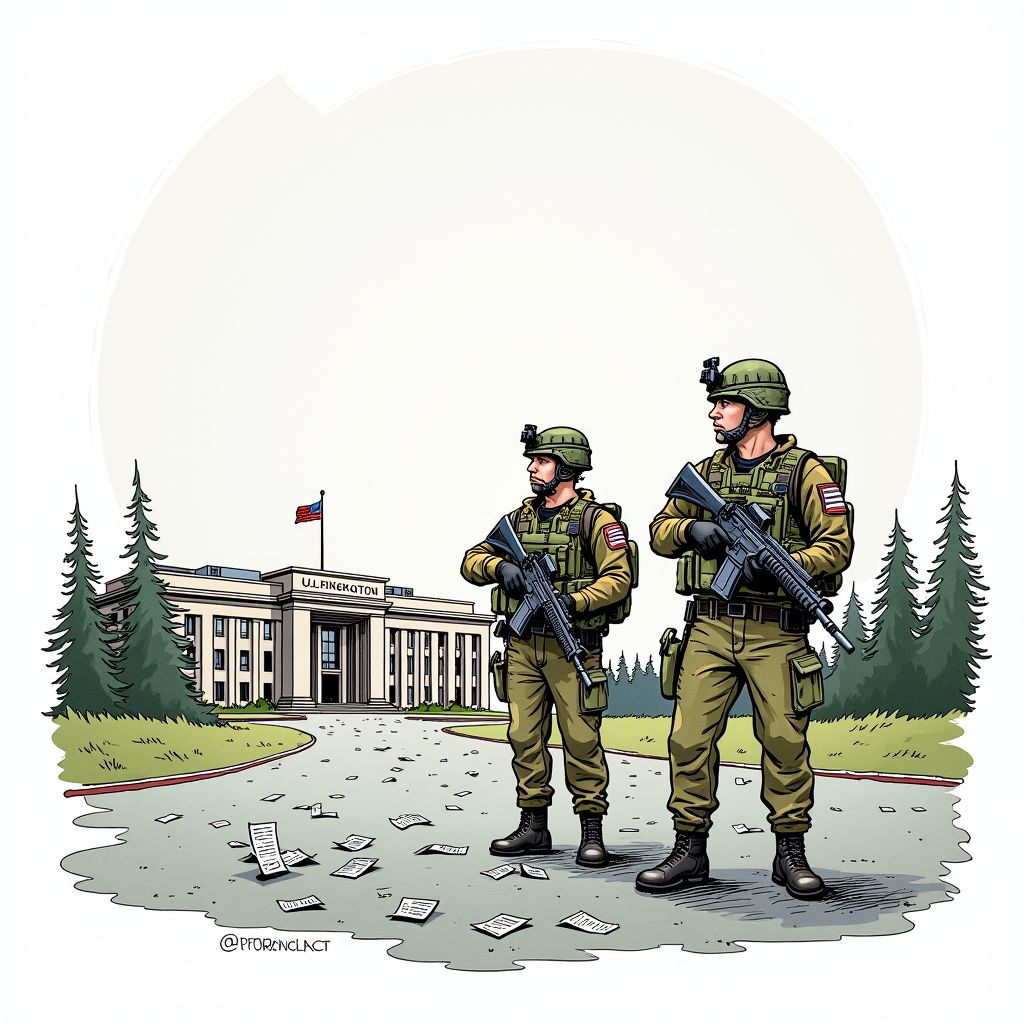
Amid rising tensions, the Pentagon has placed 1,500 Alaska-based soldiers on standby for Minnesota, signaling a potential invocation of the Insurrection Act following protests against federal immigration enforcement.
Operational Mobilization
Defense officials confirmed late Saturday that the Pentagon has ordered approximately 1,500 active-duty soldiers to prepare for a possible deployment to Minnesota [1]. These troops, drawn from the Army’s 11th Airborne Division based in Alaska, have been placed on standby following President Donald Trump’s explicit threat to invoke the Insurrection Act in response to ongoing unrest [1]. This logistical mobilization marks a critical shift from political rhetoric to operational readiness, transforming the administration’s warnings into a tangible military posture on domestic soil.
Escalating the Federal Standoff
This development represents a rapid materialization of the executive warnings detailed in our previous coverage, “Trump Threatens Military Intervention in Minnesota Amidst Escalating State-Federal Clash.” While the initial statements on January 15 sparked constitutional debates regarding state sovereignty, the specific tasking of airborne infantry indicates the federal government is actively preparing to override local objections [1][2]. The move comes as the White House characterizes the protests as the work of “professional agitators and insurrectionists” who are targeting federal law enforcement officers [2][3].
A Disproportionate Federal Footprint
The potential arrival of 1,500 soldiers would compound an already massive federal presence in the Twin Cities established under “Operation Metro Surge” [2][5]. According to Minneapolis Mayor Jacob Frey, the city currently hosts approximately 3,000 ICE agents, a force significantly larger than the local police department, which Frey notes has only about 600 officers [5]. Consequently, the existing federal force is already 5 times the size of the local police force, creating a complex security environment where federal agents vastly outnumber municipal law enforcement even before military reinforcements arrive.
Catalysts for Unrest
The current volatility stems from two violent incidents involving federal agents that have inflamed local sentiment. Tensions initially spiked after an ICE agent fatally shot Renee Nicole Good, a 37-year-old American citizen, on January 7 [2][4]. The situation deteriorated further on January 13 when a federal agent shot a Venezuelan national during an arrest attempt [6][7]. These events have driven the protests that the Trump administration cites as the justification for potential military intervention, despite Mayor Frey’s argument that the region needs de-escalation rather than additional troops [2][3].
Constitutional and Civil Impact
Invoking the Insurrection Act would allow the President to deploy these active-duty troops for domestic law enforcement, effectively bypassing the Posse Comitatus Act of 1878 [2]. While DHS Secretary Kristi Noem asserts the President “certainly has the constitutional authority” to utilize this power [3], the move faces immediate legal opposition. Minnesota Attorney General Keith Ellison has explicitly stated he is prepared to challenge such an action in court [6]. Meanwhile, the conflict is disrupting daily life; citing fears of ICE activity and the volatile environment, Minneapolis and St. Paul schools have announced plans to offer online learning options and cancel some classes for the week of January 19 [7].
Sources
- www.washingtonpost.com
- www.foxnews.com
- www.aljazeera.com
- www.aclu.org
- www.factcheck.org
- www.npr.org
- www.nytimes.com