FIFA President’s Private Jet Use Sparks Climate Outrage During 2026 World Cup
New York, Monday, 22 June 2026.
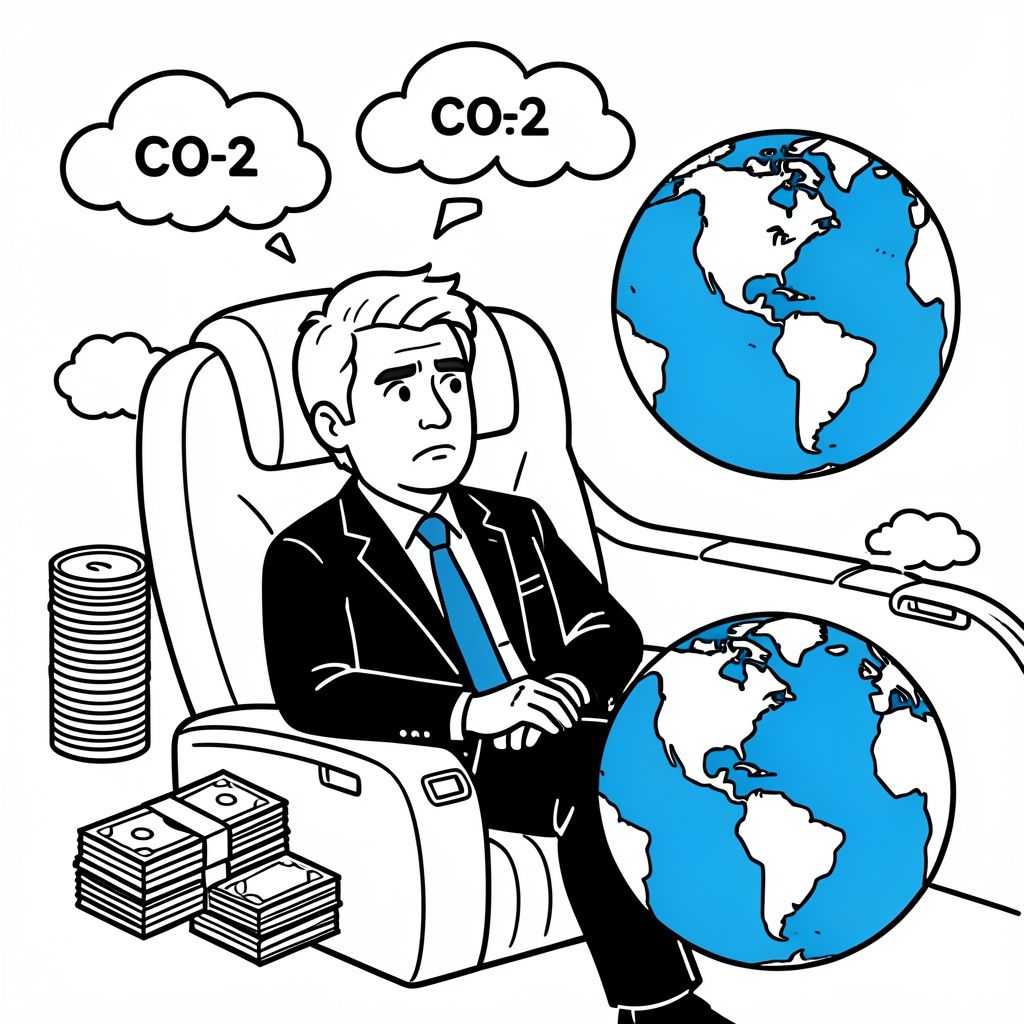
Gianni Infantino’s private jet flights during the 2026 World Cup could emit up to 500 tonnes of CO₂—equivalent to the annual footprint of 55 people. With matches spread across North America, his travel habits clash with FIFA’s sustainability pledges, igniting global criticism over corporate hypocrisy and environmental responsibility in mega-sporting events.
A Carbon Footprint That Dwarfs Individual Contributions
Gianni Infantino’s private jet travel during the 2026 FIFA World Cup has become a focal point of environmental criticism, with carbon emissions estimates ranging from 300 to 500 tonnes of CO₂ [1][2]. This figure represents approximately 54.945 times the annual per-capita emissions of a French citizen (9.1 tonnes CO₂e) [3], or the equivalent of 68.493 average Americans (7.3 tonnes CO₂e) [3]. The French carbon-footprint firm Greenly provided the initial estimates, stating that ‘just one hour in this plane emits roughly what an average human being emits in an entire year’ [1]. These figures gain additional context when compared to FIFA’s own sustainability report for the 2022 World Cup in Qatar, which claimed total emissions of 3.6 million tonnes CO₂e for the entire event [4]. Infantino’s personal travel alone could thus account for 0.014% of that tournament’s total emissions.
The Logistical Challenge of a Continent-Spanning Tournament
The 2026 World Cup’s expanded format - featuring 48 teams, 104 matches, and venues across three countries - has created unprecedented logistical demands [5]. Infantino’s itinerary from 14 to 20 June 2026 exemplifies these challenges, with visits to seven cities (Mexico City, Guadalajara, Los Angeles, San Francisco, Vancouver, Seattle, and Kansas City) to attend ten matches [1]. The tournament’s geographic dispersion has led to criticism from environmental experts, with geographer David Gogishvili noting that ‘by reusing existing but geographically dispersed NFL stadiums across a continent, FIFA has created a model that is structurally dependent on high-emission air travel’ [1]. This structural issue becomes particularly problematic when leadership actions appear to contradict stated sustainability goals. FIFA’s official travel policy claims executives select travel modes ‘based on what is most efficient and cost-effective,’ with the organization covering all costs [1], though critics argue this justification rings hollow given the environmental impact.
The Broader Environmental Impact of World Cup 2026
While Infantino’s private jet usage has drawn significant attention, it represents just one component of the tournament’s overall environmental footprint. Scientists for Global Responsibility (SGR) project that the 2026 World Cup could generate approximately 9 million tonnes of CO₂ equivalent emissions [6], nearly double the historical average of 4.6 million tonnes for tournaments between 2010 and 2022 [6]. This projection would make the 2026 edition the most carbon-intensive World Cup in history, surpassing even the controversial 2022 Qatar tournament [6]. The expanded format has significantly increased travel requirements, with teams and officials facing extensive air travel between venues. For instance, the Iran national team’s recent journey from Tijuana to Los Angeles - undertaken in less than 24 hours before their Group G match - highlights the logistical pressures that contribute to the tournament’s carbon footprint [7]. These structural challenges raise fundamental questions about the compatibility of mega-sporting events with sustainability goals.
The Reputational Risks of Corporate Hypocrisy
FIFA’s environmental commitments have come under intense scrutiny as the organization’s leadership actions appear to contradict its stated sustainability goals. The backlash against Infantino’s travel habits reflects broader concerns about corporate hypocrisy in an era where Environmental, Social, and Governance (ESG) commitments carry significant reputational weight [2]. Greenpeace USA’s Oceans Campaign Director John Hocevar has been particularly vocal, stating that ‘having [FIFA leadership] hop between matches via private jet… perfectly reflects the broader systemic issue’ [1]. This criticism gains additional weight when considered alongside FIFA’s official sustainability strategy, which includes commitments to ‘promote climate action’ and ‘reduce the environmental impact’ of its events [8]. The organization’s own 2022 sustainability report acknowledged that ‘travel and accommodation’ accounted for 52% of the tournament’s total emissions [4], making the current controversy particularly damaging to FIFA’s credibility. Corporate sponsors, increasingly sensitive to ESG concerns, may find themselves caught between their partnerships with FIFA and their own sustainability commitments.
The Future of Sustainable Mega-Events
The controversy surrounding Infantino’s travel habits has reignited debates about the feasibility of hosting sustainable mega-sporting events. The 2026 World Cup’s expanded format - while commercially attractive - presents significant environmental challenges that appear to conflict with global climate goals. Environmental analysts have noted that the tournament’s carbon footprint could exceed that of entire countries, with the 9 million tonnes CO₂e projection surpassing the annual emissions of nations like Jamaica (11.5 million tonnes) or Latvia (7.5 million tonnes) [9][GPT]. This comparison underscores the scale of the challenge facing sporting organizations as they attempt to balance commercial expansion with environmental responsibility. The Science Based Targets initiative (SBTi) has recently updated its Corporate Net-Zero Standard to provide more flexible frameworks for corporate decarbonization [6], though it remains unclear whether such frameworks can accommodate the unique challenges of mega-events. As David Gogishvili observes, ‘the question is whether major sporting events can truly align with sustainability goals while continuing to expand in scale and reach’ [2].
Sources
- www.channelnewsasia.com
- www.instagram.com
- ourworldindata.org
- www.fifa.com
- www.fifa.com
- sustainabilitymag.com
- www.theguardian.com
- www.fifa.com
- ourworldindata.org