Russia Faces Mounting Financial Strain as Budget Deficit Surges
Moscow, Saturday, 15 August 2026.
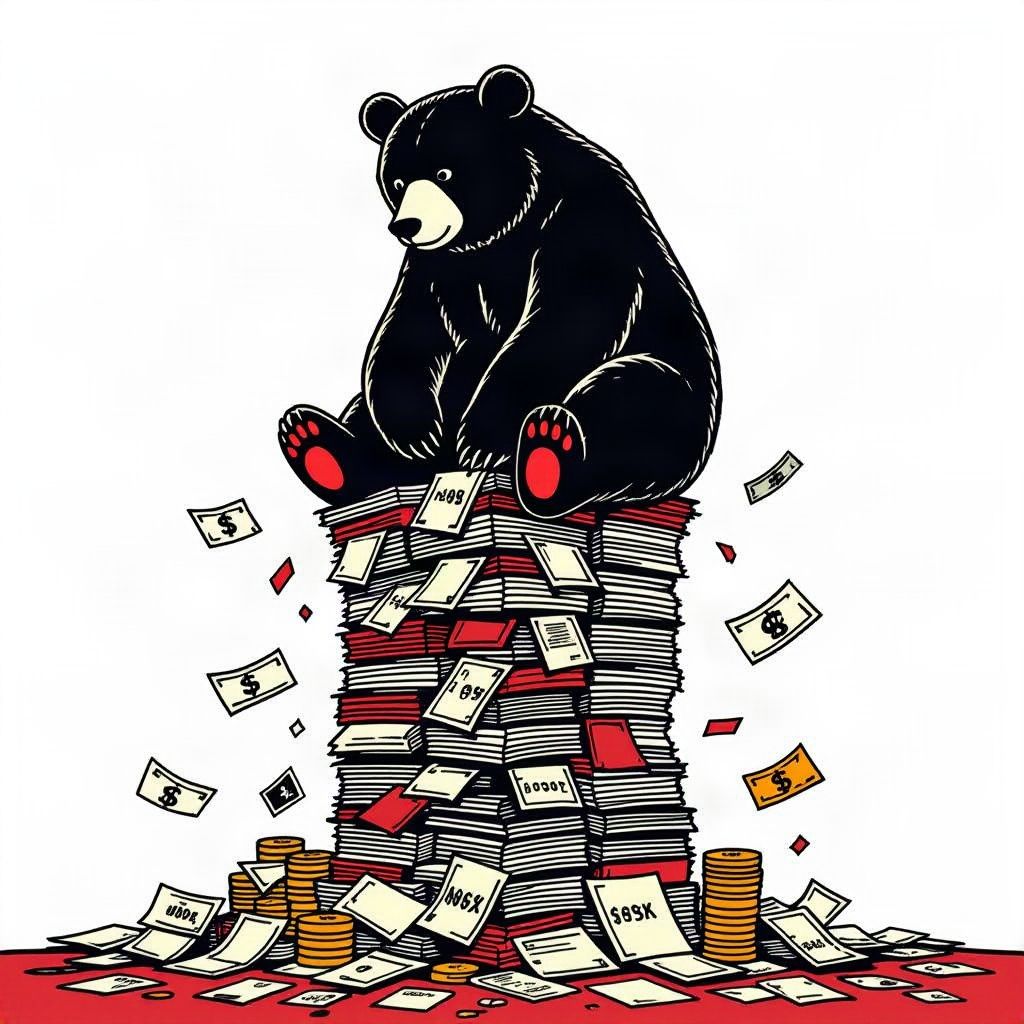
Heavy war spending and targeted energy strikes pushed Russia’s seven-month budget deficit to 6.5 trillion rubles, placing the nation on track to double its deficit for a second consecutive year.
Fiscal Deficit Expands Amid Wartime Spending
Russia’s federal budget deficit reached 6.5 trillion rubles in the first seven months of 2026, representing nearly 3% of GDP [2]. This fiscal gap places the nation on track to double its deficit for a second consecutive year, following a similar doubling from 2024 to 2025 [1][2]. While goods exports for January through June 2026 reached 226 billion USD, a 16% year-on-year increase, this growth was driven largely by fossil fuels which comprise over 50% of total goods exports [2]. Analysts warn that mounting defense spending and declining energy revenues are compounding internal pressures, making structural vulnerabilities increasingly difficult for Moscow to conceal [1]. The finance ministry revised its 2026 expenditure estimate upward by 1 trillion rubles, citing front-weighting of expenditures, though expectations remain that the situation will normalize as the year continues [2].
Energy Sector Under Pressure from Strikes and Sanctions
The energy sector, a critical pillar of state revenue, faced significant disruption in July 2026 due to Ukrainian drone strikes on infrastructure and domestic export bans [2]. Russian refined oil product exports dropped by approximately 50% in July 2026 compared to the 2025 daily average, falling from 2.6 million to 1.4 million barrels/day -46.154 [2]. Total Russian oil exports, including crude and refined products, fell by roughly 5% in July 2026 compared to the 2025 daily average, totaling approximately 7 million barrels/day [2]. In the first half of 2026, Russian oil and gas revenues reached only 64% of their levels from the same period in 2024, impacted by refinery strikes, EU oil price caps, and shadow-fleet sanctions [1]. Additionally, Ukrainian forces struck the Ilsky refinery and the Rosneft-operated Syzran plant on August 8, 2026, as part of a campaign targeting oil revenues [3].
Consumer Behavior Shifts and Labor Market Strain
Domestic economic stress is evident in changing consumer habits, with reports indicating a 2.5x increase in cookie consumption in April 2026 as consumers traded down to cheaper food products to manage income pressure [1]. X5 Group President Yekaterina Lobacheva noted that cookie consumption has risen almost two and a half times, serving as a small indulgence cheaper than chocolate and other confectionery [1]. Simultaneously, the labor market shows signs of distortion, with high school graduates facing higher competition for tuition-free university spots as paid seats are eliminated while military quotas expand [4]. The number of students admitted into Russian universities under the military quota nearly doubled since the invasion of Ukraine, reaching a record 41,000 this year [4]. These shifts reflect a broader trend where the Kremlin has pushed to reduce university enrollment in favor of vocational training to address industrial labor shortages [4].
Economic Outlook and Inflationary Risks
Despite GDP growth of 1.3% in Q2 2026, economists warn that war spending masks deeper economic weakness, with civilian industry contracting 3.2% year-over-year [3]. Inflation management remains precarious; while rates were brought down to basically the target of 4% late last year, analysts suggest this will not last given internal and external inflationary pressures [1]. Fuel shortages and restrictions are spreading across multiple regions, forcing the government to seek additional gasoline from Kazakhstan and loosen some fuel-quality standards [5]. Expert analysis indicated on August 14, 2026, that despite mounting economic strain, Russia is unlikely to end the war based solely on economic factors, provided oil prices remain stable [1]. However, if oil prices were to drop to $35 or $40 for the next year, the economic decision might change, though current geopolitical tensions make this unlikely [1].