Air Force Adopts Trump’s Preferred Design for Presidential Fleet, Replacing Kennedy-Era Livery
Washington, Wednesday, 18 February 2026.
The Air Force officially retires the historic robin’s egg blue for a darker palette, with the first repainted C-32 already spotted undergoing flight tests in Texas.
A Shift in Presidential Aesthetics
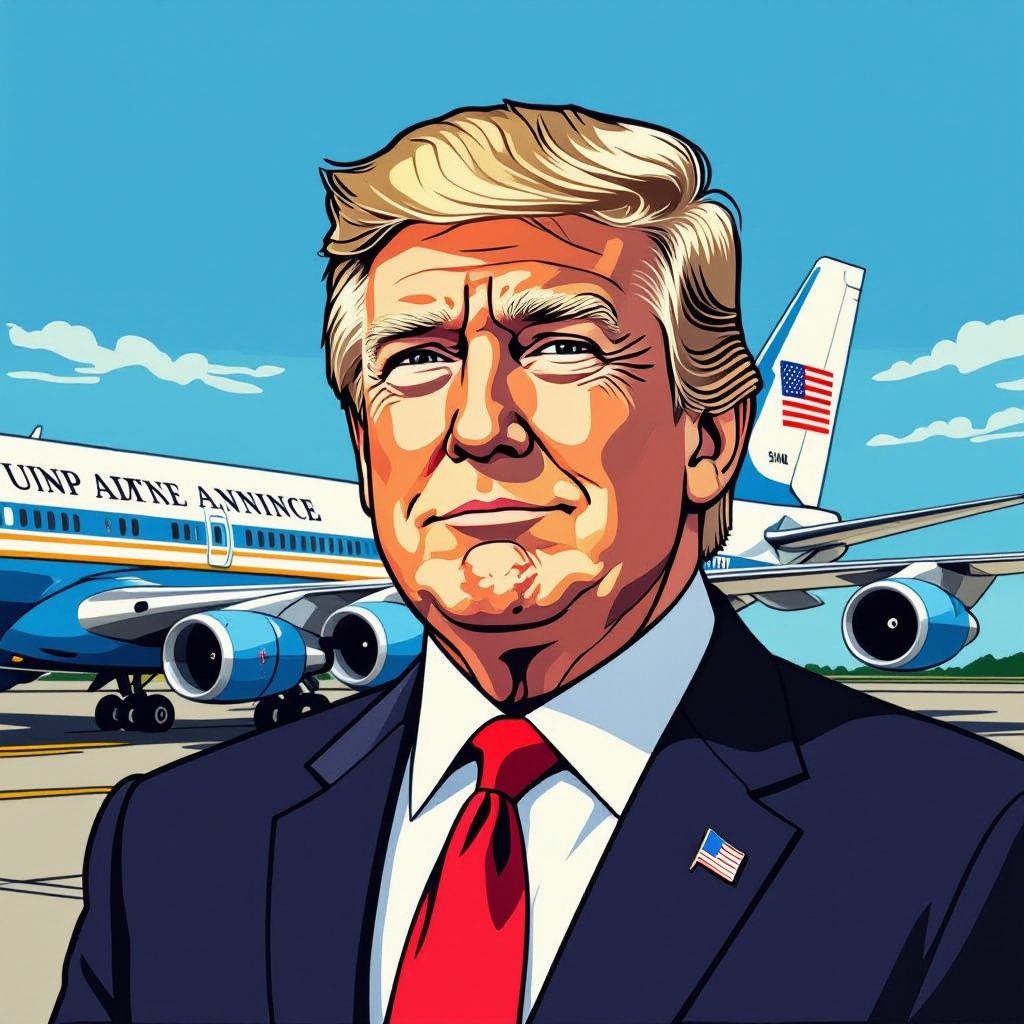
On Tuesday, February 17, 2026, the United States Air Force formally announced a sweeping redesign of the executive airlift fleet’s exterior, confirming the adoption of a red, white, dark blue, and gold palette [3]. This decision marks a definitive departure from the robin’s egg blue and white livery that has characterized the presidential fleet since the Kennedy administration [1][2]. The new color scheme, originally championed by President Donald Trump during his first term, will be applied to the incoming VC-25B aircraft—the next generation of Air Force One—as well as the donated Qatari 747-8i and the fleet of C-32 aircraft, which serve as Air Force Two when carrying the Vice President [1][2]. According to Air Force officials, the first repainted C-32 is expected to be delivered in the coming months, while the refurbished Qatari jet is slated for readiness by the summer of 2026 [1][2].
Technical Challenges and Strategic Reversals
The implementation of this darker livery represents the conclusion of a contentious engineering debate regarding the thermal properties of the aircraft’s skin. In 2022, the Biden administration scrapped President Trump’s initial proposal, citing concerns that the dark blue paint would absorb excessive heat, potentially damaging the sophisticated avionics aboard the VC-25B and requiring costly cooling modifications [3][5]. While the Air Force has not publicly detailed how these thermal concerns were mitigated in the revived 2026 design, the decision to proceed suggests that the engineering hurdles have been cleared or deemed manageable [3]. Tangible evidence of the rollout emerged yesterday, February 17, 2026, when a C-32A (tail number 99-0003) was spotted conducting test flights at the L3Harris facility in Greenville, Texas, sporting the new red, white, and navy livery [4][5].
Procurement Economics and Political Friction
The aesthetic overhaul runs parallel to significant financial complexities within the Air Force One replacement program. Boeing is currently operating under a fixed-price contract signed in 2018 valued at $3.9 billion, yet the manufacturer’s cost to build the two new VC-25B jets has ballooned to over $5 billion [3]. This discrepancy represents a financial burden on the manufacturer of at least 1.1 billion. Furthermore, the program is currently running four years behind schedule, with the delivery of the new VC-25Bs now projected for 2028 [3][5]. To bridge the operational gap caused by these delays, the Air Force purchased two used Lufthansa 747-8 aircraft in December 2025 for $400 million to serve as sources for spare parts and crew training [3][5].