Inflation and Living Costs Dominate Public Concern in New National Poll
Milwaukee, Thursday, 6 August 2026.
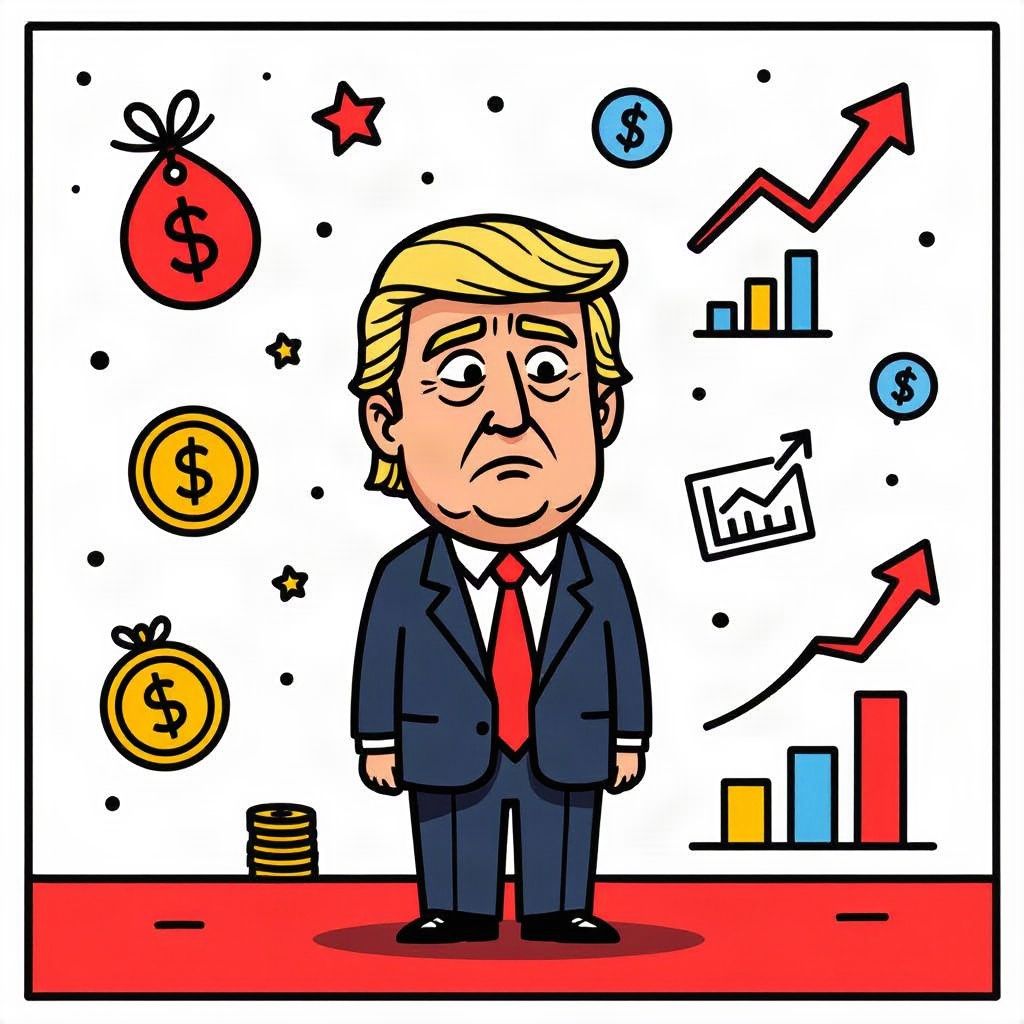
A August 2026 Marquette Law School poll shows 35% of Americans view inflation as the top national issue. Crucially, 61% attribute rising costs directly to President Trump’s policies.
Inflation and Cost of Living Top Voter Concerns
A new national survey released by the Marquette Law School Poll in early August 2026 identifies inflation and the cost of living as the most important issue for 35% of Americans [1][3]. This marks a consistent trend throughout 2026, with the same metric polling at 38% in January, 30% in April, and 37% in May [3]. The national economy ranks as the second most important issue at 15%, indicating that broader economic health remains a critical secondary concern for the public [1][2]. These findings were gathered from interviews with 1,076 adults conducted between July 22 and July 29, 2026, carrying a margin of error of +/-3.2 percentage points [1][3].
Policy Impact and Economic Expectations
Public sentiment regarding economic policy shows significant skepticism toward the current administration’s approach. Approximately 61% of adults believe President Trump’s policies have caused an increase in inflation, a rise from 45% in December 2024 [2][3]. Furthermore, 69% of respondents expect inflation to increase over the next 12 months, suggesting persistent anxiety about purchasing power heading into the final quarters of the year [1][2]. Approval ratings for the President’s handling of inflation and the economy remain at or below 30%, despite a slight increase in his overall job approval rating [1][3].
Deterioration in Personal Financial Well-being
On a personal level, financial confidence has declined since the beginning of the year. Only 19% of adults state they are better off financially than they were a year ago, down from 28% in January 2026 [1][3]. This represents a significant decrease in positive sentiment, calculated as a -32.143 percent change in the proportion of adults feeling financially improved [GPT]. Concurrently, the percentage of respondents reporting they are living comfortably dropped from 43% in June 2026 to 33% in late July 2026 [1][3].
Consumer Prices and Daily Costs
Specific cost-of-living indicators drive much of this economic pessimism. About 81% of respondents report rising gasoline prices over the last six months, while 79% report rising grocery prices [1][2]. In January 2026, 50% of Americans believed gas prices had gone down, but by July 2026, that perception shifted radically with the majority believing prices are rising [2][3]. These tangible price increases correlate strongly with the 35% of the public citing inflation as their primary concern [1][3].
Shifting Priorities: Iran War and Congressional Approval
While economic issues dominate, foreign policy concerns have receded relative to earlier in the year. The war with Iran is cited as the most important issue by 10% of adults, a significant decline from 24% in April 2026 [1][3]. In the political sphere, Congressional job approval remains negative for both parties, with 37% approving of Republicans and 34% approving of Democrats [2][3]. Democrats hold a slight lead over Republicans in the generic congressional vote among registered voters, with a larger advantage observed among likely voters [1][3].
Conclusion and Outlook
The Marquette Law School Poll data suggests that economic messaging and cost-containment strategies will likely dominate political and business agendas heading into the late 2026 election cycle [1][2]. With 69% of adults expecting inflation to rise and personal financial well-being metrics trending downward, pressure on policymakers to address cost-of-living issues is expected to intensify [1][3]. The survey results underscore a populace primarily focused on domestic economic stability over other national or international concerns [2][3].