Europe’s Supermarkets Unwittingly Stocking Controversial Settlement Goods as Israeli
Brussels, Wednesday, 17 June 2026.
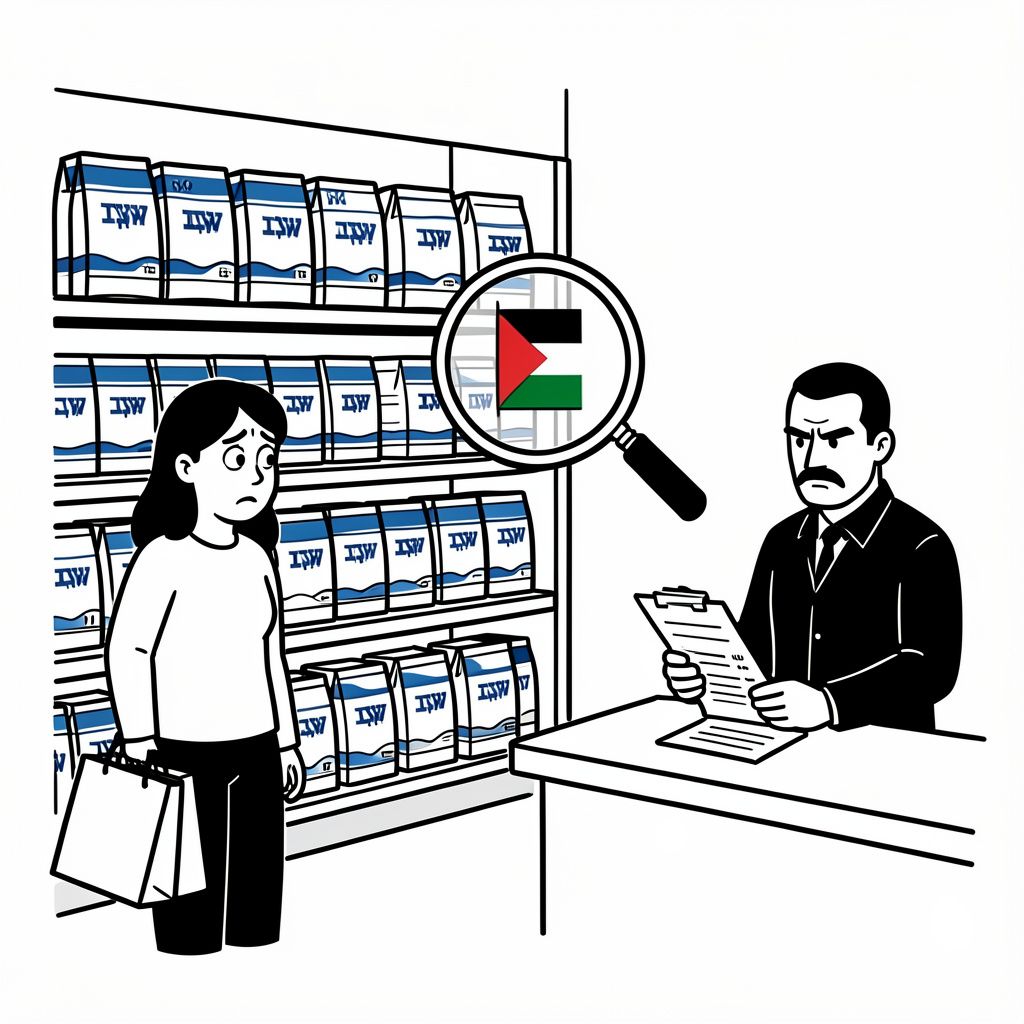
A June 2026 investigation reveals European retailers are selling products from Israeli settlements in occupied Palestinian territories mislabeled as ‘Israeli,’ risking legal action, consumer backlash, and strained EU-Israel trade relations.
The Investigation’s Key Findings
A joint investigation by Global Echo, a non-profit research organization, and several European media outlets has uncovered systematic mislabeling of products originating from Israeli settlements in the occupied West Bank and Golan Heights. The investigation, published in mid-June 2026, reveals that agricultural products such as dates, herbs, and wines are routinely shipped to Europe with labels falsely identifying them as ‘Product of Israel’ [1][2]. The settlements in question are widely considered illegal under international law, including United Nations Security Council Resolution 2334, which reaffirms that Israel’s settlement activity constitutes a ‘flagrant violation’ of international law [GPT]. The European Union has long maintained a policy of non-recognition of Israeli sovereignty over these territories, reflected in its trade agreements and labeling guidelines [3].
How the Mislabeling Occurs
The investigation traces the supply chain from settlement farms to European supermarket shelves, identifying multiple points where mislabeling occurs. Products are often relabeled at Israeli ports or during transit, with documentation altered to obscure their true origin [1]. For example, dates harvested in the Jordan Valley, an area within the occupied West Bank, are frequently exported as Israeli produce. Customs documents reviewed by investigators show that shipments from settlements are sometimes reclassified under broader Israeli export codes, effectively erasing their origin [2]. This practice not only misleads consumers but also allows these products to benefit from preferential trade terms under the EU-Israel Association Agreement, which applies only to goods produced within Israel’s pre-1967 borders [4].
Legal and Ethical Implications for European Retailers
The mislabeling of settlement products poses significant legal risks for European retailers. The European Court of Justice (ECJ) ruled in 2019 that products from Israeli settlements must be clearly labeled as such to avoid misleading consumers, a decision that was reaffirmed in subsequent EU guidelines [5]. Retailers found to be selling mislabeled settlement goods could face fines, legal action from consumer protection groups, or even criminal charges in some EU member states [1]. Beyond the legal risks, there are substantial reputational concerns. Consumer awareness of the Israeli-Palestinian conflict has grown, and many European shoppers actively avoid products linked to human rights abuses or illegal settlements [6]. Supermarkets such as Carrefour, Lidl, and Aldi, which were named in the investigation as unwitting sellers of these products, may face boycotts or public campaigns demanding greater supply chain transparency [2].
Economic Impact on Trade Relations
The revelations come at a delicate time for EU-Israel trade relations. The EU is Israel’s largest trading partner, with bilateral trade valued at approximately €45 billion in 2025 [7]. However, the mislabeling scandal threatens to derail ongoing negotiations for an updated trade agreement, which Israel has sought to expand market access for its agricultural exports [1]. European officials have warned that continued violations of labeling regulations could lead to stricter enforcement measures, including potential suspensions of certain trade preferences [8]. The European Commission has already initiated discussions with member states on how to address the issue, with some policymakers calling for mandatory origin verification systems for high-risk products [2]. For Israeli exporters, the scandal could result in lost market share, particularly in sectors where European consumers are sensitive to ethical concerns, such as organic and fair-trade products [9].
The Role of the Settler Economy
The investigation highlights the economic significance of settlement agriculture to the broader settler movement. The West Bank’s settler economy, valued at an estimated €2.5 billion annually, relies heavily on exports to Europe and the United States [10]. Products from settlements such as dates, olives, and wines are often marketed as premium goods, commanding higher prices in European markets [1]. Global Echo’s report notes that mislabeling is not merely an oversight but a deliberate strategy to bolster the settler economy, which operates under Israeli government subsidies and tax incentives not available to Palestinian producers in the same territory [2]. These subsidies, which include grants for agricultural development and reduced water rates, have enabled settlement farms to undercut Palestinian competitors, further entrenching the economic divide in the occupied territories [11].
Consumer and Corporate Responses
European consumers and advocacy groups are beginning to mobilize in response to the findings. The Boycott, Divestment, and Sanctions (BDS) movement, which advocates for economic pressure on Israel to end its occupation, has called for a boycott of all products linked to settlements [12]. While the BDS movement remains controversial, its influence has grown in recent years, with several European pension funds and banks divesting from companies operating in settlements [13]. On the corporate side, some retailers have already taken steps to address the issue. The Dutch supermarket chain Albert Heijn announced in June 2026 that it would temporarily suspend sales of all Israeli dates pending an internal review of its supply chain [1]. Similarly, the German retailer Rewe has pledged to enhance its origin verification processes for products sourced from Israel [2]. These responses reflect a broader trend toward greater corporate accountability in global supply chains, particularly in sectors linked to geopolitical conflicts [14].
The Path Forward: Policy and Enforcement
The investigation’s findings have reignited debates over the effectiveness of existing EU labeling regulations. While the 2019 ECJ ruling and subsequent guidelines were intended to provide clarity, enforcement has been inconsistent across member states [5]. Some countries, such as Ireland and Belgium, have adopted stricter labeling requirements, while others, including Hungary and the Czech Republic, have resisted implementing the guidelines [15]. The European Commission is now under pressure to harmonize enforcement and consider additional measures, such as mandatory third-party audits of Israeli exporters or the creation of a centralized database to track settlement products [2]. For their part, Israeli officials have dismissed the investigation’s findings as politically motivated, arguing that the EU’s labeling policies unfairly single out Israel [1]. However, legal experts note that the EU’s approach is consistent with its obligations under international law to distinguish between Israel and the territories it occupies [16]. As the debate intensifies, the mislabeling scandal is likely to become a key issue in the EU’s broader foreign policy toward the Israeli-Palestinian conflict.
Sources
- www.theguardian.com
- www.arabnews.com
- eeas.europa.eu
- eur-lex.europa.eu
- curia.europa.eu
- www.europarl.europa.eu
- ec.europa.eu
- www.reuters.com
- www.france24.com
- www.btselem.org
- www.hrw.org
- bdsmovement.net
- www.ft.com
- www.oecd.org
- www.politico.eu
- www.icj-cij.org