Drone Attacks on US Forces in Iraq Mark Major Conflict Escalation
Baghdad, Tuesday, 3 March 2026.
Retaliating for Khamenei’s death, Iraqi militias targeted US bases, confirming a dangerous regional expansion in a conflict that has already claimed the lives of four American service members.
Militia Strikes Signal Dangerous Regional Expansion
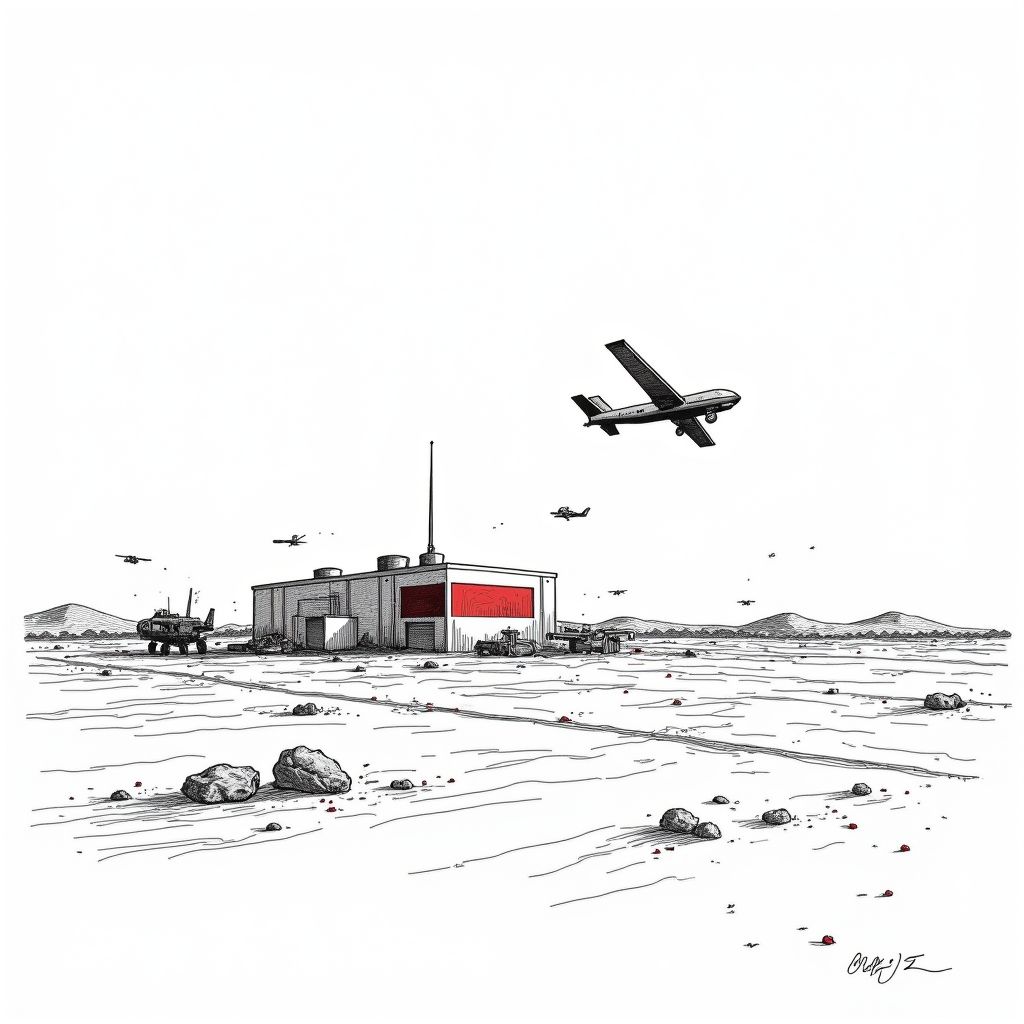
On Monday, March 2, the conflict in the Middle East underwent a material escalation as Iraqi Shiite militias launched a drone attack targeting U.S. troops stationed at the airport in Baghdad [1]. The group Saraya Awliya al-Dam, a faction operating within Iraq since the post-2003 era, formally claimed responsibility for the strike [1]. This offensive serves as a direct retaliation for the death of Iran’s Supreme Leader, Ayatollah Ali Khamenei, who was killed in a joint U.S. and Israeli campaign launched on February 28 [2]. The involvement of these proxies indicates that the theater of war has effectively widened beyond the immediate Iranian borders, drawing Iraqi territory deeper into the crossfire of this high-stakes geopolitical confrontation [1][2].
Operational Details of the Baghdad Offensive
Security reports confirm that the hostile unmanned aerial vehicles (UAVs) targeted the Victoria Base, a military installation housing U.S. forces within the perimeter of Baghdad International Airport [4]. According to Iraqi security sources, air defense systems successfully intercepted and shot down a drone attempting to approach the base from the eastern side on Monday evening [4]. While four projectiles reportedly caused explosions at the airport prompting security forces to cordon off the area [7], official sources indicated that this specific interception concluded without casualties [4]. This incident marked the second time the Victoria Base was subjected to hostilities within a single 24-hour window [4], underscoring the intensity of the current threat environment.
Strategic Coordination Among Proxies
The Monday attack is part of a broader, coordinated offensive by the Islamic Resistance in Iraq (IRI), a coalition of Iran-backed militias designated as a terror group by the United States [2]. Following the death of Khamenei, the IRI claimed responsibility for 16 separate drone attacks against bases in Iraq and the wider region on February 28 alone [2]. Other groups, including Kataib Hezbollah and Harakat Hezbollah al Nujaba, have also announced their entry into the conflict, declaring an intent to drag U.S. forces into a “long war of attrition” [2]. The sheer volume of fire has been significant; Iraqi Foreign Minister Fuad Hussein confirmed that the city of Erbil, the capital of the Kurdistan region, had been targeted by more than 70 missiles and drones [4].
U.S. Casualties and Military Outlook
The human cost of this widening war has already become apparent. As of 7:30 a.m. ET on March 2, U.S. Central Command (CENTCOM) confirmed that four U.S. service members have been killed in action [8]. One of these service members succumbed to serious wounds sustained during Iran’s initial retaliatory attacks [8]. While major combat operations continue under the banner of Operation Epic Fury [8], the simultaneous engagement of U.S. forces in Iraq, alongside the ongoing exchanges with Iran, presents a complex challenge for American defense strategists attempting to stabilize the region [1][8].
Analysis: The Destabilization of Regional Security
The integration of Iraqi airspace and territory into the conflict dynamic poses severe risks to Middle Eastern stability. Iraqi Foreign Minister Fuad Hussein has warned that the country is now directly affected by the war, with attacks originating from various parties to the conflict exacerbating the security landscape [4]. The continued bombardment of areas like Erbil and the targeting of diplomatic and military hubs in Baghdad threaten to create a chaotic vacuum that could disrupt global energy commerce and humanitarian security [4]. As militias follow through on threats to target American assets, the U.S. faces the dual pressure of managing a direct conflict with Tehran while suppressing a widespread insurgency across Iraq [2][4].
Sources
- kutv.com
- www.longwarjournal.org
- www.facebook.com
- arabic.news.cn
- www.facebook.com
- qna.org.qa
- www.instagram.com
- www.centcom.mil