Resource Boom Drives Canadian Industrial Growth as UK Manufacturing Slumps
London, Wednesday, 5 August 2026.
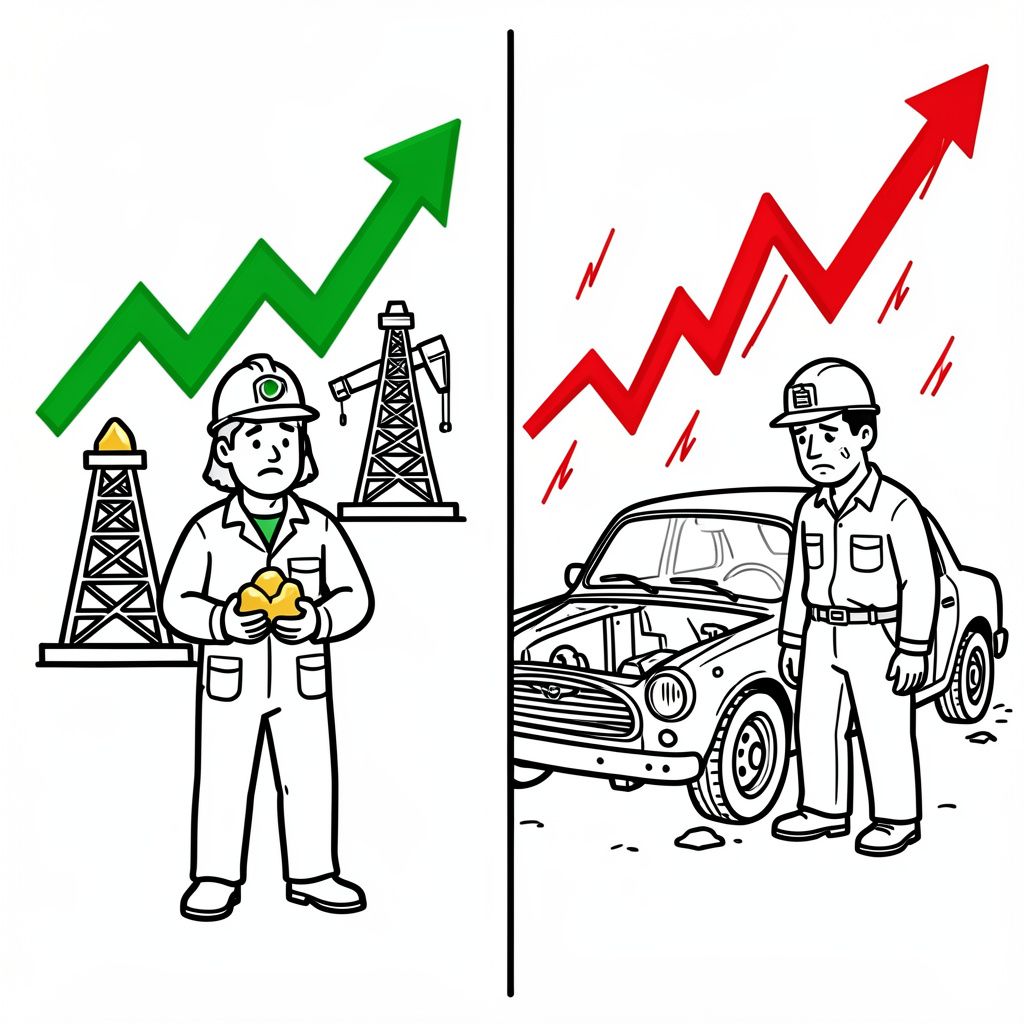
Canada led global industrial sentiment gains in early August 2026 on strong mining and energy activity, while vehicle manufacturing slumps dragged the United Kingdom to the steepest decline.
Diverging Industrial Sentiment Indices
Global industrial production sentiment exhibited a sharp divergence in early August 2026, according to data from Permutable AI covering the week ending 2 August 2026 [1]. While resource-heavy economies demonstrated resilience, traditional manufacturing hubs faced significant headwinds [3]. Canada recorded the largest weekly sentiment improvement with a score increase of 0.76, driven by gains in resources, mining, and capital goods [1][4]. In contrast, the United Kingdom recorded the sharpest deterioration with a score decrease of 0.86, primarily impacted by automotive disruption and weak demand [1][3]. Germany followed closely with a decline of 0.85, reflecting concerns over industrial competitiveness and energy costs [1][3]. The spread between the top performer and the bottom performer highlights a significant gap in industrial confidence, calculated as 1.62 points between Canada and the UK [1][3]. This data is derived from Permutable’s Global Macro Sentiment Indices (GMSI), an AI-native product designed to track macroeconomic risk through structured sentiment indicators across 95 countries [2].
UK Automotive Sector Under Pressure
The United Kingdom’s industrial weakness is primarily attributed to the automotive sector, which experienced continued weakness in vehicle manufacturing during the first half of 2026 [3][8]. UK vehicle production fell 7.5% in the first half of 2026 amid trade uncertainty, according to the Society of Motor Manufacturers and Traders (SMMT) [8]. Despite the production decline, the UK new car market grew 11.7% in July 2026, with 156,571 units registered, marking an eighth consecutive month of growth [6]. However, Permutable data indicates the UK experienced the largest weekly decline in industrial-production sentiment among assessed economies due to weakness in vehicle manufacturing as of the week ending 4 August 2026 [6]. The SMMT warned that Britain risked losing future investment without urgent action to cut energy costs and reform electric vehicle regulations [8]. Industry forecasts suggest UK car and light vehicle production will remain broadly flat at around 740,000 units in 2026 before returning to growth in 2027 [8]. [alert! ‘2027 growth forecast depends on policy changes and trade arrangements not yet finalized’]
Resource-Led Growth in Canada and Asia
In North America and Asia, industrial sentiment was bolstered by specific sectoral strengths rather than broad-based recovery [1]. Canada’s rise was led by resources rather than a factory-wide rebound, with momentum coming from recent reporting regarding oil sands production and mining investment [4]. Specific developments included federal approval for Crawford’s nickel mine and the Equinox–Orla merger, which provided a secondary source of movement in sentiment [4]. India recorded the second-largest improvement with a sentiment score rise of 0.49, supported by gains in infrastructure-related production and electricity [1][3]. South Korea’s sentiment score increased by 0.41, bolstered by business expectations and production metrics in semiconductors and investment [1][3]. Jack Watson, a market analyst at Permutable, noted that the strongest improvements were concentrated in economies closest to resources, metals, and capital goods [1]. This suggests a strategic advantage for emerging Asian hubs and North American producers over traditional European manufacturing centers [1].
Macroeconomic Implications and Inflation
Broader macroeconomic indicators suggest lingering inflationary pressures despite central banks standing pat on policy in late July 2026 [7]. The Inflation Sentiment Index, published by Permutable, ticked notably higher for the US and some European countries as prospects for peace in the Persian Gulf began wavering [7]. CEIC’s proprietary high-frequency nowcasts point to an uptick in July headline inflation across the board, correlating with surged long-term sovereign bond yields [7]. These factors might explain why Kevin Warsh faced unprecedented early dissent in his second meeting as Federal Reserve Board chair [7]. Permutable’s GMSI transforms global news flow into structured, point-in-time macro signals using AI to analyze global news coverage across 250,000 curated sources [2]. This divergence in industrial sentiment indicates selective industrial expansion focused on resources and productive investment, rather than broad recovery in manufactured trade or household demand [1]. Policymakers face the challenge of addressing competitiveness concerns in contracting economies while managing inflation risks in expanding sectors [3][7].
Sources
- www.globenewswire.com
- www.intelligentcxo.com
- londonlovesbusiness.com
- www.canadianminingjournal.com
- ground.news
- iloveclaims.com
- www.linkedin.com
- www.aol.com