FAA Advises Caution for Latin American Flights Amid Rising Military Risks
Washington D.C., Sunday, 18 January 2026.
Following a near-miss between a passenger jet and a military tanker, the FAA warns of potential military activities and navigation interference across Latin American air corridors.
Operational Risks in the Eastern Pacific
The Federal Aviation Administration (FAA) issued seven Notices to Airmen (NOTAMs) on January 16, 2026, alerting carriers to potential “military activities” and satellite navigation interference across the Eastern Pacific and Latin America [2][4]. These advisories, which remain in effect for 60 days through March 17, 2026, cover airspace bordering Mexico, Panama, Colombia, and Ecuador [1][4]. The alerts advise pilots to exercise caution at all altitudes, specifically noting risks during overflight, as well as the arrival and departure phases of flight [1][8]. The specific inclusion of Global Navigation Satellite System (GNSS) interference suggests a risk of jamming or spoofing, which compels operators to plan for degraded navigation accuracy and maintain holistic contingency plans for fuel and alternate routes [8].
Escalation of Regional Military Operations
These aviation warnings coincide with a significant intensification of U.S. military campaigns in the region. Following the capture of Venezuelan President Nicolás Maduro and his wife on January 3, 2026, geopolitical tensions have risen sharply [2][6]. President Donald Trump recently stated that the U.S. has “knocked out 97% of the drugs coming in by water” and intends to shift focus to land targets, specifically identifying cartels in Mexico [2][4]. This strategic pivot implies that the remaining 3% of the drug trade is now the primary justification for potential ground or air strikes on Mexican soil. While FAA Administrator Bryan Bedford confirmed coordination with the military prior to the Venezuela operation earlier in January [7], representatives from the U.S. Special Operations Command and Southern Command indicated they were unaware of the specific FAA warnings issued on January 16 before their release [4], highlighting a potential disconnect in communication regarding the current airspace environment.
Precedent of Danger: The JetBlue Incident
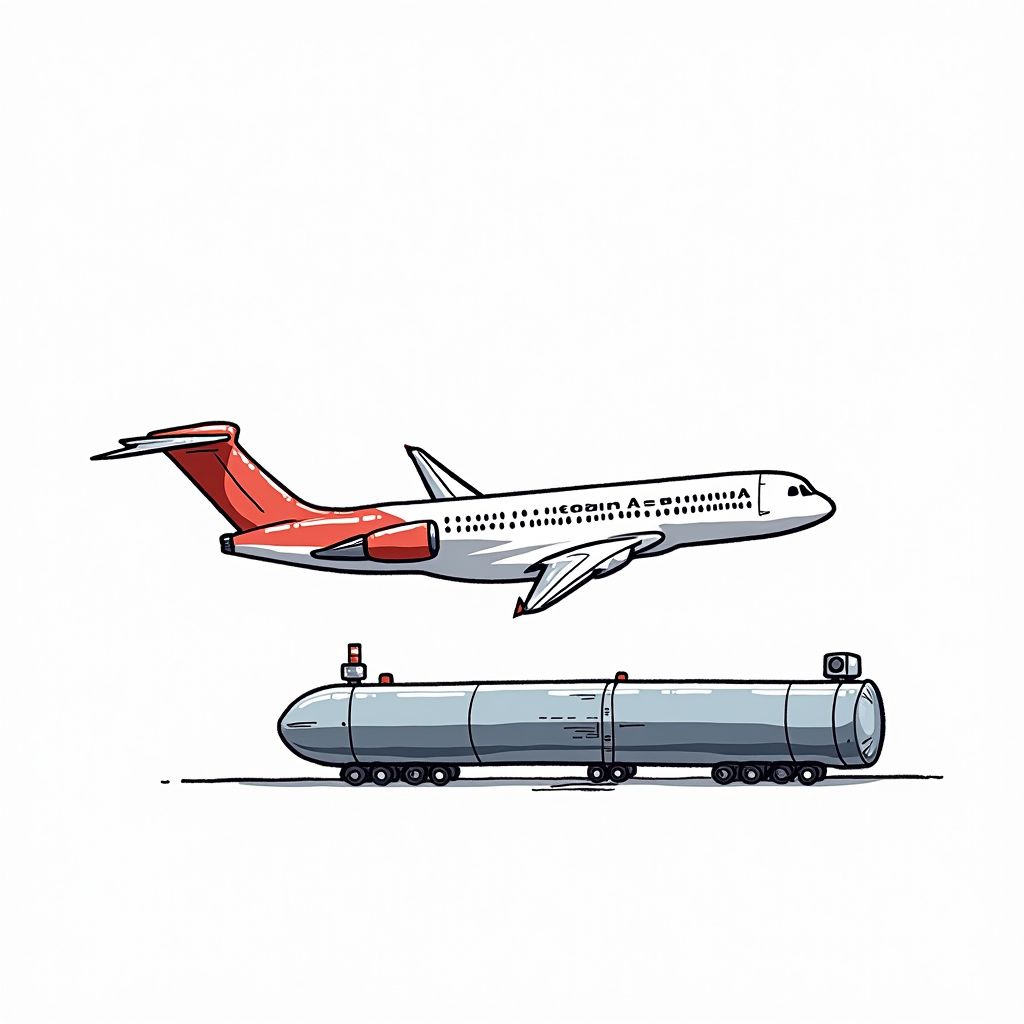
The urgency of these advisories is underscored by a critical safety incident that occurred in December 2025, illustrating the tangible risks to civil aviation. JetBlue Flight 1112, an Airbus aircraft departing from Curaçao, was forced to take evasive action to avoid a mid-air collision with a U.S. Air Force refueling tanker approximately 60 kilometers off the coast of Venezuela [6][7]. The military vessel reportedly did not have its transponder activated, a scenario that exemplifies the “potential risks” cited in the current NOTAMs [3][7]. Following the military attack on Venezuela, the FAA had previously restricted flights throughout the Caribbean, resulting in hundreds of cancellations [1][3].
Industry Caution and Diplomatic Responses
U.S. carriers have adopted a cautious stance in response to the new directives; United Airlines stated it is monitoring the situation, while Southwest Airlines confirmed it remains in contact with the government regarding regional activities [1]. Conversely, Mexican authorities have sought to downplay the operational impact. Mexico’s civil aviation authority clarified that the notice applies strictly to U.S. operators and does not constitute a flight prohibition [1]. Meanwhile, Mexican President Claudia Sheinbaum emphasized that her government’s efforts against cartels are already yielding “compelling results,” pushing back against the narrative necessitating U.S. intervention [3].
Sources
- www.forbes.com
- www.foxnews.com
- www.aljazeera.com
- www.nytimes.com
- www.ctvnews.ca
- www.reuters.com
- www.independent.co.uk
- safefly.aero