Fervo Energy Secures Landmark Turbine Agreement to Scale Clean Geothermal Power
Houston, Friday, 10 April 2026.
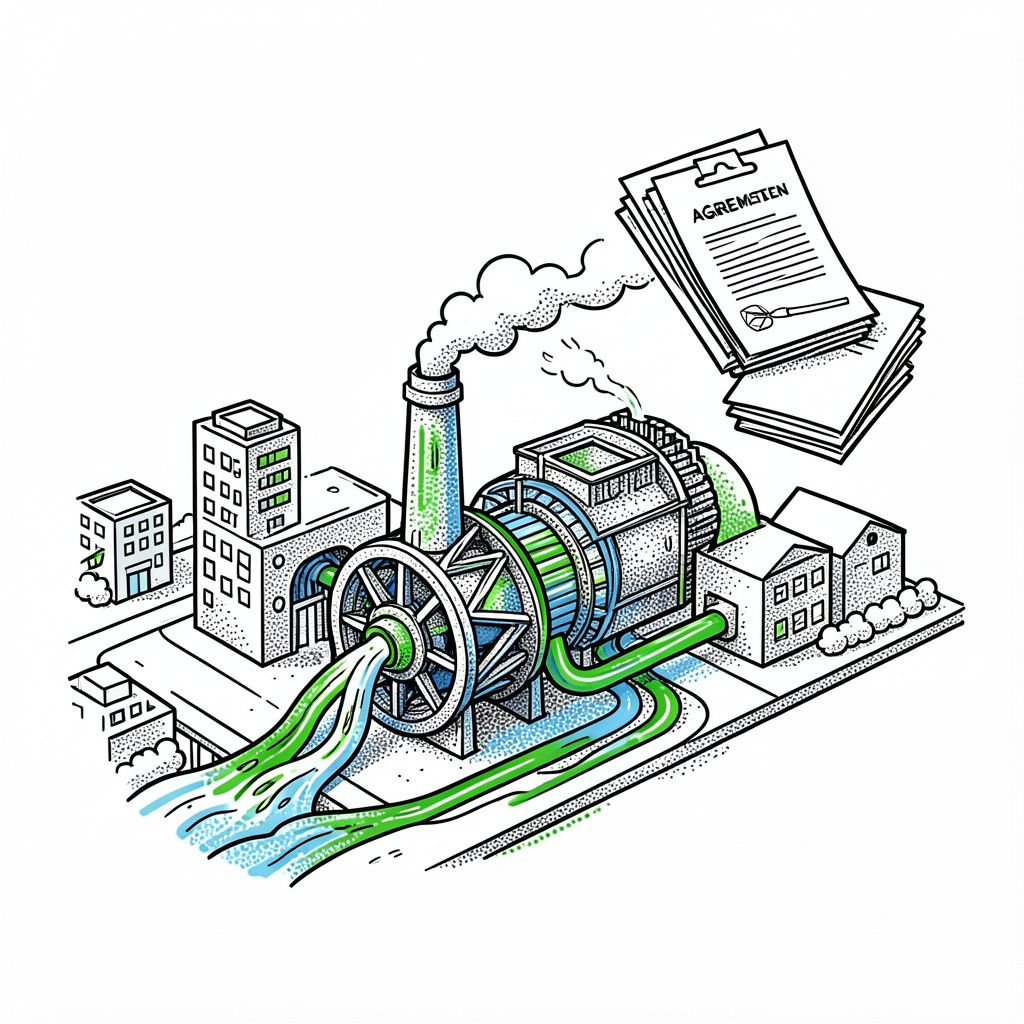
Fervo Energy’s 1.75-gigawatt agreement with Turboden America signals a commercial breakthrough for next-generation geothermal technology, promising to expand current U.S. geothermal power capacity by more than 50 percent.
A Massive Scale-Up for Next-Generation Geothermal
On April 7, 2026, Texas-based Fervo Energy cemented a three-year binding framework agreement with Turboden America, a subsidiary of the Italian manufacturer Turboden S.p.A., which is part of the Mitsubishi Heavy Industries Group [1][2]. The agreement secures 1.75 gigawatts of Organic Rankine cycle (ORC) turbine capacity [1][3]. This capacity translates to up to 35 individual 50-megawatt power plants, which Fervo refers to as “GeoBlocks” [2]. The calculation 1750 confirms the 1,750 megawatts of committed generation [2]. By securing this supply chain milestone, Fervo Energy—which has successfully completed 14 funding rounds and is reportedly preparing for an initial public offering—is positioning itself to rapidly deploy commercial-scale geothermal power [1][4].
Leveraging Legacy Oil and Gas Technology
The technological approach driving this expansion relies heavily on innovations adapted from the traditional oil and gas industry. Fervo Energy utilizes horizontal drilling and distributed fiber-optic sensing to access and optimize deep subsurface heat [4]. The company’s binary cycle power plants use a secondary fluid that is vaporized by the geothermal heat to spin the ORC turbines, converting underground thermal energy into carbon-free electricity [4]. Crucially, Turboden’s ORC turbines achieve this power conversion without increasing water consumption, fuel usage, or carbon dioxide emissions [2].
Cape Station and Data Center Demand
The initial deployment of these turbines will heavily support Fervo’s flagship project, Cape Station, located in Beaver County, Utah [1]. Turboden America is already contracted to supply more than half of the turbine capacity for this site [1]. While the first 100-megawatt phase of the 500-megawatt project is officially slated to come online later in 2026, there is some uncertainty regarding whether this ambitious deadline will be met [alert! ‘Source data indicates the Phase I deadline may currently be unmet or facing delays’] [1][2][3]. Ultimately, Cape Station is projected to reach its full 500-megawatt capacity by 2028 [5]. Internal and independent estimates suggest the Utah site holds an estimated 4.3 gigawatts of total capacity potential [1].
Meeting the Baseload Needs of Hyperscalers
Beyond Utah, Fervo is developing the 115-megawatt Corsac Station in Nevada, designed to supply electricity to NV Energy and technology giant Google [1]. This aligns with a broader macroeconomic trend: data center developers are increasingly looking to advanced geothermal systems as a reliable, 24/7 baseload power solution to meet soaring electricity demands [2][3]. Because geothermal energy provides a constant power output—unlike intermittent renewable sources such as wind and solar—it is uniquely suited to stabilize strained power grids [1][5].
Transforming the U.S. Power Grid and Labor Market
The scale of Fervo’s current pipeline highlights a dramatic shift in the U.S. energy landscape. Combined, the Cape Station project and the newly procured 1.75 gigawatts of turbine capacity represent over 2.2 gigawatts of geothermal power [1]. The United States currently has approximately 4 gigawatts of installed geothermal capacity, which accounts for less than 1 percent of the country’s total electricity generation [1][5]. If Fervo successfully brings this combined 2.2 gigawatts online, it would represent a 55 percent increase over the existing national capacity [1][5]. Looking further ahead, the U.S. Department of Energy projects that domestic geothermal power could expand twentyfold to reach 90 gigawatts by 2050 [5].
A Transition Pathway for Fossil Fuel Workers
This renewable energy expansion is also creating a direct transition pathway for the traditional energy workforce. Up to 80 percent of the investment required for geothermal projects relies on skills and capacities common to the oil and gas sector [5]. At Fervo’s Cape Station in Utah, 90 percent of the labor force consists of former fossil fuel workers [5]. As the International Energy Agency projects the global geothermal workforce could grow from 145,000 to one million by the end of the decade, the synergy between legacy drilling expertise and next-generation clean energy will be critical for achieving long-term climate goals [5].