Apartment Construction Drops sharply while Massive Cash Reserve Awaits Investment
New York, Thursday, 13 August 2026.
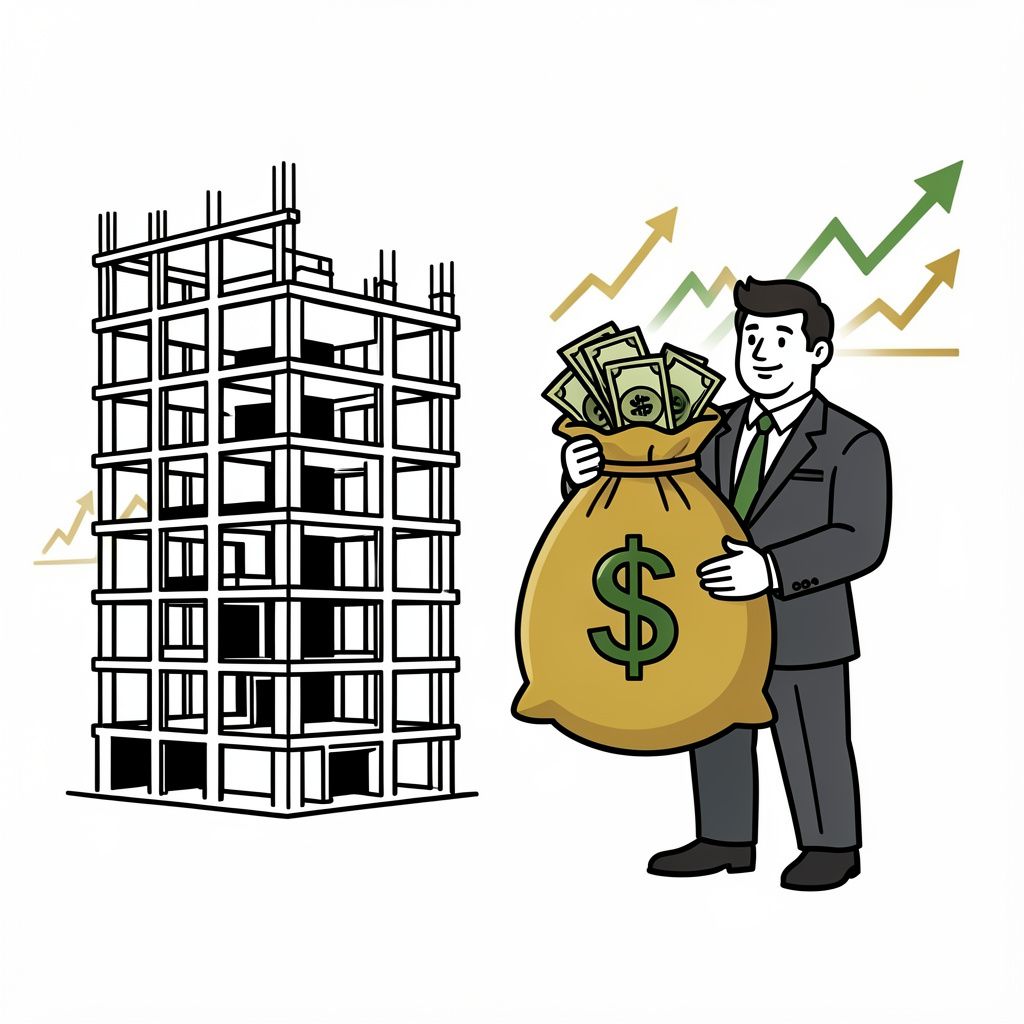
U.S. apartment construction starts have fallen over 50%, yet investors hold $174 billion ready to deploy as housing market supply drops.
A Transition to Normalization Amid Supply Reductions
According to the Q2 2026 U.S. Multifamily Market Report released by Viking Capital on August 13, 2026, the multifamily sector is undergoing a transition toward stabilization as supply pressures begin to ease [1]. Following a peak in 2025 where unit deliveries reached approximately 523,000 units, completions are projected to drop to 333,000 units in 2026 [1]. This represents a significant contraction of -36.329%, bringing construction deliveries to their lowest volume since 2014 [1]. Furthermore, construction starts have plummeted by more than 50% from their 2023 peak, signaling a prolonged reduction in future supply [1]. While early 2026 national vacancy rates for institutional-quality properties hovered between 6.7% and 6.8%, and occupancy hit a multi-year low of 94.1% in April 2026, the reduction in new completions is expected to support a gradual recovery in occupancy levels [1].
Regional Disparities and Demand Resilience
The impact of this supply contraction is highly regionalized. Sun Belt markets such as Austin, Phoenix, Denver, and Tampa are currently grappling with elevated inventory levels and widespread rent concessions, with asset values in many of these areas falling 20% to 30% below their 2022 peaks [1]. Conversely, supply-constrained Gateway and Midwest markets are exhibiting much stronger rent growth [1]. On a localized level, New York City is experiencing an anomalous construction surge, with developers proposing nearly 17,000 new multifamily units in Q1 2026—the highest apartment construction volume since 1965—though this remains insufficient to close a 400,000-unit regional housing deficit [5]. Despite these localized imbalances, broader demand remains robust. Net absorption for Q2 2026 reached approximately 73,000 units [1], contributing to a first-half 2026 total absorption of over 279,000 units, which represents the second-highest first-half absorption on record [4].
Sidelined Capital and Future Outlook
A massive pool of capital is waiting to enter the market. Through Q1 2026, developers and fund managers raised $174 billion in equity capital for U.S. multifamily acquisitions on a rolling two-year basis, leading all major commercial real estate asset classes [1]. However, transaction volumes remain constrained by wide bid-ask spreads and uncertainty regarding financing costs, driven by higher-for-longer interest rates and inflation [1][2][3]. Despite these headwinds, investment sales volume reached $72.1 billion in Q2 2026, accounting for 28.1% of all U.S. commercial investment sales [4]. Over the next 12 to 24 months—stretching from August 2027 to August 2028—the shrinking construction pipeline is expected to fundamentally alter market dynamics, allowing Sun Belt markets to gradually absorb excess inventory and enabling the broader sector to leverage its durable, essential-demand fundamentals [1][3].