Proposed Southwest Gas Pipeline Sparks Protests Over Energy for Artificial Intelligence
Phoenix, Sunday, 2 August 2026.
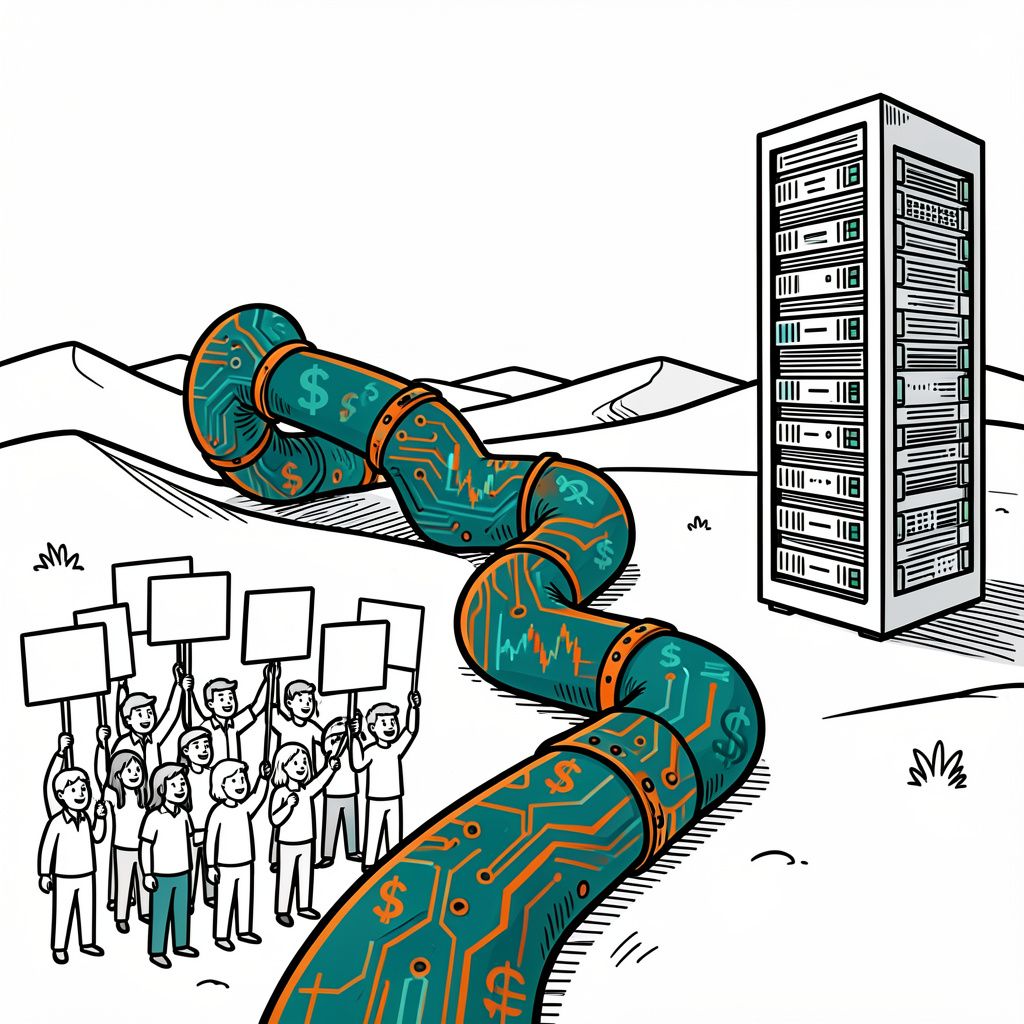
Protests are escalating over Energy Transfer’s proposed 837-kilometer natural gas pipeline across three southwestern states, designed primarily to meet the enormous power demands of expanding artificial intelligence data centers.
Infrastructure Scope and Environmental Concerns
The proposed Desert Southwest Pipeline spans approximately 520 miles, translating to 836.857 kilometers, traversing Texas, New Mexico, and Arizona [1]. Energy Transfer intends for the 48-inch-wide infrastructure to supply natural gas primarily to hyperscale data centers, including the notable Project Jupiter facility [1]. Environmental advocacy groups argue that construction would threaten sensitive ecosystems such as the Otero Mesa region and contaminate critical water systems including the Pecos and Rio Grande rivers [1]. Opposition has mobilized around the potential for increased pollution in communities like Chaparral, which are already burdened by industrial emissions [1]. The Federal Energy Regulatory Commission holds permitting authority, though state agencies also possess decision-making power regarding the project’s approval [1].
Data Center Market Dynamics
Economic data indicates a shift in the growth trajectory of the digital infrastructure sector supporting these energy demands. According to a Q2 2026 report by Wood Mackenzie, 36GW of new data center capacity was added to the development pipeline during the first quarter of 2026 [2]. This figure represents a 19% decline compared with the fourth quarter of 2025, suggesting developers are focusing on advancing existing projects rather than announcing new capacity [2]. Total disclosed pipeline capacity currently stands at 331GW, with approximately 40% of projects under active development [2]. This slowdown occurs even as power demands from artificial intelligence operations continue to drive interest in dedicated energy infrastructure like the southwestern pipeline [2].
Regulatory Landscape and Land Use
Broader federal land policies are influencing the placement of technology infrastructure across the region. Recent reports from July 30, 2026, highlight that thousands of federally protected acres in Nevada are being fast-tracked for tech infrastructure without slow permitting processes [3]. This shift prioritizes technology infrastructure over previous conservation designations, sparking debate over the trade-offs between economic progress and public land preservation [3]. The interplay between federal land management and energy permitting remains a critical factor for investors and stakeholders monitoring the viability of large-scale projects [3]. As of August 2, 2026, the outcome of these regulatory decisions remains pending [3].