Mexican Peso Drops Following Donald Trump's Speech at United Nations
Mexico City, Wednesday, 23 September 2026.
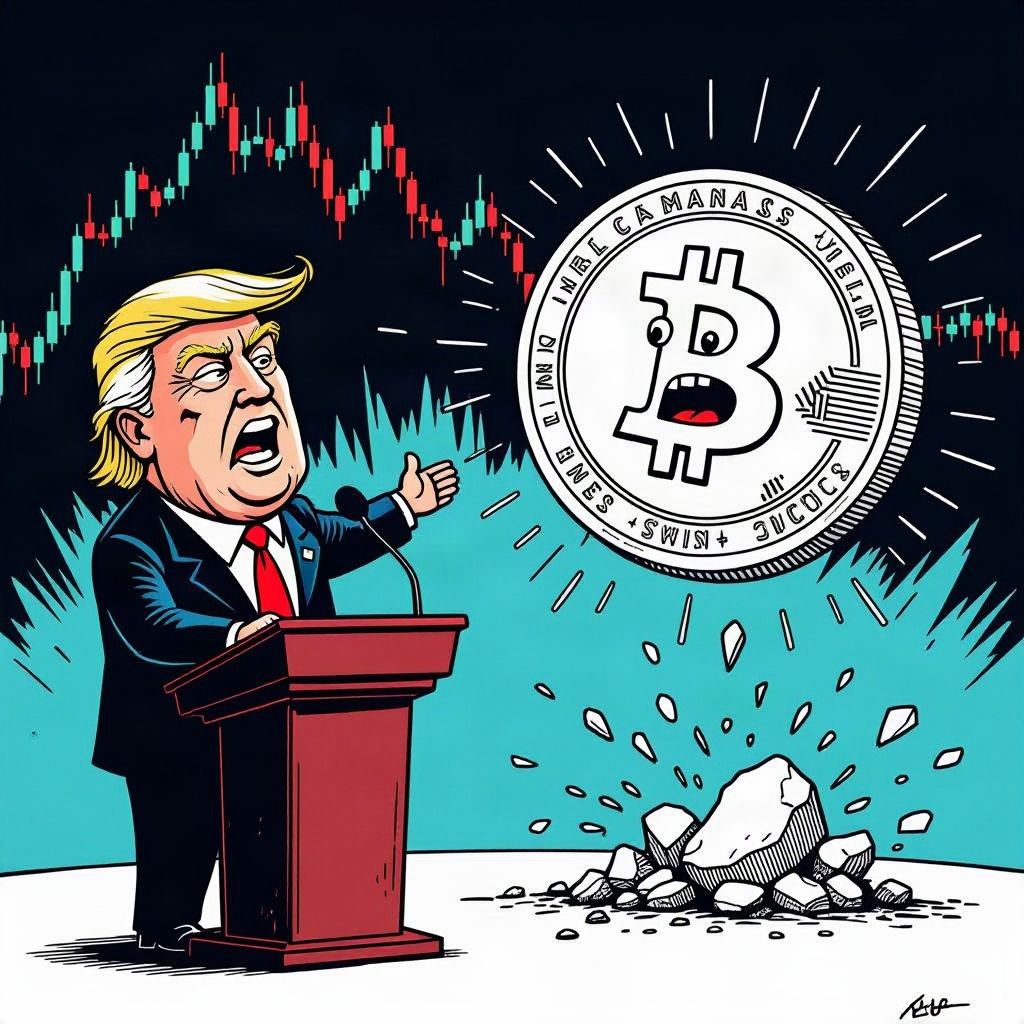
On September 22, 2026, the Mexican peso plunged to 17.29 per dollar, becoming the world’s second most depreciated currency following sharp security criticisms from U.S. President Donald Trump.
Geopolitical Tensions Drive Currency Slump
The immediate catalyst for the peso’s depreciation was President Donald Trump’s address to the United Nations General Assembly on September 22, 2026, where he labeled Mexico as the epicenter of cartel violence [1]. Gabriela Siller Pagaza, director of Economic and Financial Analysis at Grupo Financiero Base, noted that these remarks significantly increased the risk perception surrounding Mexico, raising concerns about potential new tensions in the bilateral relationship with the United States [1]. The dollar reached its session peak precisely during Trump’s speech, highlighting the market’s sensitivity to geopolitical rhetoric [1]. Although Trump later moderated his tone to acknowledge bilateral advances, the initial shockwave had already impacted currency valuations [1].
Market Reaction and Technical Levels
Following the speech, the Mexican peso closed the Tuesday session at 17.29 units per dollar, marking a 0.43% depreciation [1]. Intraday trading operated within a range of 17.2098 to 17.3160 pesos per dollar, representing a volatility span of 0.106 pesos [1]. Technical analysis suggests that if the exchange rate sustains levels above 17.4240, the rebound could extend toward 17.58 and 17.81 [1]. Conversely, a drop below 17.0408 would increase the probability of retesting the double-bottom base at 16.8555 [1]. This volatility positioned the peso as the second most depreciated currency in the global session, according to market analysis [1].
Regional Currency Volatility and Oil Prices
The depreciation of the Mexican peso occurred within a broader trend of Latin American currency weakness driven by global dollar oscillations [2]. On Tuesday, September 22, 2026, major regional currencies declined amid a approximately 1% drop in crude oil prices, influenced by expectations of negotiations between the United States and Iran [2]. The Brazilian real rose 0.08% to 5.1040 per dollar, while the Colombian peso closed at 3.203 per dollar, accumulating seven days of losses by September 21, 2026 [2]. The Peruvian sol also depreciated 0.3% to 3.3620/3.3660 per dollar, reflecting widespread regional pressure [2].
Energy Markets and Diplomatic Expectations
Oil prices touched their lowest level in 12 days due to expectations of diplomatic progress regarding Iran during the UN General Assembly and a partial recovery in shipments from Saudi Arabia [7]. The DXY dollar index reached a two-month high of 100.70 points during the day before trimming gains to close with a 0.12% advance at 100.59 points [1]. This strengthening of the US currency negatively affected emerging market currencies, including the Mexican peso, as investors adjusted positions ahead of key diplomatic and monetary events [2].
Central Bank Policy and Inflation Concerns
Market attention is now focused on the Bank of Mexico’s interest rate decision scheduled for September 24, 2026 [2]. Investors expect the monetary authority to maintain the reference rate unchanged following the 25 basis point hike delivered by the Federal Reserve the previous week [1]. Susan Collins, Boston Federal Reserve President, supported the recent interest rate hike, citing risks of inflation remaining notably above the 2% target [2]. The market anticipates that Bank of Mexico will keep its key interest rate unchanged for an extended period, despite the Federal Reserve’s signal of further adjustments [7].
Economic Implications for Trade and Investment
The depreciation of the peso increases the cost of imported products such as electronics and food, raising internal inflation and operational costs for companies with foreign inputs [6]. However, the weaker currency benefits export sectors and tourism by increasing price competitiveness [6]. Corporate leaders and international investors are closely monitoring these fluctuations due to potential disruptions in cross-border trade and foreign direct investment flow between the United States and Latin American markets [GPT]. The trajectory of the exchange rate will depend on Mexico’s ability to maintain investor confidence and control inflation in the coming months [6].
Sources
- es-us.finanzas.yahoo.com
- www.elnuevoherald.com
- oem.com.mx
- www.facebook.com
- www.facebook.com
- reporteaguila.mx
- forbes.com.mx
- www.facebook.com