Unprecedented Air Traffic Communication Failure Halts All Domestic Flights Nationwide
Washington, Friday, 13 November 2026.
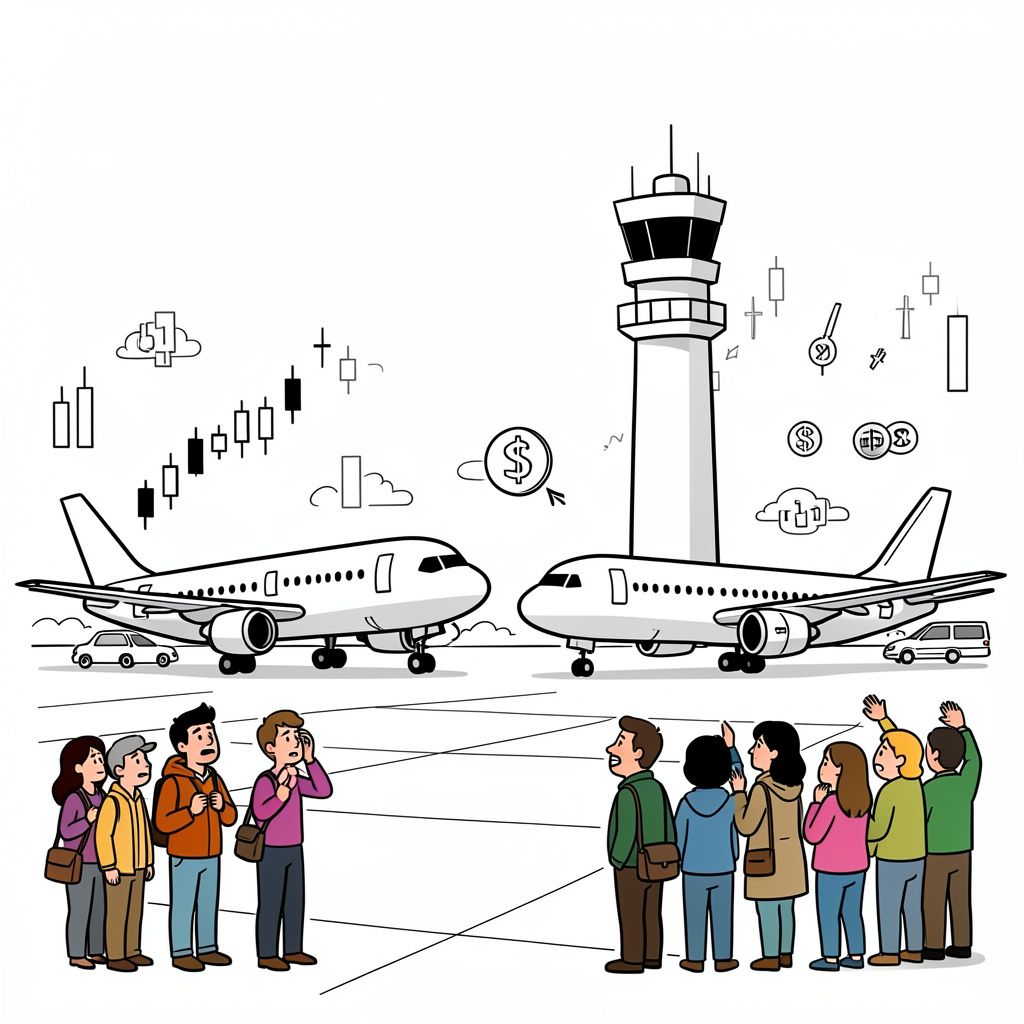
A critical telecommunications breakdown across high-altitude control centers forced a rare nationwide ground stop on Friday, November 13, 2026, though federal officials confirmed the disruption was not a cyberattack.
A Rare and Unprecedented Ground Stop
The Federal Aviation Administration (FAA) ordered a nationwide ground stop for all domestic flights on Friday, November 13, 2026, citing ‘extraordinary circumstances’ and critical safety concerns [1][3][5][8]. This decision halted all departures at U.S. airports until further notice, marking only the second time in history such a measure has been enacted—the first being in September 2001 following the terrorist attacks [1][5][8]. Air Route Traffic Control Centers (ARTCCs), responsible for managing high-altitude airspace, experienced a sudden and unexplained telecommunications failure, rendering automated systems and frequency communications inoperative [1][3][5][8]. The disruption triggered ‘ATC Zero’ conditions in multiple regions, where controllers lost all ability to manage aircraft handoffs and flight paths, forcing an immediate cessation of departures [1][8].
Immediate Economic and Logistical Disruptions
The economic ripple effects of the ground stop were immediate and far-reaching. Airlines canceled thousands of domestic flights, stranding passengers and disrupting supply chains that rely on air freight for time-sensitive cargo [1][3][5][8]. Major carriers such as Delta Air Lines and JetBlue reported significant operational impacts, with over 1,000 flights canceled or delayed in the Northeast alone on the preceding day due to severe weather, compounding Friday’s ground stop disruptions [7]. The cancellation of inbound international flights on a case-by-case basis further strained global logistics networks, as airports like John F. Kennedy International and Newark Liberty International were forced to reroute or delay arrivals [3][8]. Transportation Secretary Sean Duffy confirmed that FAA technicians were investigating the root cause of the telecommunications failure, though no evidence of a cyberattack had been identified as of Friday evening [1][3][5][8]. Homeland Security Secretary Markwayne Mullin emphasized that the incident was not an act of terrorism, stating, ‘This isn’t another 9/11,’ and urging the public not to panic [1][3][5][8].
Underlying Vulnerabilities in U.S. Air Traffic Systems
The ground stop has highlighted long-standing vulnerabilities within the U.S. air traffic control infrastructure. The FAA is currently undergoing a $12.5 billion systems overhaul to modernize its physical and radio networks, a project that has faced delays and cost overruns [8]. Transportation Secretary Duffy indicated that an additional $30 billion in Congressional funding may be required to complete the transition, raising questions about the system’s resilience in the face of unexpected failures [8]. The incident also raised concerns about the FAA’s reliance on legacy technology. Air traffic controllers reported that frequencies and automation systems failed simultaneously across multiple ARTCCs, creating a cascading failure that overwhelmed backup protocols [1][8]. Preliminary reports from law enforcement and aviation officials suggest the outage stemmed from a telecommunications malfunction rather than a coordinated attack [1][8]. However, the lack of transparency regarding the failure’s origin has fueled speculation and underscored the need for a comprehensive review of air traffic control redundancies [alert! ‘no official confirmation of failure origin’].
Broader Implications for Commerce and Travel
The economic impact of the ground stop extends beyond the aviation sector. The closure of U.S. airspace disrupted just-in-time supply chains, particularly for industries reliant on overnight air freight, such as pharmaceuticals and perishable goods [GPT]. Air cargo, which accounts for approximately 0.5% of U.S. gross domestic product (GDP) by value, faced significant delays as flights were grounded [GPT]. Airlines warned that prolonged disruptions could lead to additional cancellations through the weekend, exacerbating financial losses for carriers already grappling with reduced demand post-pandemic [3][8]. The FAA’s decision to halt departures also stranded thousands of passengers, many of whom faced uncertain rebooking options. While major airlines such as American Airlines and United Airlines offered flexible rebooking policies with waived change fees, the logistical challenges of accommodating displaced travelers across over 3,000 U.S. airports remained daunting [7][8]. The incident has prompted calls from industry stakeholders for greater investment in air traffic control modernization and enhanced emergency response protocols to mitigate future disruptions [GPT].