Court Orders Immediate Cleanup of Thousands of Abandoned Wind Turbine Blades in Texas
Austin, Tuesday, 7 July 2026.
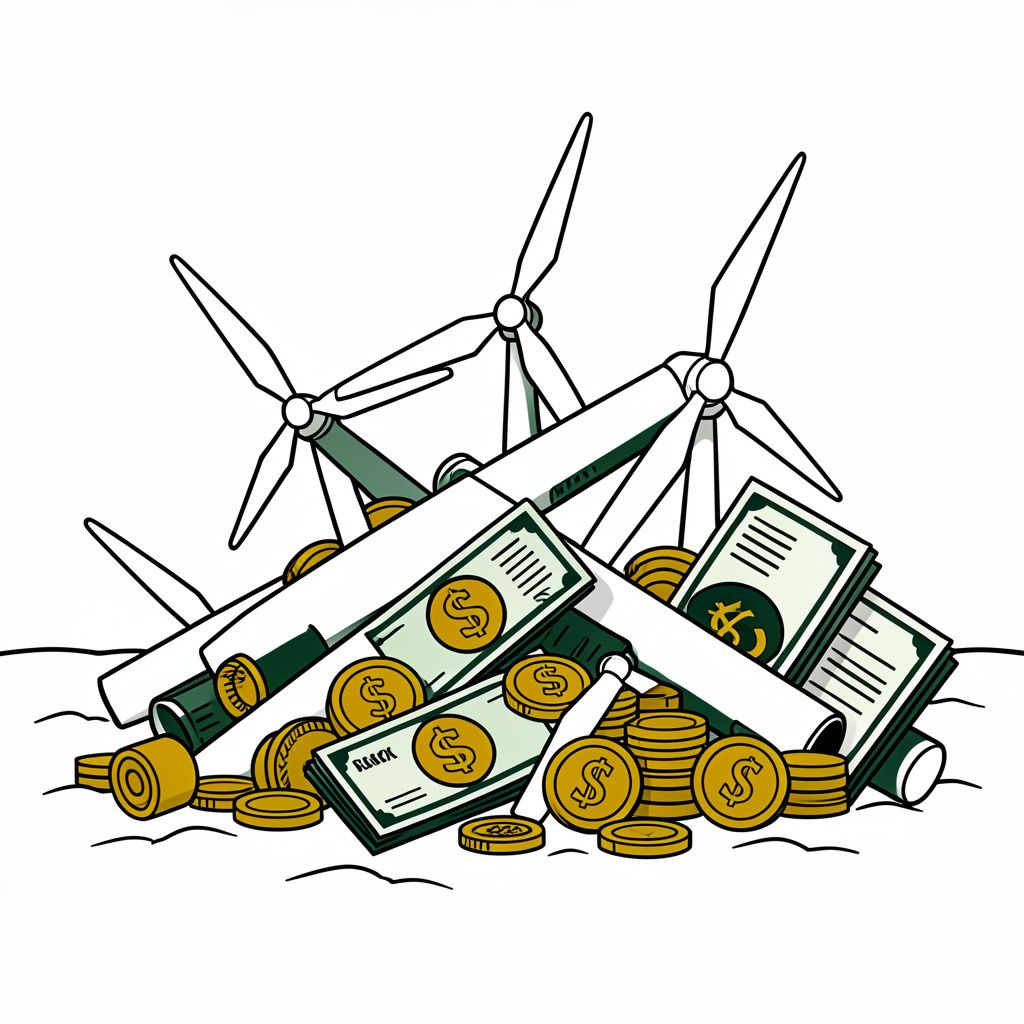
Texas secured a court injunction forcing a recycling firm to clean up over 3,000 illegally stockpiled wind turbine blades, highlighting growing waste challenges for renewable energy.
A Decisive Legal Mandate in West Texas
On Tuesday, July 7, 2026, Texas Attorney General Ken Paxton, a Republican, secured a significant legal victory by obtaining a Temporary Injunction against Global Fiberglass Solutions, Inc. and its affiliated entities [1][2][GPT]. This judicial order represents an active, implemented legal enforcement action rather than a mere campaign proposal or statement of political intent [1][GPT]. The injunction legally binds the defendants, forcing them to immediately stop accepting any new shipments of decommissioned wind turbine blades and to begin cleaning up two unpermitted stockpiles located in Sweetwater, Texas [1][4].
The Accumulation of Unregulated Waste
The legal battle began in earnest in February 2026, when Paxton’s office filed a lawsuit against the recycling firm for ongoing violations of the state’s solid waste disposal laws [1][3]. Global Fiberglass Solutions had been contracted by various energy companies to transport, break down, and recycle retired wind turbine components [1]. Instead of fulfilling these contractual and regulatory obligations, the company accumulated an unpermitted stockpile of over 3,000 wind turbine blades and parts, creating what the state characterized as hazardous, illegal dumping grounds that threaten local ecosystems and communities [1]. With more than 3,000 blades and parts accumulated across the two Sweetwater facilities, the sites hold an average of approximately 1500 discarded components per location [1].
The Growing Bottleneck of Renewable Waste
This enforcement action highlights a critical, systemic challenge facing the green energy transition across the United States [GPT]. While wind power is a cornerstone of carbon-reduction strategies, the physical infrastructure of wind generation presents a formidable end-of-life disposal issue [GPT]. First-generation wind turbines, built during the early boom of renewable energy installations, are now reaching the end of their typical 20- to 25-year operational lifespans [GPT].
Material Complexity and Financial Liabilities
The primary obstacle lies in the material composition of the turbine blades, which are engineered from highly durable composite materials like fiberglass and epoxy resins to withstand extreme weather conditions [GPT]. Because these composite materials are exceptionally difficult and expensive to break down, recycling them is a complex industrial process that few companies can execute at scale [GPT]. When recycling contractors like Global Fiberglass Solutions fail to perform, the resulting logistical bottlenecks often leave landowners and municipal governments holding the liability for thousands of tons of non-biodegradable waste [1][GPT].
Future Liabilities and Regulatory Oversight
Under the terms of the newly secured Temporary Injunction, the defendants must immediately pivot from accumulation to remediation [1][4]. The court order mandates that Global Fiberglass Solutions begin the labor-intensive process of breaking down the stockpiled blades and transporting them to authorized, legally compliant waste disposal facilities [1]. Attorney General Paxton’s office has signaled that this present injunction is merely a preliminary step, as the state continues to pursue substantial civil penalties and a permanent resolution to ensure the complete restoration of the affected West Texas land [1][3].
Broader Implications for the Green Transition
As the federal government and various states push forward with aggressive renewable energy mandates, the situation in Sweetwater serves as a stark reminder of the regulatory friction that can occur when waste management infrastructure fails to keep pace with technological deployment [GPT]. For wind farm operators and clean energy investors, the Texas ruling underscores that environmental liability does not end when a turbine stops spinning [1][GPT]. State regulators are increasingly willing to use strict statutory frameworks to hold third-party recycling firms accountable, signaling that the future of renewable energy must include robust, legally compliant decommissioning plans [1][GPT].