The Reluctant Witness: Nixon Aide Who Exposed the Secret Oval Office Tapes Dies at 99
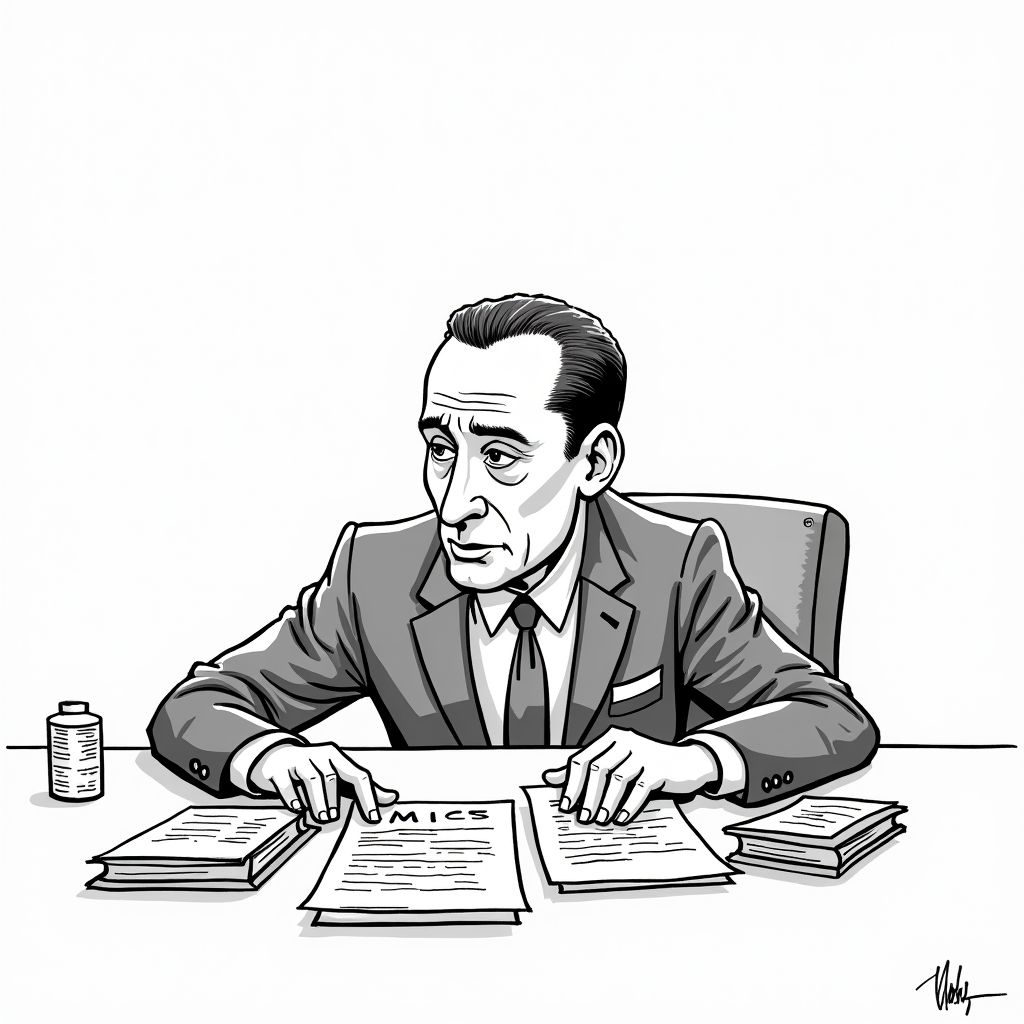
Washington, D.C., Tuesday, 10 March 2026.
Alexander Butterfield has died at 99. Despite overseeing their installation, his reluctant 1973 testimony exposed Nixon’s secret tapes, triggering the president’s resignation and forever reshaping American political accountability.
Ascension to the Inner Circle and the Secret System
Alexander P. Butterfield’s journey to the center of Republican President Richard M. Nixon’s administration began far from the political arena [1][2][GPT]. Joining the US Air Force in 1948, Butterfield distinguished himself as a pilot, serving in the Vietnam War and earning the Distinguished Flying Cross before rising to the rank of colonel [1]. His trajectory shifted dramatically after befriending H.R. Haldeman at the University of California, Los Angeles [1]. Through this connection, Butterfield secured a role as a deputy assistant to the president, ultimately becoming one of Nixon’s closest aides [1]. By late 1969, his office was strategically relocated to adjoin Nixon’s own workspace [1].
The Testimony That Shook Washington
The existence of these tapes remained a closely guarded secret until the summer of 1973, as investigations into the Watergate cover-up intensified [1][2]. On July 13, 1973, while being questioned by the staff of the Senate Watergate Committee, Butterfield was pressed on the matter of White House recordings [2]. ‘I was hoping you fellows wouldn’t ask me about that,’ he remarked, before confirming the system’s existence [2]. Three days later, on July 16, 1973, he delivered his bombshell public testimony before the full Senate Watergate Committee, fundamentally altering the course of the investigation [1][2].
Navigating the Fallout
Unlike many of his contemporaries in the Nixon administration, Butterfield was never charged with any crimes related to the Watergate scandal [1]. Before the scandal reached its zenith, Nixon had nominated him in 1972 to serve as the administrator of the Federal Aviation Administration (FAA) [1]. The Senate confirmed his appointment the following year [1]. However, his tenure in the federal government was relatively short-lived; he resigned from the FAA in 1975 after being asked to step down by Republican President Gerald Ford [1][GPT].
A Legacy Defined by Reluctance
Decades after the scandal, Butterfield expressed deep frustration over his enduring public image. In a 2012 interview with The Washington Post, he stated, ‘Frankly, I don’t like being known as the man who revealed the existence of the tapes’ [1]. He clarified that he did not eagerly volunteer the information, adding, ‘It makes it appear that I ran full tilt to the Watergate committee and told them eagerly and breathlessly the very information that Nixon considered top secret. That was not the case’ [1].