U.S. Forces Initiate Major Retaliatory Airstrikes Against ISIS in Syria
Damascus, Saturday, 20 December 2025.
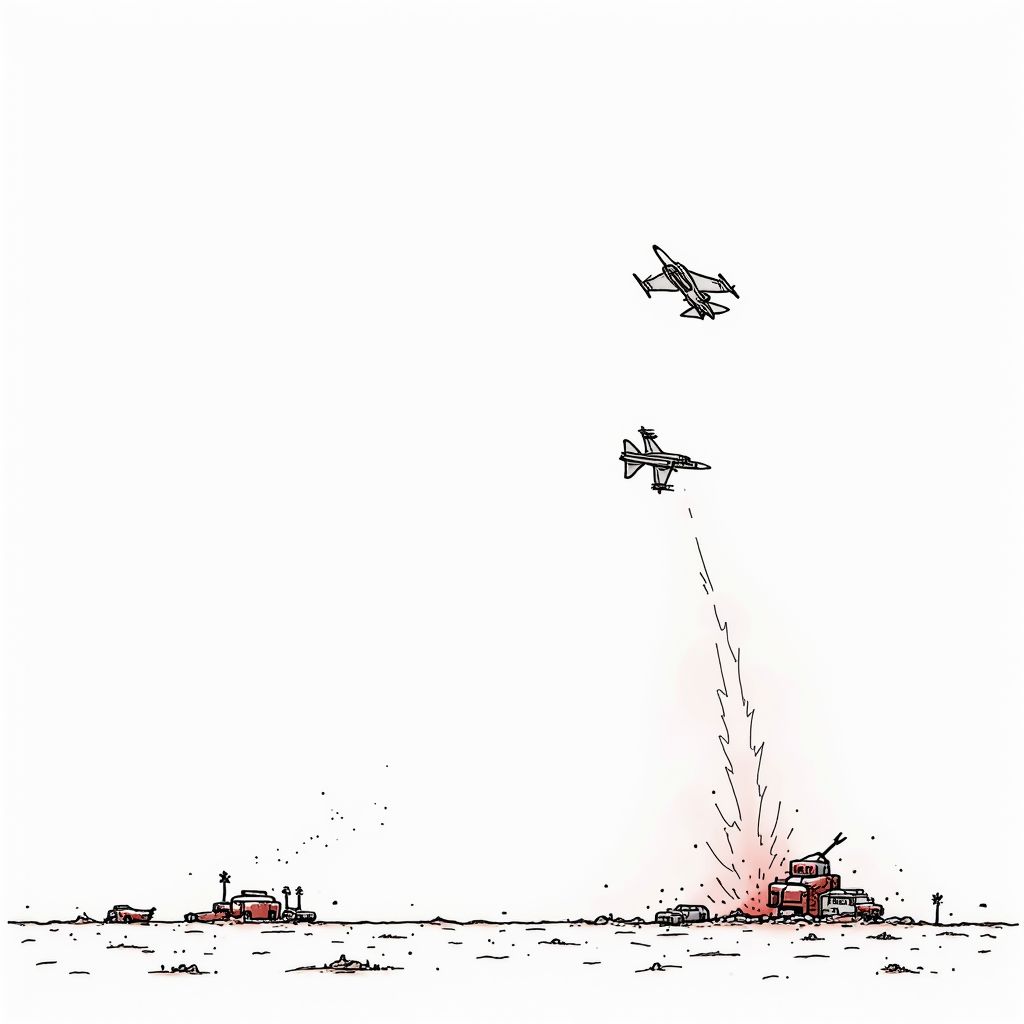
In a decisive response to the December 13 attack that killed two American soldiers, U.S. Central Command has executed “Operation Hawkeye Strike.” Launched on Friday, December 19, 2025, this massive offensive targeted dozens of ISIS weapons caches and infrastructure sites across central Syria. The operation fulfills President Trump’s pledge of vengeance and signals a sharp escalation in counter-terrorism efforts following the recent collapse of the Assad government. With approximately 1,000 U.S. troops remaining in the region, this coordinated strike aims to dismantle terror networks currently exploiting the country’s post-regime instability.
Operational Details and Strategic Retaliation
For a comprehensive background on the December 13 ambush that precipitated these events, readers may consult our previous coverage: Deadly Ambush in Post-Assad Syria Signals Persistent ISIS Threat. Following that tragic loss of two U.S. Army soldiers and a civilian interpreter, American forces launched “Operation Hawkeye Strike” on Friday, December 19, 2025 [1][2]. This large-scale offensive utilized a combination of fighter jets, attack helicopters, and artillery to strike dozens of ISIS-linked targets across central Syria, including critical weapons storage facilities [1][2]. Intelligence gathered in the days following the initial ambush on the U.S. patrol near Palmyra helped identify the specific locations targeted in this wave of strikes [2]. Defense officials have characterized the operation as a fulfillment of President Trump’s vow to avenge the fallen Americans, with Secretary Pete Hegseth issuing a stark warning to those targeting U.S. personnel: “This is not the beginning of a war — it is a declaration of vengeance… you will spend the rest of your brief, anxious life knowing the United States will hunt you, find you, and ruthlessly kill you” [2].
Escalation in a Post-Assad Landscape
The intensity of Operation Hawkeye Strike highlights the volatile security environment in Syria one year after the collapse of Bashar al-Assad’s government in December 2024 [3][4]. While the U.S. has reduced its military footprint in the country to approximately 1,000 troops—a decrease of -50% from the 2,000 personnel present at the start of 2025—the threat from ISIS remnants remains potent [1]. The terror group has sought to exploit the instability of the political transition, necessitating a sustained operational tempo from American forces [2]. According to U.S. Central Command (CENTCOM), U.S. and partner forces have conducted nearly 80 counterterrorism missions since July 2025 to prevent the group’s reconstitution [2][5]. These operations have resulted in the detention of 119 operatives and the deaths of at least 14 others over the last six months, disrupting plots that reportedly included threats against the U.S. homeland [5][6].
Regional Coordination and Security Dynamics
Recent developments underscore a shift toward deeper collaboration between U.S. forces and regional actors in the wake of the regime change. The targets struck on Friday build upon joint efforts with the Syrian Ministry of Interior, which recently assisted in locating and destroying 15 ISIS weapons caches containing mortars, rockets, and anti-tank mines [5][7]. This cooperation extends beyond Syria’s borders; on December 18, Iraqi security forces conducted an airborne raid into Syria’s northeastern Hasaka province, coordinating with the U.S.-led coalition to target cross-border terror cells [4]. Despite these tactical successes, the security situation remains fragile. The December 13 attack involved a gunman identified as a member of the Syrian security forces with extremist views, raising concerns about insider threats within the new security architecture [2]. As the United Nations Security Council continues to monitor the political transition and the interim government led by President Ahmed al-Sharaa, the U.S. military maintains a posture of aggressive pursuit to deny ISIS the opportunity to resurge [6][5].
Sources
- www.nytimes.com
- www.newsmax.com
- www.csmonitor.com
- www.longwarjournal.org
- www.centcom.mil
- www.securitycouncilreport.org
- www.welattv.net