Trump Halts European Tariffs After Securing Greenland Framework Deal With NATO
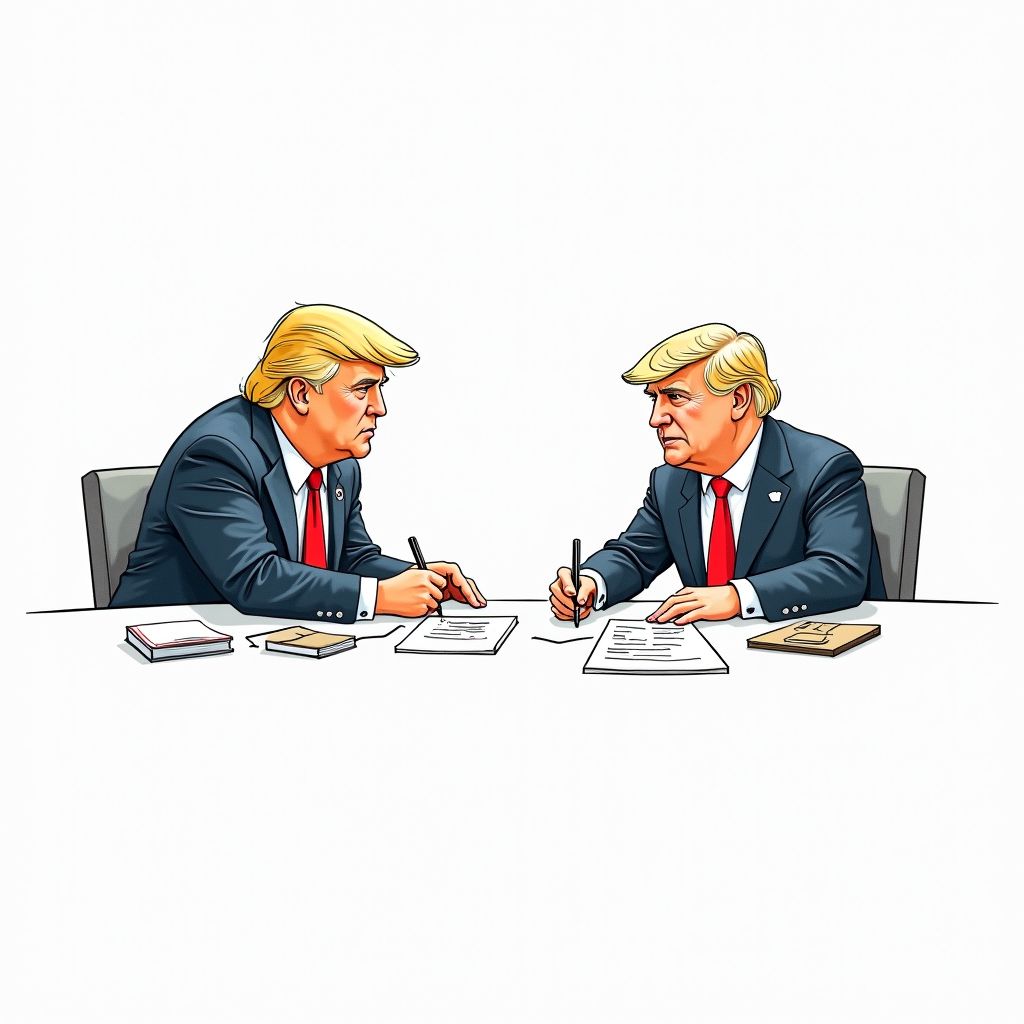
Davos, Wednesday, 21 January 2026.
Trump rescinded imminent European tariffs today after agreeing to a Greenland framework with NATO, securing U.S. access to the island’s strategic mineral rights and “Golden Dome” defense participation.
De-escalation at Davos
In a rapid pivot from the trade hostilities outlined in our previous report, President Trump has formally withdrawn the threat of punitive tariffs on European allies as of January 21, 2026 [1][3]. The reversal follows a high-stakes meeting with NATO Secretary General Mark Rutte at the World Economic Forum in Davos, Switzerland, where the two leaders agreed to a “framework of a future deal” concerning the strategic territory of Greenland [2][8]. Consequently, the 10 percent tariffs on nations such as the United Kingdom, France, and Denmark—originally scheduled to take effect on February 1—will no longer be imposed [3][8]. This diplomatic breakthrough immediately eased transatlantic tensions, with President Trump characterizing the new understanding as an “infinite” and “forever” arrangement that benefits the entire NATO alliance [3][8].
Strategic Minerals and Missile Defense
While the administration had previously demanded a “complete and total purchase” of the island, the newly established framework appears to prioritize U.S. access to strategic assets over immediate sovereignty transfer [6][8]. President Trump revealed that the agreement secures U.S. and European involvement in Greenland’s mineral rights, a critical sector given that the island holds the world’s eighth-largest reserves of rare earth elements [7]. These minerals are essential components for electric vehicles, electronics, and weapons systems, aligning with the administration’s industrial policy to secure supply chains [7]. Furthermore, the deal integrates Greenland into the “Golden Dome” missile defense system [4][7]. Negotiations regarding the specifics of this defense collaboration are ongoing, led by a high-level U.S. delegation including Vice President JD Vance, Secretary of State Marco Rubio, and Special Envoy Steve Witkoff [3][6].
Diplomatic Shift and Market Reaction
In a significant departure from his earlier rhetoric, President Trump explicitly ruled out the use of military force to acquire the territory, stating on January 21 that while the U.S. would be “unstoppable,” he has no intention of utilizing such measures [1][6]. This assurance was welcomed by Danish Foreign Minister Lars Løkke Rasmussen, although he reiterated that a transfer of ownership remains a “red line” for Copenhagen [3]. President Trump, however, appeared to bypass Danish objections by emphasizing his direct alignment with NATO leadership, remarking that Secretary General Rutte was “more important” in these negotiations than the Danish Foreign Minister [8]. The de-escalation was immediately cheered by global investors, with U.S. markets rallying on the news; the S&P 500 climbed 1.52 percent, while the Nasdaq rose 1.7 percent following the announcement [3].
Sources
- www.nytimes.com
- www.reuters.com
- www.bbc.co.uk
- www.cnbc.com
- www.aljazeera.com
- www.politico.com
- www.cnbc.com
- thehill.com