Persistent High Prices Force American Shoppers Toward Cheaper Alternatives
Charlotte, Sunday, 15 November 2026.
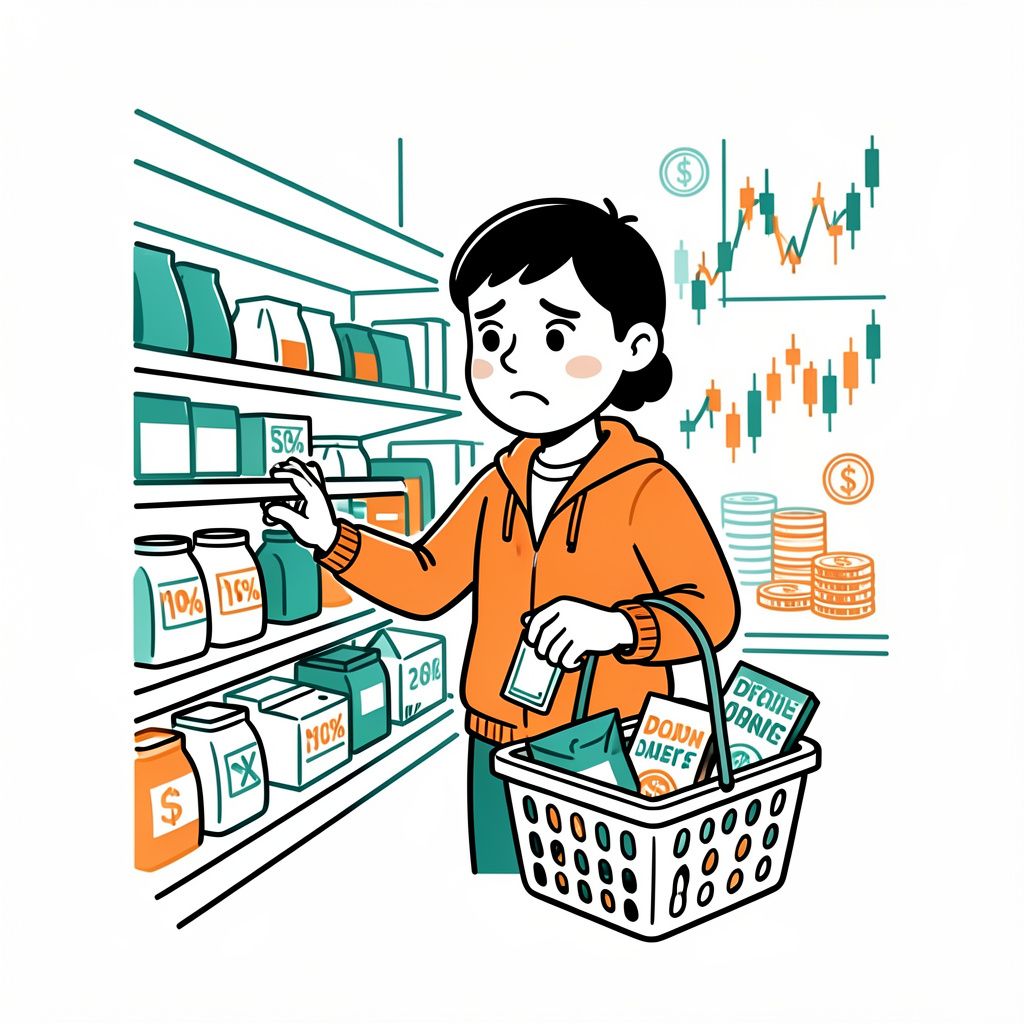
Despite steady overall retail spending in late 2026, 57% of consumers report eroded living standards, driving spending tiers to four-year lows as buyers aggressively seek lower-priced options.
Inflation Pressure Mounts as Consumers Adjust Spending Habits
As of mid-November 2026, American consumers are navigating a persistent inflationary environment that has reshaped purchasing behaviors across discretionary categories. A Bank of America Institute report released on 13 November 2026 indicates that while aggregate spending remains stable, households are increasingly prioritizing value over premium options in a strategic response to elevated prices [1]. The spending tier composite—a metric tracking apparel, dining, grocery, and travel categories—has fallen to its lowest level since 2021, reflecting a clear shift toward lower-cost alternatives [1]. Taylor Bowley, an economist at the Bank of America Institute, notes that this adaptation underscores the ongoing strain of inflation rather than an alleviation of its effects: “Consumers are still spending, and they’re adapting to inflation, but adapting is not the same thing as escaping it” [1].
Demographic Disparities Exacerbate Spending Challenges
The economic strain is unevenly distributed across generational cohorts, with millennials and Gen Z facing the most pronounced declines in spending power. Millennials are grappling with compounded pressures from childcare, housing, and auto expenses, while Gen Z’s lower composite spending scores reflect reduced incomes and fewer assets [1]. Conversely, baby boomers maintain the highest spending composite, likely due to accumulated wealth and fixed spending patterns [1]. Meanwhile, average gas prices hovering around $4 per gallon continue to squeeze household budgets, further limiting discretionary spending power [1].
Travel and Dining Sectors Feel the Pinch While Cruises Gain Appeal
Within the travel sector, spending patterns reveal a bifurcation: airline transactions have declined over recent months, while hotel spending has shown renewed strength and cruise expenditures remain robust [1]. This divergence suggests that consumers are opting for budget-friendly travel alternatives, with cruises emerging as a particularly cost-effective option [1]. In the dining category, trading down is most pronounced, as households seek lower-cost venues or reduce frequency of outings [1]. Scott McPherson, CEO of Performance Food Group, corroborates these trends, emphasizing that “consumers remain value-conscious and selective with discretionary spending” [1].
Living Standards Erode as Inflation Outpaces Wage Growth
A stark indicator of the economic strain is the erosion of living standards reported by consumers. University of Michigan surveys cited in the Bank of America Institute report show that 57% of respondents in November 2026 reported their living standards had been negatively impacted by high prices, a significant jump from 46% in February 2026 [1]. Joanne Hsu, survey director, attributes this decline to persistent inflationary pressures, noting that “about 57% spontaneously mentioned that their living standards have been eroded by high prices, the highest seen since May and up from 46% in February, just prior to the Iran conflict” [1]. While wage growth has provided some relief, housing costs continue to absorb a disproportionate share of household income, limiting the overall effectiveness of earnings increases [5].
Corporate Profit Margins Face Headwinds Amid Trading-Down Trend
The widespread shift toward value-oriented retail is poised to exert pressure on corporate profit margins heading into 2027. Businesses in discretionary sectors—particularly apparel and dining—are likely to encounter pricing power constraints as consumers become increasingly selective [1][6]. Eric van der Valk, CEO of Ollie’s, observes that “Lower-income customers are prioritizing needs over wants, shopping closer to need, and in many cases delaying discretionary purchases where they can, while higher income customers continue to trade down in search of value” [1]. This bifurcation in consumer behavior suggests that retailers will need to recalibrate pricing strategies to balance volume and margin in a high-inflation environment.
Holiday Spending Outlook Reflects Cautious Optimism
Despite the broader economic headwinds, early indicators from the Bank of America Holiday Spending Survey suggest that holiday outlays are strengthening as temperatures drop [3]. Online spending is running 3 percentage points higher than overall holiday spending, and the average dollars per transaction are below 2025 levels [3]. The survey also projects that the bulk of holiday shopping may occur later in the year, potentially concentrating spending into a shorter window [3]. While this pattern may provide a temporary boost to retailers, the underlying trend of value-seeking behavior remains a defining feature of the 2026 holiday season.
Broader Economic Implications and Federal Reserve Policy Context
The Federal Reserve’s monetary policy decisions in late 2026 reflect the ongoing battle against inflation. After raising interest rates in September 2026, the Fed maintained its stance in October 2026, signaling a commitment to reining in price pressures [1]. This policy environment has contributed to the broader cost-of-living squeeze, with housing costs remaining a key strain on household budgets [7]. Bank of America’s internal data further underscores the moderation in spending momentum, with total card spending per household rising 5.8% year-over-year in October 2026 [5]. While this growth indicates resilience in consumer spending, the rate of increase suggests a deceleration compared to prior periods.
Sources
- www.businessinsider.com
- institute.bankofamerica.com
- www.linkedin.com
- institute.bankofamerica.com
- x.com
- institute.bankofamerica.com
- fortune.com