Why Video Game Consoles Risk Becoming Luxury Goods
San Mateo, Monday, 9 November 2026.
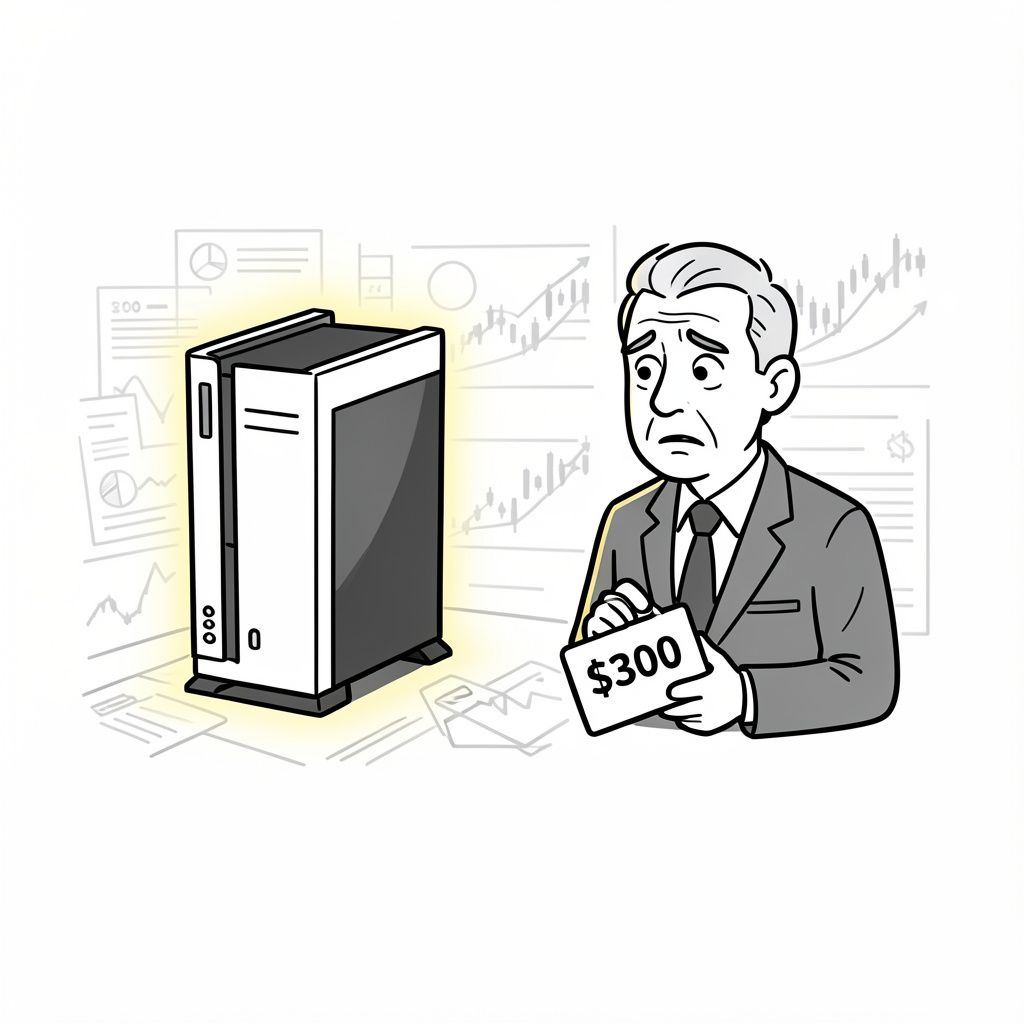
Former PlayStation chief Shawn Layden warned that rising hardware costs are unsustainable, arguing true innovation means engineering a $300 console rather than releasing an unaffordable $1,200 device.
A Warning from PlayStation’s Former Leader
Shawn Layden, former CEO of Sony Interactive Entertainment America, has sounded the alarm over the escalating costs of video game hardware, describing the industry’s pricing trajectory as unsustainable. Speaking on The Trophy Room podcast in early November 2026, Layden argued that the gaming industry’s focus on brute-force specifications for next-generation consoles—such as a hypothetical PlayStation 6 priced at $1,200—risks pricing out the mass market and stifling long-term growth [1][3][7]. Instead, he advocated for a shift toward affordability, urging manufacturers to prioritize delivering PS5-level performance at a $300 entry-level price point. ‘The innovation needs to come not from making a PS6 for $1,200,’ Layden stated. ‘It’s to make another PS5 for $300’ [1][3][7]. His remarks reflect growing concerns among industry leaders and investors about the financial accessibility of gaming platforms amid rising semiconductor costs and expanding development budgets.
The Shift in Console Pricing: From Accessible to Luxury
The current generation of consoles—including the PlayStation 5, Xbox Series X|S, and Nintendo Switch—has already seen significant price increases since their launch. The PS5, for example, debuted at $499 for the base model with a disc drive in November 2020 but now retails for $649, while the Digital Edition is priced at $599 [3]. Third-party resellers have pushed the used PS5 Pro’s price to as high as $1,400, underscoring the broader trend of hardware becoming a luxury commodity [3]. Layden highlighted this shift as unprecedented, noting that ‘this is the first platform that I’ve seen that has gone up in price over time’ [1][3][7]. By contrast, earlier generations—such as the PlayStation 2—saw their prices drop to $99 by the end of their lifecycle, making gaming more accessible to a wider audience [3]. The contrast is stark: where once consoles were priced to democratize gaming, today’s market risks confining it to a niche of affluent consumers.
The Case for Affordability Over Specifications
Layden’s argument hinges on the assertion that current-generation hardware already possesses sufficient processing power to meet the demands of modern gaming. He dismissed the push for incremental improvements in graphics and performance—such as ‘even more ray tracing and more teraflops’—as ‘differences only dogs can hear’ [5]. Instead, he urged Sony to focus on reducing the cost of the PS5 through innovation in design, materials, and manufacturing, rather than iterating on a traditional console model [1][3][7]. ‘What the company needs to do is do what it’s never done,’ Layden said. ‘Don’t iterate the console. Make it smaller, make it cheaper’ [5]. His stance aligns with broader industry debates about whether next-generation consoles should prioritize raw power or accessibility. A February 2026 report suggested that Sony was considering delaying the PS6’s release to 2028 or 2029 due to an AI-fueled chip crisis, further complicating the timeline for any new hardware [3]. Meanwhile, rumors about the PS6’s potential components—such as RAM and storage costs reaching $680—paint a picture of a console that could further alienate casual gamers [3].
Industry Reactions and the Path Forward
Layden’s comments have resonated across the gaming community, sparking discussions about the future of console pricing and innovation. While some argue that higher prices reflect the increasing complexity of game development and hardware, others echo Layden’s concerns about market saturation and consumer accessibility [1][3][5][7]. Sony’s own actions suggest a cautious approach to the PS6’s development. In May 2026, the company stated it had not yet decided on the PS6’s launch timing or pricing, and in January 2028, it plans to eliminate physical discs on PlayStation, which could further influence hardware costs [3]. Additionally, Sony’s development of its own frame generation technology—revealed in an October 2026 patent—indicates a focus on software-based enhancements rather than raw hardware upgrades [3]. As the industry grapples with these challenges, Layden’s vision of a $300 console represents a bold alternative to the status quo, one that prioritizes inclusivity over exclusivity.
Sources
- www.vgchartz.com
- www.ign.com
- www.gamesradar.com
- www.instagram.com
- www.instagram.com
- www.reddit.com
- x.com
- www.facebook.com