NASA Positions Artemis 2 for a Historic April Moon Launch
Cape Canaveral, Sunday, 22 March 2026.
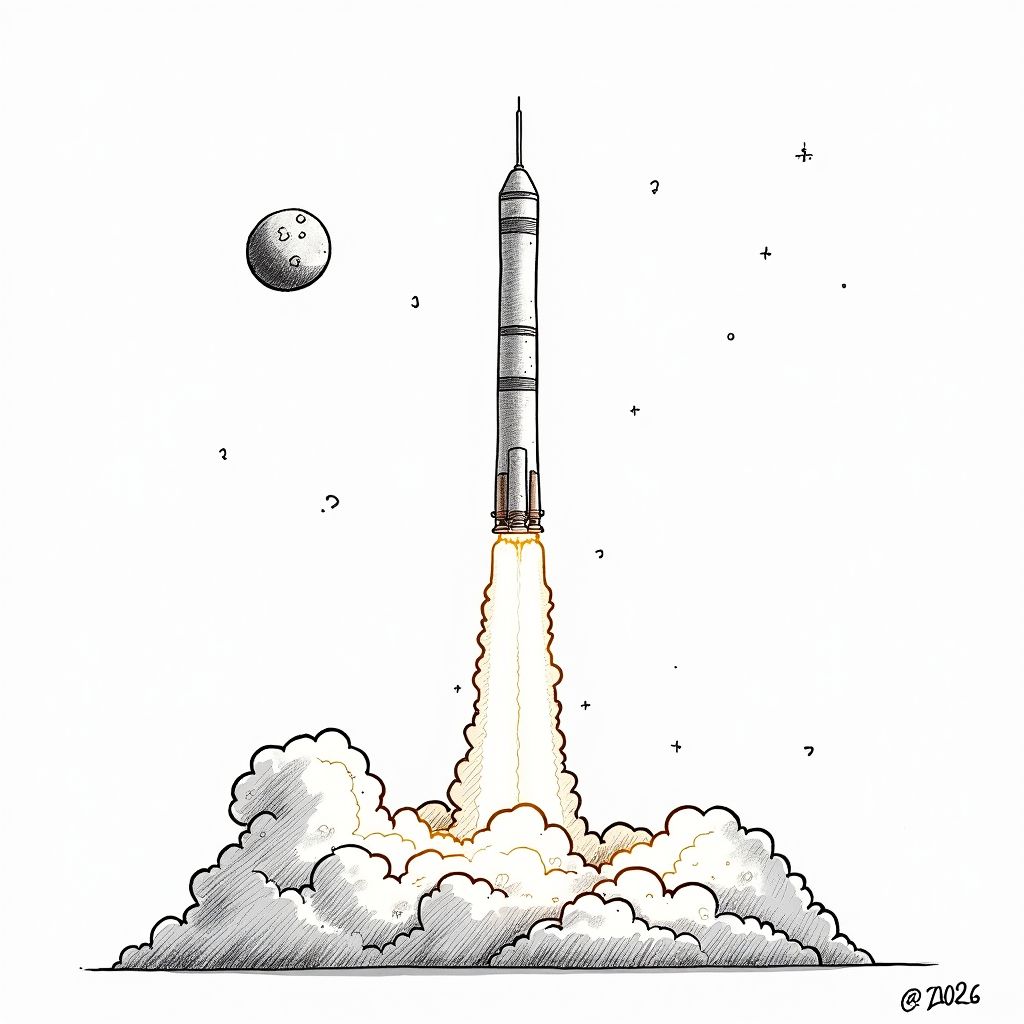
Targeting an April 1, 2026 launch, NASA is preparing Artemis 2 for the first crewed lunar flyby in over fifty years, validating billions in aerospace investments.
Overcoming Setbacks for a Spring Launch
As engineers continue to fine-tune the SLS rocket ahead of the Artemis II lunar mission, NASA has successfully transported the massive vehicle to the launch pad at Kennedy Space Center [3].
Final Preparations and Astronaut Quarantine
With the rocket now stationed at the pad, engineers are actively conducting critical pressure tests on the newly repaired helium system [3]. Meanwhile, the Artemis II crew—comprising three Americans and one Canadian astronaut: Reid Wiseman, Victor Glover, Christina Koch, and Jeremy Hansen—have officially entered their pre-flight quarantine [3][6]. The mission management team is scheduled to meet just days before the April 1 target to review the final data and give the ultimate authorization for the 10-day lunar flyby [3]. Lori Glaze, NASA’s acting associate administrator for exploration systems development, emphasized the importance of these final checks, stating that if the vehicle can be successfully fully tanked, she wants to be able to poll “go” for launch [2].
Broader Aerospace Market Implications
The successful execution of Artemis II is not just a scientific triumph; it is a critical bellwether for the global aerospace economy [GPT]. Government space agencies and commercial contractors are closely monitoring the mission, with the Artemis Suppliers Conference conveniently scheduled for March 23 to March 25 in Washington [2]. Josef Aschbacher, director general of the European Space Agency (ESA), confirmed the international community’s keen interest in NASA’s updated lunar roadmap, which currently projects Artemis 4 and Artemis 5 lunar landings for early and late 2028, respectively [2].