Proposed Atlantic Seabed Mining Plan Triggers Backlash Near Protected Coastal Reserve
Salisbury, Friday, 7 August 2026.
A federal proposal to open Atlantic seabed waters near Virginia’s protected barrier islands for critical mineral mining faces intense pushback over severe ecological and economic risks.
A Federal Push for Critical Minerals
The roots of the current seabed mining debate trace back to April 2025, when President Donald Trump signed an executive order aimed at advancing U.S. leadership in seabed mineral resources [1]. Following this directive, Odyssey Marine Exploration submitted an unsolicited request in November 2025 to the Bureau of Ocean Energy Management (BOEM) to lease hard minerals off the coast of Virginia [1]. In response, BOEM issued a Request for Information and Interest (RFI) on 23 June 2026, officially investigating the potential for seabed mining of critical mineral resources in the Atlantic Ocean at a distance of 4.8 to 101.4 kilometers (3 to 63 miles) offshore [1]. This federal initiative has accelerated discussions about domestic mineral supply chains, but it has also raised immediate alarms among local communities and environmental organizations [1][2].
Ecological Threats to a Vital Coastal Buffer
Opponents of the proposal argue that dredging and mining these waters could severely damage the regional ecosystem [1][2]. The Nature Conservancy’s Volgenau Virginia Coast Reserve manages approximately 16,187 hectares of the region’s 53,823 total hectares of conserved land off the Eastern Shore of Virginia, representing 30.075% of the protected area [1]. This reserve is a UNESCO-designated site comprising 23 barrier and marsh islands, ranging from Fishermans Island to Assateague, which act as a critical natural buffer against severe coastal storms [1]. Sally Dickinson, Director of the Barrier Islands Center, emphasized the fragility of these islands, noting that observers are already seeing significant physical changes not just from generation to generation, but from storm to storm [1].
Disruption of Marine Habitats and Regional Economies
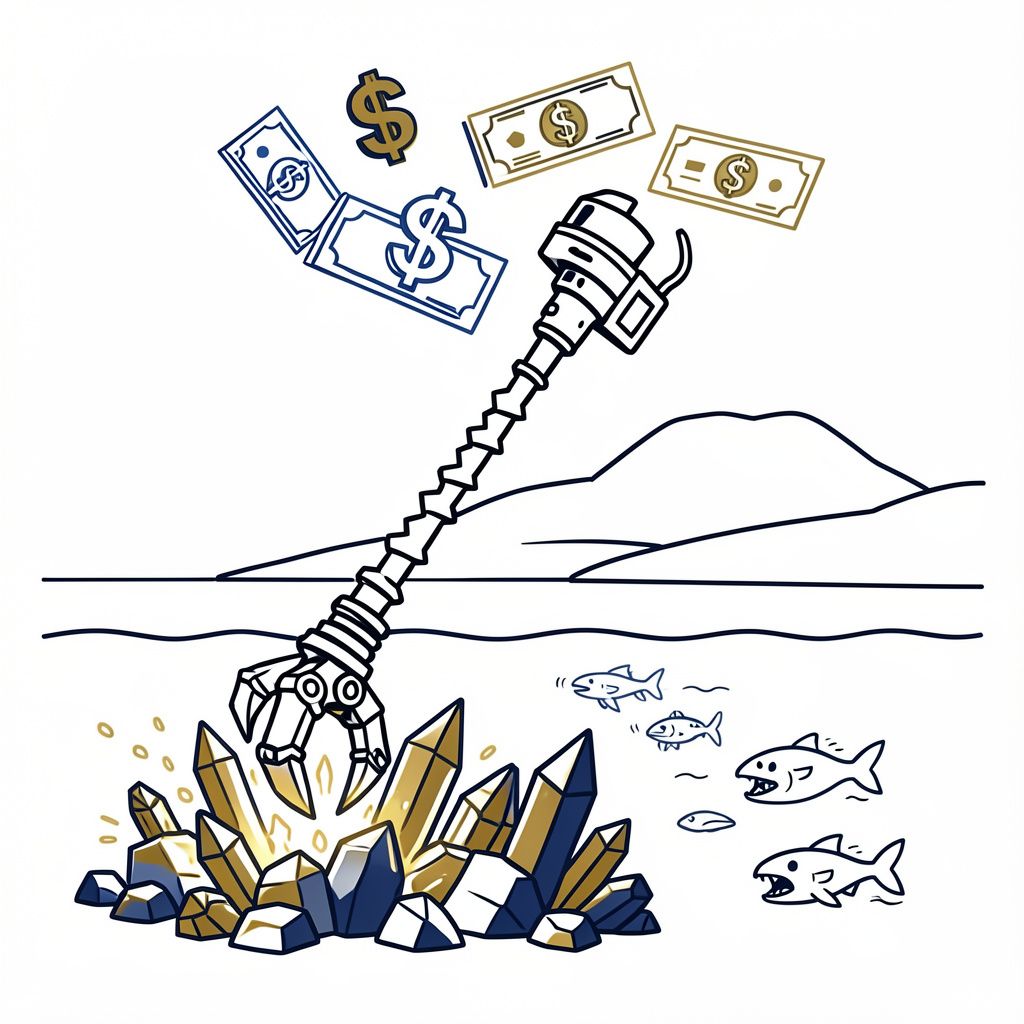
The mechanical process of seabed mining presents direct physical threats to the marine environment [2]. If the project proceeds, heavy industrial machinery will plow through vast stretches of the seafloor, breaking up sand and sediments before vacuuming them onto large surface vessels [2]. This activity risks destroying delicate benthic habitats and releasing toxic pollutants that have long been safely trapped in the seafloor sediment [2]. Furthermore, the resulting turbidity and habitat destruction could disrupt migratory pathways for vital marine species, including whales, sea turtles, and commercial fish species, threatening the regional tourism and fishing economies that depend on a healthy ocean [GPT][2].
The Fight for Public Input and Next Steps
As the regulatory review continues, regional leaders and conservationists are urging the public to intervene [1][2]. Jill Bieri, Director of the Virginia Coast Reserve, expressed deep concern over the long-term unknowns of the project, stating that exploring so close to such a sensitive system without understanding the potential consequences is highly dangerous for the region [1]. The public comment period regarding BOEM’s seabed mining proposal remains open until 22 August 2026, giving stakeholders a narrow window to submit formal feedback [1][2]. To help mobilize and inform the local community, organizations such as Environment Virginia are hosting a public webinar on 12 August 2026 featuring environmental law experts and local activists to discuss the ecological risks and coordination strategies [2].