Examining the 76ers' Cost-Cutting Decision to Trade Jared McCain
Philadelphia, Thursday, 21 May 2026.
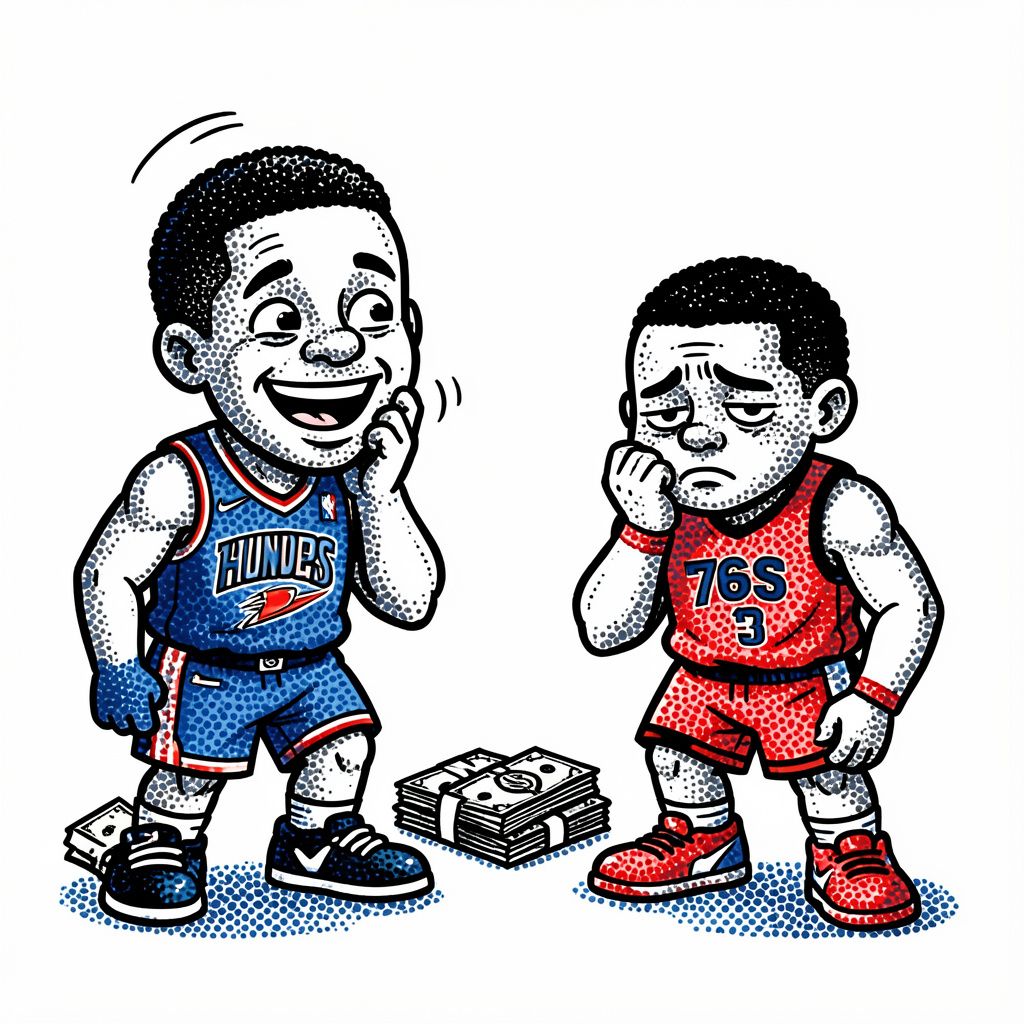
Driven by financial savings rather than roster improvement, the 76ers traded standout rookie Jared McCain. Now, as McCain thrives with the Thunder, the cost-cutting move faces intense public scrutiny.
The Financial Mechanics Behind the Move
In the modern NBA, managing a team’s salary cap is often as critical as managing the players on the court [GPT]. For the Philadelphia 76ers, the decision to trade guard Jared McCain prior to the 2026 trade deadline was heavily influenced by the restrictive financial realities of their roster [2][3]. Anchored by the massive contracts of superstars Joel Embiid and Paul George, the 76ers found their salary cap flexibility severely crippled [2]. To circumvent mounting luxury tax penalties and clear essential cap space, the front office made the calculated decision to part ways with McCain, a promising young player on a highly controllable rookie deal [2][3].
A Tale of Two Trajectories
The contrasting fortunes of the two franchises since the trade highlight the inherent risks of prioritizing balance sheets over immediate roster depth. As of mid-May 2026, the 76ers are watching the postseason from home, having been eliminated in the Eastern Conference semifinals [1]. Conversely, the Oklahoma City Thunder—the defending NBA champions—have seamlessly integrated McCain into a potent bench rotation as they advance through the playoffs [1][3]. McCain, wearing jersey number 3 for the Thunder, has found a comfortable home in Oklahoma City, stepping into a crucial sharpshooting role [1][4].
Market Sentiments and Strategic Disconnect
The public and analytical reaction to the trade has been largely critical of Philadelphia’s front office, led by Daryl Morey [2]. McCain had previously demonstrated immense potential, even leading the Rookie of the Year race during his debut season before being sidelined by injuries [1]. Despite his early promise, he fell out of the 76ers’ rotation after returning from a subsequent injury this season, leading the franchise to view him as a disposable asset to be sold high [1][2]. Critics argue that punting on a cheap, young asset simply to save ownership luxury tax dollars is a misstep, especially while the championship window for their veteran core is rapidly closing [2].